Lecture
RayOne: Initial visual outcomes with a new non-diffractive “enhanced” monofocal IOL using the phakic implantation technique
At the DOC 2023 Congress, Dr. Detlev R.H. Breyer presented his initial findings on the RayOne EMV lens. In his presentation, he classified the lens’s optics as falling between a monofocal lens and an EDoF lens. He also reported on how the lens performs in terms of transition visual acuity and discussed whether and which photopic phenomena occurred in patients.
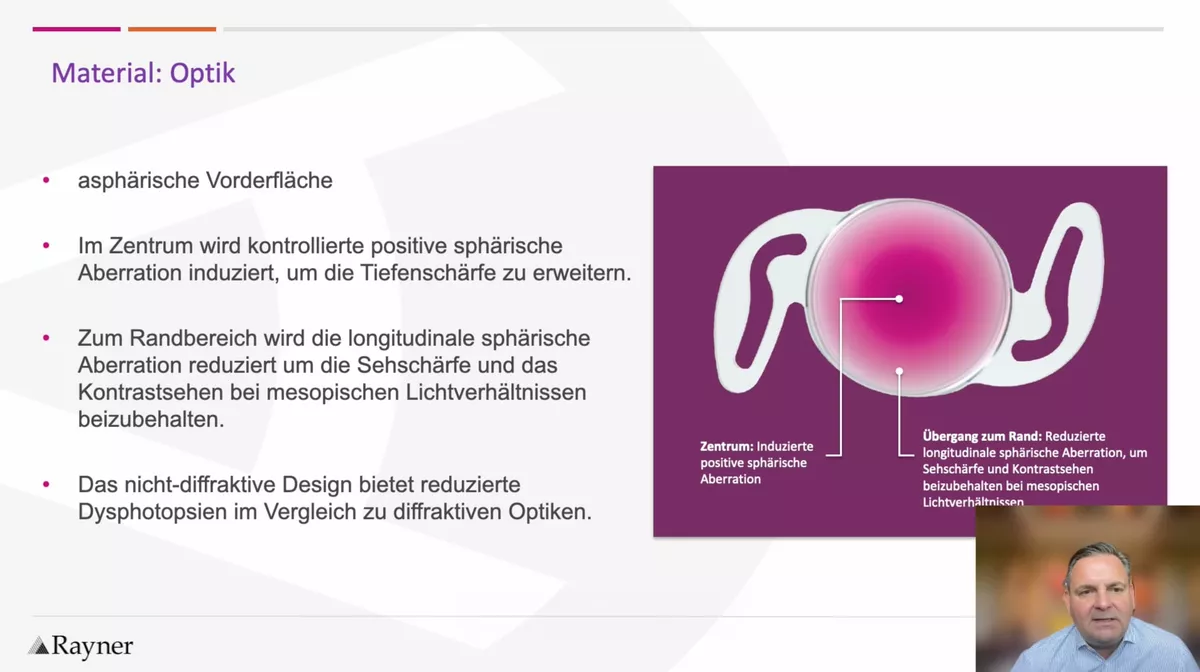
Figure 1: In this chart, Dr. Breyer describes the optics of the lens in different areas. The non-diffractive design produces fewer light and glare effects than diffractive optics.
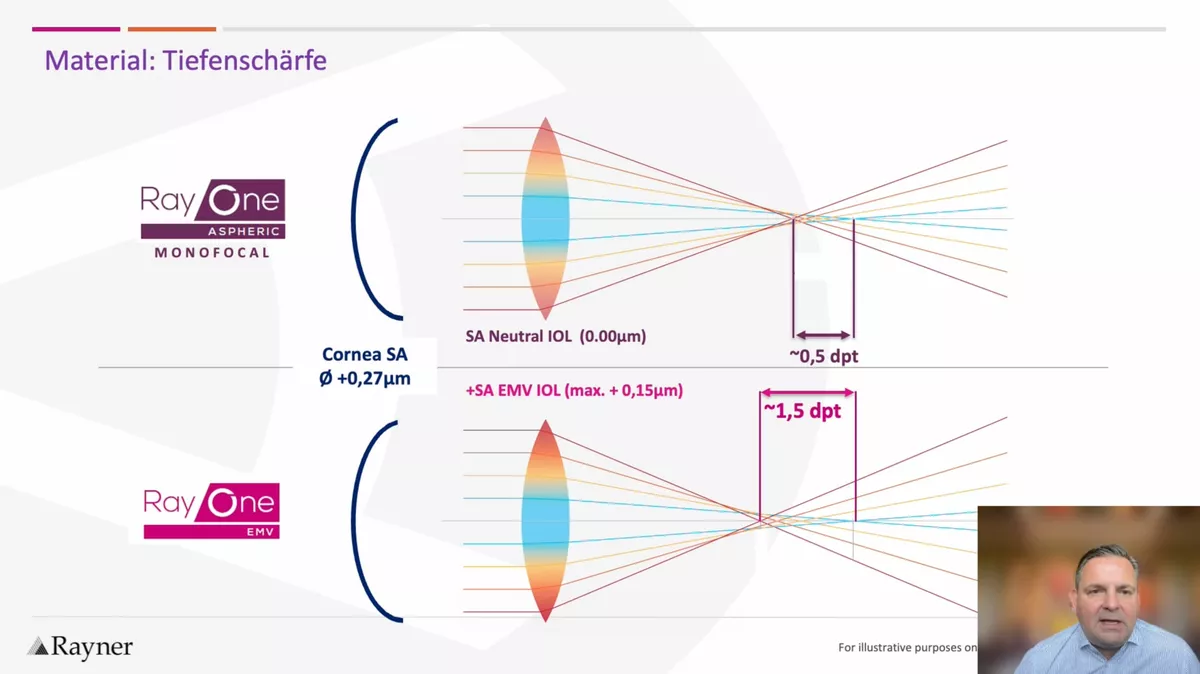
Figure 2 illustrates the optical principles of the RayOne monofocal lens compared to those of the EMV with an extended focus.
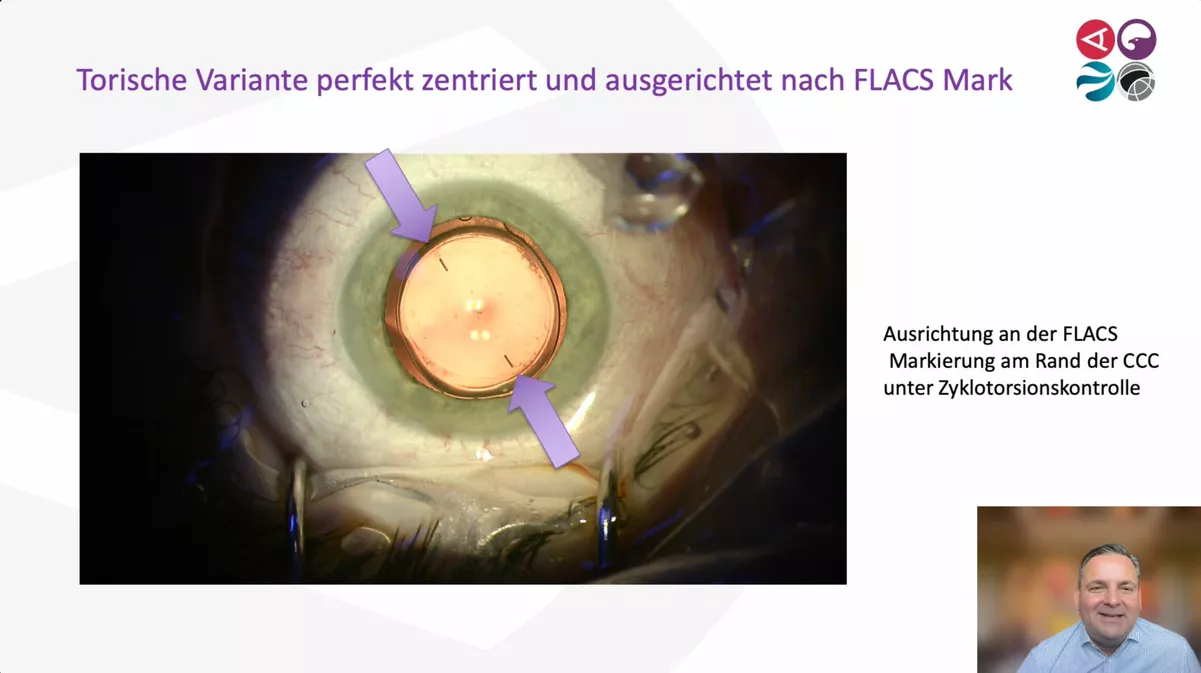
Figure 3 shows the alignment of a toric lens during implantation. The markings from the femtosecond laser are particularly helpful in precisely correcting existing astigmatism.
Implantation of the RayOne EMV based on Blended Vision
Dr. Breyer implanted the RayOne EMV lenses using the “Blended Vision” method he developed for lens procedures.
By inducing myopia (optimizing for mild nearsightedness) in the second eye for monovision (1), the depth of field extends beyond the intermediate range, thereby also enabling functional near vision (2). Theoretically, the functional visual acuity extends to 2.5 dpt (3).
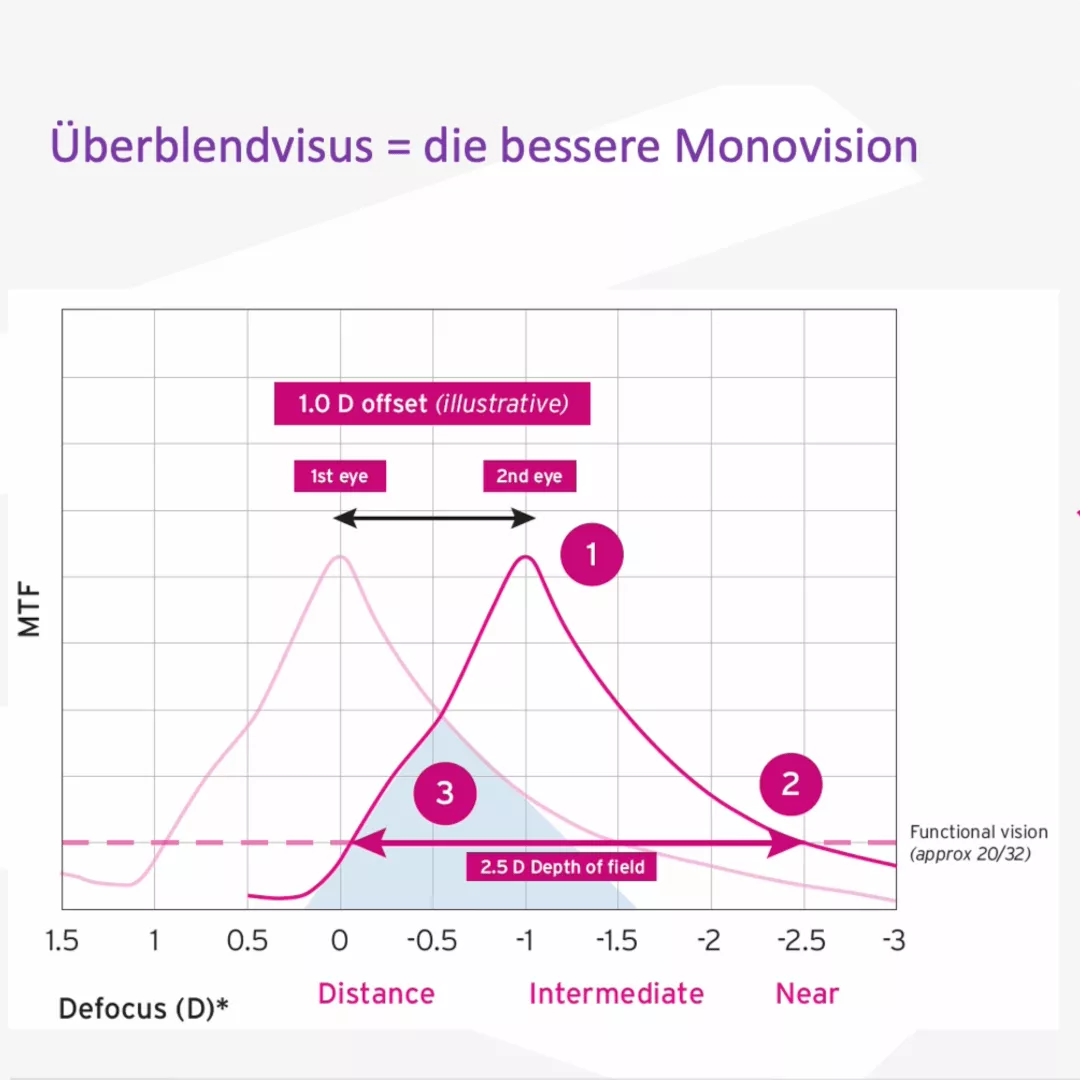
Our real-world data show that patients with the RayOne EMV implanted to correct their best-corrected visual acuity can play sports, work on a laptop, drive a car, and read a book without corrective glasses. Glasses are needed only for reading fine print.
Dr. Detlev R.H. Breyer