
Cataracts and Presbyopia
Blended Vision According to the Düsseldorf Formula—for Cataracts and Presbyopia

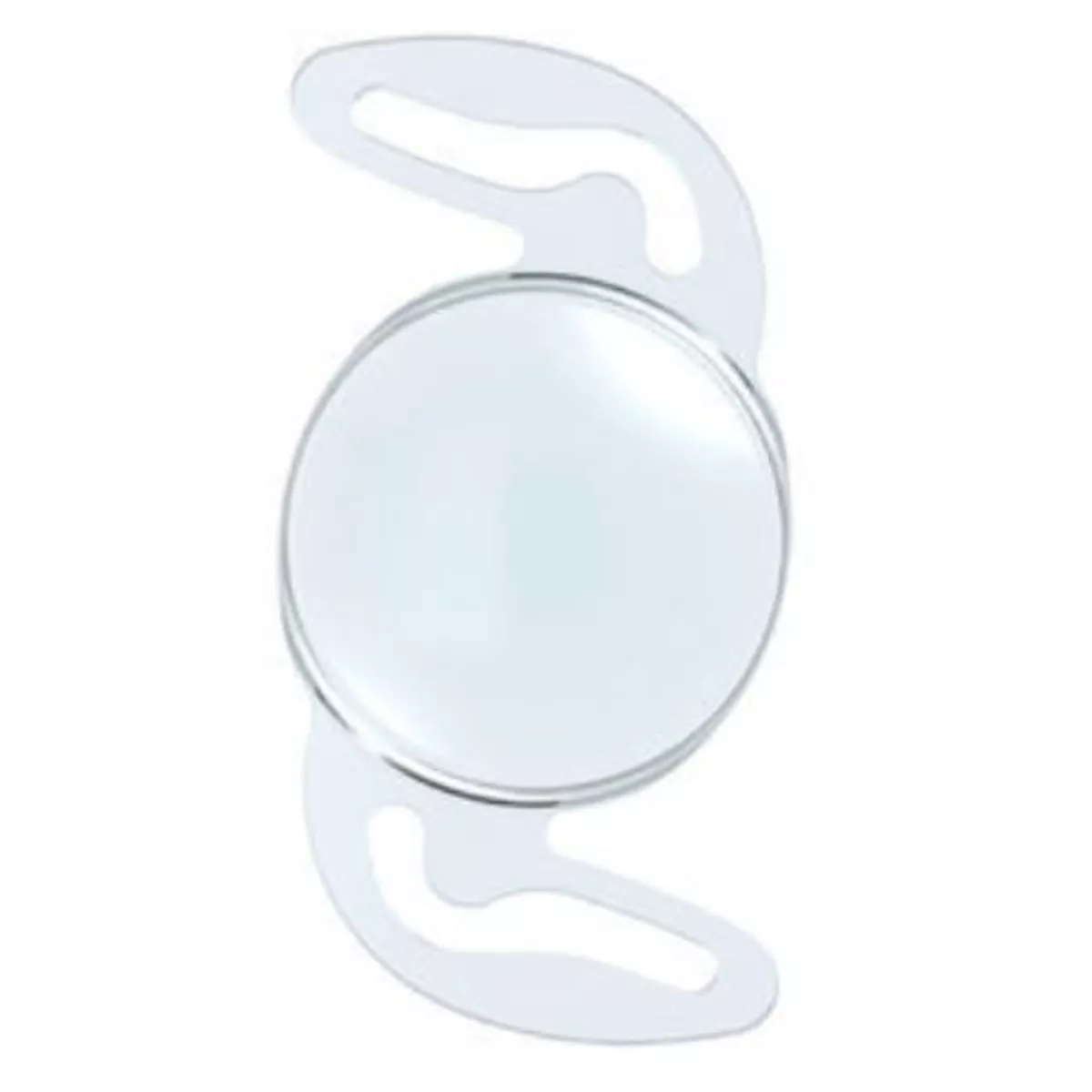
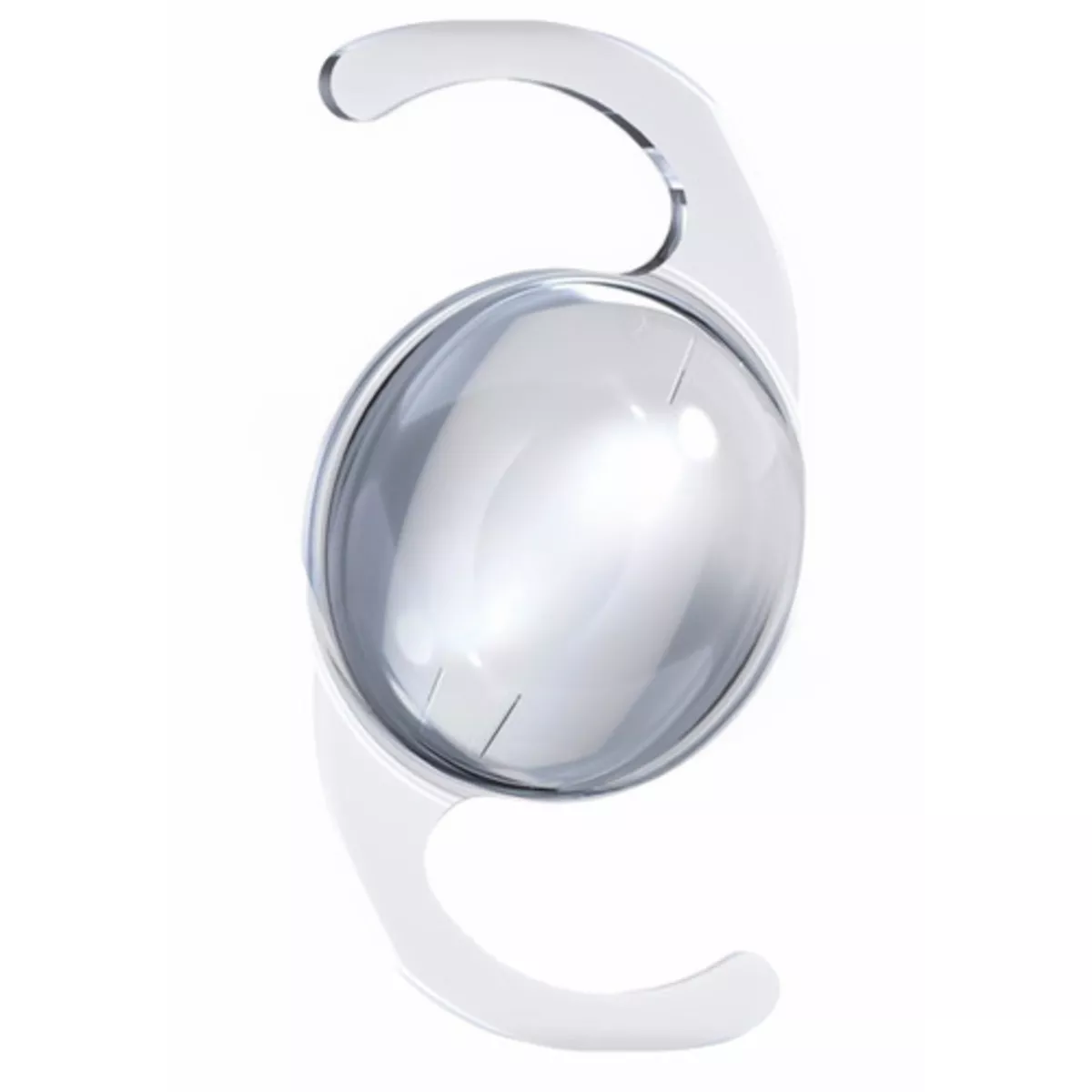
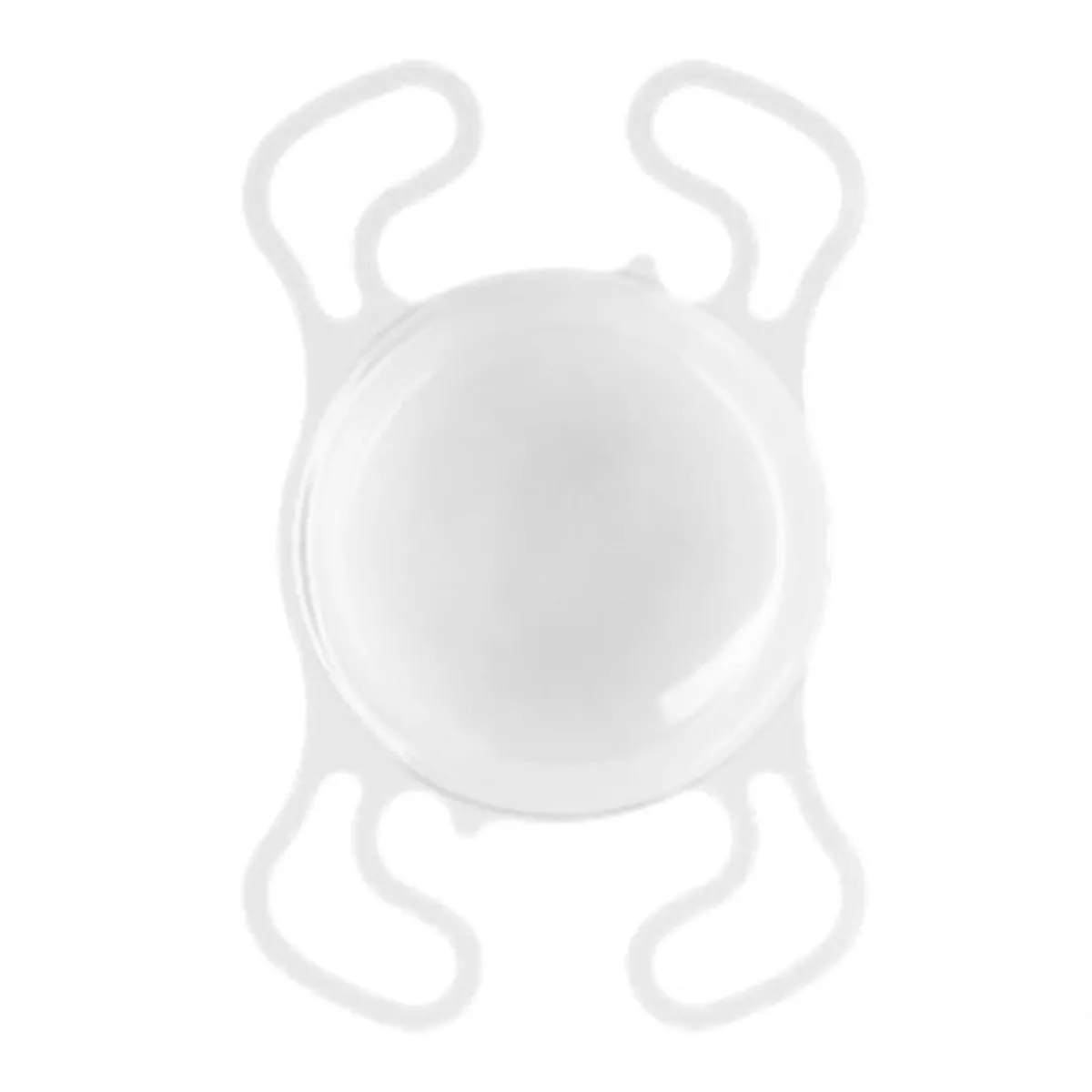
People are individuals: That’s why there isn’t a single “best” lens that suits everyone. Based on the “Düsseldorf Formula” for correcting presbyopia, developed by Dr. Detlev Breyer, we combine different premium lenses with extended depth of field—so-called EDoF lenses—based on your personal visual preferences to offer you greater independence from glasses.
What makes this special is that the lenses' different focal zones complement and overlap with one another to create the most natural visual experience possible.
Dr. Detlev Breyer
Meaning
What does "overlapping visual acuity" mean?
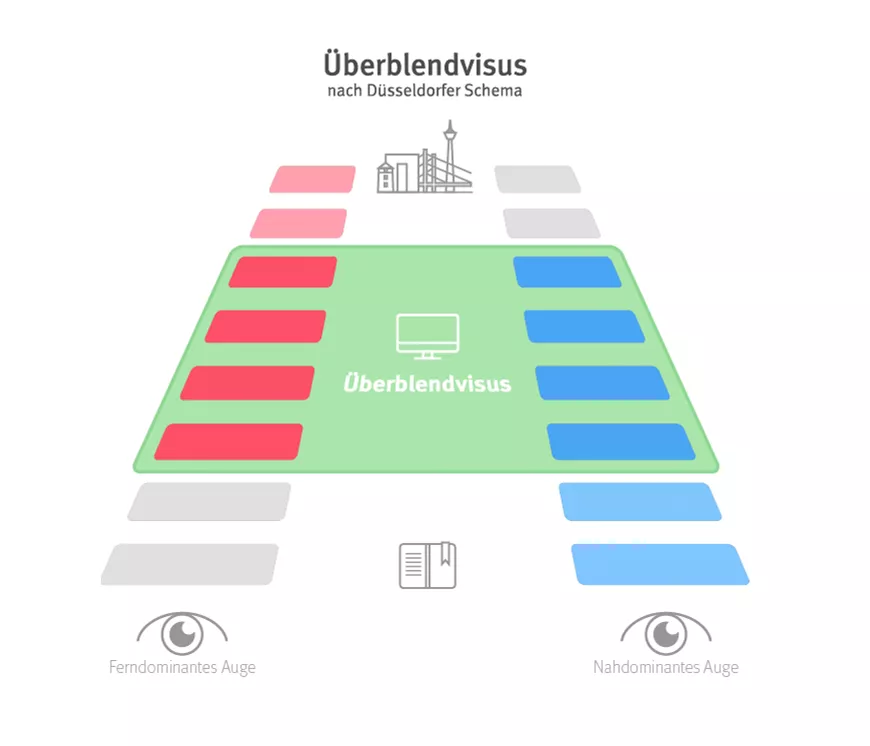
“Blending” is a term used in photography and film that refers to the “mixing” of two images. This principle is applied to vision: one eye sees clearly at a distance, while the other sees clearly up close. Unlike monovision, both eyes also see the intermediate “blending zone” clearly. With laser treatment, this principle is achieved using uniform visual ranges of 0.0 and -1.5 dpt. With the Düsseldorf Formula, you can choose the visual zones in which you will see a sharp image, because we can combine different EDoF lenses or multifocal lenses.
Advantages
What are the advantages of Blended Vision?
Compared to conventional multifocal lenses with diffractive optics or monovision treatment—which does not involve a transition zone—transition vision offers significant advantages:
- Tailored treatment through a customized combination of lenses
- Good depth perception
- Fewer distracting light phenomena
- Improved contrast sensitivity
Schedule an appointment
for a no-obligation initial consultation
Schedule an appointment for a
free initial consultation that includes a quick assessment.
Dr. Breyer underwent laser eye surgery based on the principle of Blended Vision
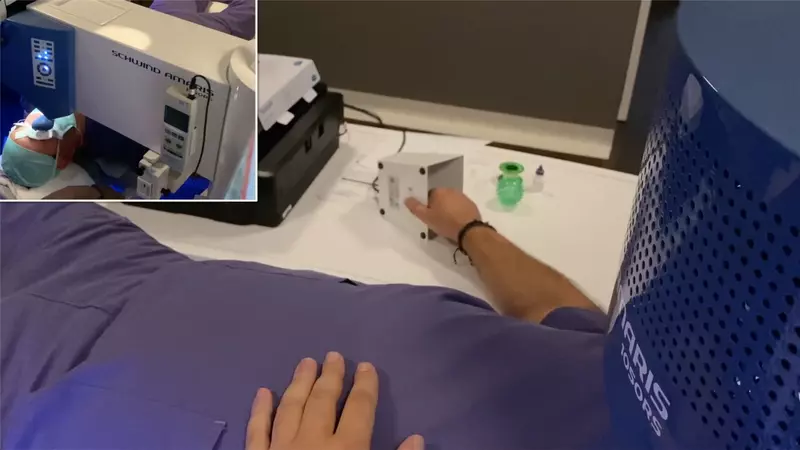
Dr. Breyer was so convinced by Blended Vision that he underwent laser surgery himself based on this principle. In line with his belief that, when the natural lens is clear, laser treatment is preferable to lens replacement, he opted for laser surgery because the risk is lower and the visual outcome is comparable. We also offer this advice to our presbyopic patients who wish to be free from reading glasses or progressive lenses. If the lens is already cloudy or if there are significant contraindications to laser correction of the cornea, then lens surgery is the treatment of choice.
From Laser Blended Vision to a Custom Lens Combination Based on the Düsseldorf Formula
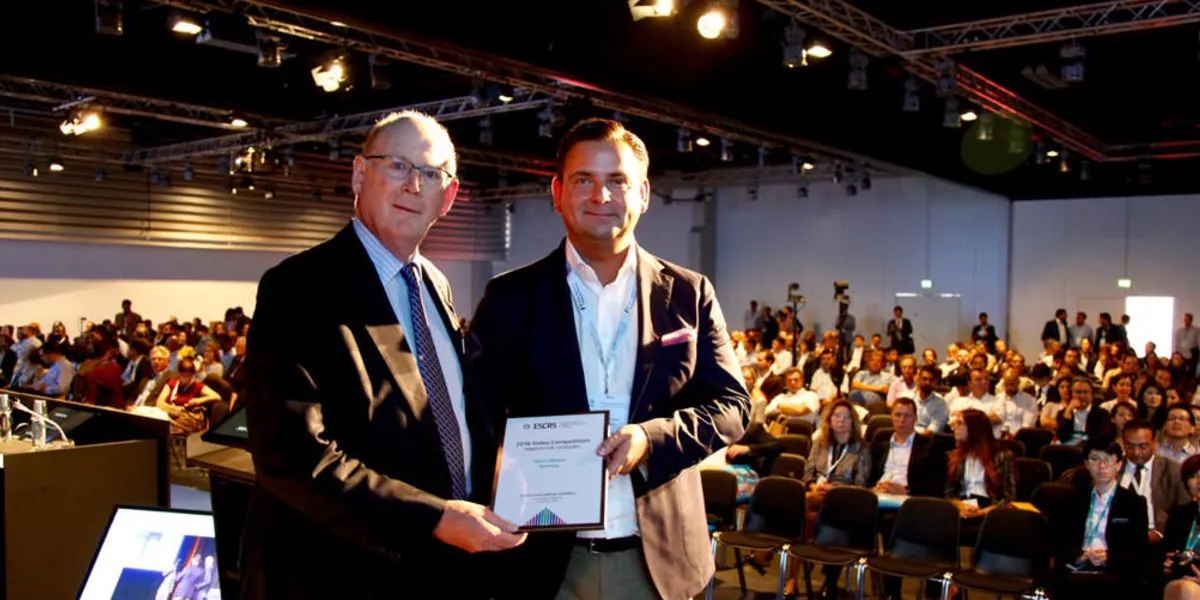
Blended vision was first introduced in 2013 as “Laser Blended Vision” for the correction of presbyopia. This idea inspired Dr. Breyer to apply the principle using a combination of EDoF lenses. His scientific video on this topic received an award from the European Society of Ophthalmic Surgeons in the “Innovation” category in 2016.
The Inspiration. Prof. Dan Reinstein presents Presbyond Laser Blended Vision in Singapore at the Zeiss Symposium as part of APACRS: An excimer laser treatment (Presbyond) in which one eye is slightly undercorrected to 0.0 dpt for distance vision and the other eye is slightly undercorrected to -1.5 dpt for near vision. In addition, a special ablation profile achieves a greater depth of focus through spherical aberrations. Since the target refraction of both eyes differs by only 1.5 dpt, a transition zone is created at intermediate distances. This principle inspired Dr. Breyer to apply it to intraocular lenses.
Dr. Breyer will present his concept of crossover visual acuity with segmental MIOLs in London at the International Congress of the Presbyopia Society (ISOP) and the European Society of Cataract and Refractive Surgeons (ESCRS).
We will present our clinically significant scientific data supporting this idea in Barcelona at the ISOP and ESCRS conferences.
Dr. Breyer will present the new data on crossfade visual acuity not only at our Innovation Symposium in Düsseldorf, but also at the World Congress of Ophthalmologists in Guadalajara (Mexico), in Athens (ESCRS), in Chinese Taipei (APAO), in Nuremberg (DOC), and in Rome among the elite circle of American-European Eye Surgeons (AECOS).
At its international research congress in Copenhagen, the European Society of Cataract and Refractive Surgeons (ESCRS) is honoring the scientific video by Dr. Breyer and colleagues on crossover visual acuity with an award in the “Innovation” category.
Dr. Breyer is so convinced of the Düsseldorf method that he even underwent laser treatment himself using this technique.
Since then, Dr. Breyer has implanted many modern lenses with various designs using the Düsseldorf method and has presented his findings at international medical conferences. You can read more about this in the Research section.
Personalized Lens Consultation
The consultation with the patient forms the basis for a personalized lens combination

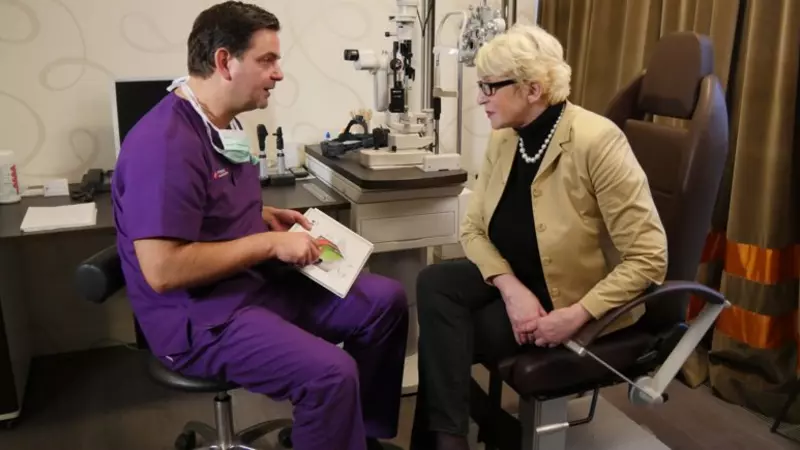
To ensure we select the right lenses, we place great importance on a thorough consultation with you, during which we ask detailed questions about your visual habits. This includes questions about your profession, hobbies, and other activities or habits that help us determine which areas of vision are a priority for you and where you might be willing to make compromises, as these factors are important for minimizing side effects. For example, whether you drive at night frequently or only rarely plays a major role, as this generally determines your tolerance for glare. People who drive frequently at night are sensitive to glare (halos and glare). Athletes usually prefer sharp distance vision, while people who do a lot of close-up work place the greatest emphasis on near vision. Based on our scientific experience with premium lenses and the results of the patient consultation, we determine a lens recommendation.
Compromises are important for minimizing side effects.
Dr. Detlev R.H. Breyer
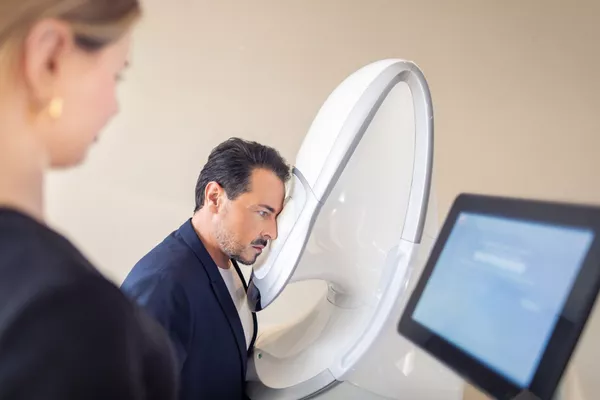
We’ll explain what your vision is expected to look like after surgery using the Vision Simulator or visual aids such as illustrations of glare effects and charts with text in various sizes, to give you a realistic idea in advance of what to expect once your brain has adjusted to the new visual experience. The duration of this adjustment phase (neuroadaptation) varies from person to person and can certainly last about three months.
The adjustment period to the transition vision varies from person to person and can last up to three months.
Dr. Detlev R.H. Breyer
Let us advise you
If you're interested in achieving the best possible vision without glasses, please feel free to schedule an appointment for a no-obligation initial consultation or preliminary examination with Dr. Breyer. You can do so by phone or online via doctolib.de. We'd also be happy to call you back. We look forward to hearing from you.
Schedule an appointment
Our patient is absolutely thrilled with the Düsseldorf Protocol

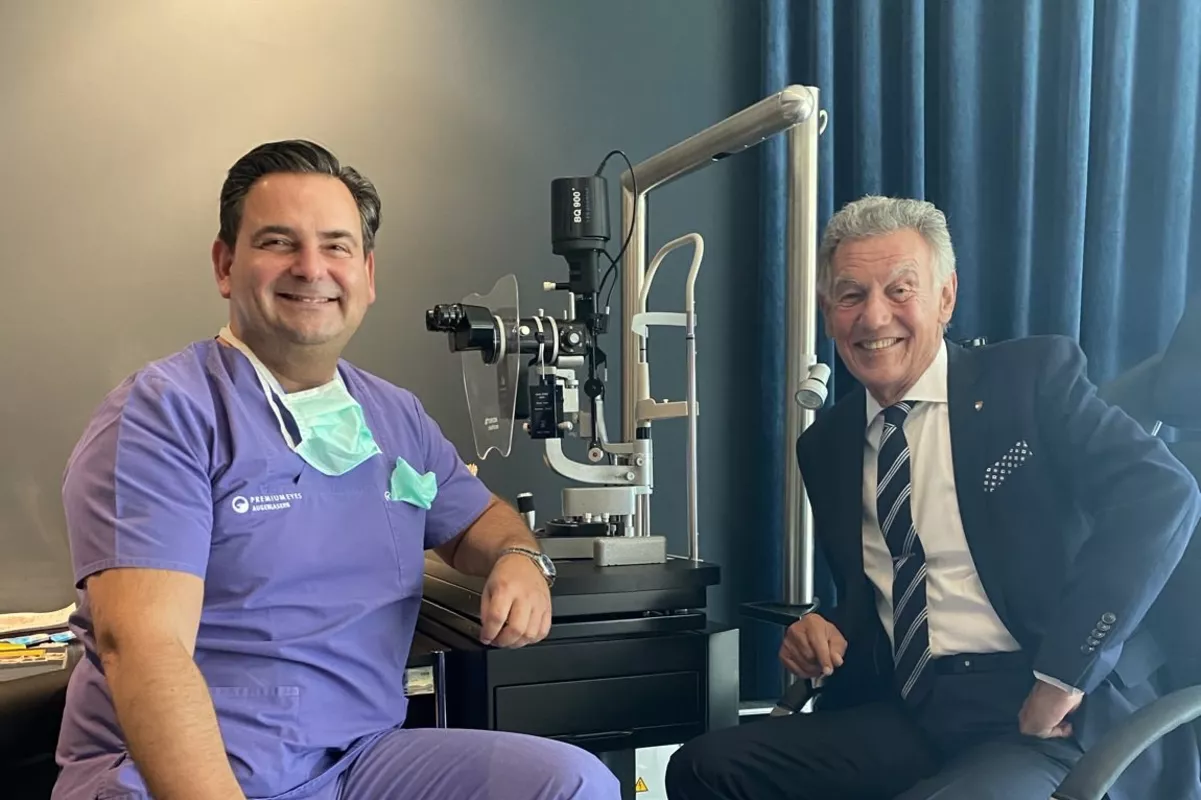
That was a piece of cake! If I'd known it was that easy, I would have done it 15 years ago.
Wolfgang Rolshoven
Videos of Dr. Breyer's lectures on the topic


Educational video for ophthalmologists and interested patients
Dr. Breyer has presented the crossfade visual acuity test—based on the Düsseldorf method—in a video at numerous international conferences. In September 2016, it even received an award in the “Innovation” category at the European Congress of Refractive and Cataract Surgeons. The video describes the scientific background and data collection, how the method works, the surgical procedure, and patient education. Why not take a look?


Costs
Our Fair Prices
Implantation of a monofocal intraocular lens (IOL)
Includes an initial consultation and preoperative examination, lens implantation, and 3 follow-up visits—plus anesthesia and, if necessary, laser treatment during laser lens exchange
Implantation of a multifocal intraocular lens (MIOL)
Includes an initial consultation and preoperative examination, lens implantation, and 3 follow-up visits—plus anesthesia and, if necessary, laser treatment during laser lens exchange
* The initial consultation is non-binding and free of charge. The fee for lens implantation is based on the German Scale of Medical Fees (GOÄ). More specific information on this can only be provided after a preliminary examination. Depending on the actual time and effort involved, the final bill may differ from this estimate. The GOÄ does not permit any other method of pricing. In the vast majority of cases, however, we have been able to adhere to the fees listed above. Following an initial examination, we would be happy to discuss with you which treatment is suitable for you personally and what approximate costs you can expect.
** Monthly payments for a 24-month term with no down payment.
By the way: Under certain circumstances, the costs of laser eye surgery or intraocular lens procedures may be tax-deductible as an extraordinary expense under Section 33 of the German Income Tax Act (EStG) without the need to submit a medical certificate from a public health officer.
References
Further Reading
EC Ophthalmology 14.9 (2023), 01–09. pdf, 379.41 KB ›
,” Supplement to Cataract & Refractive Surgery Today Europe, Sept. 2020 pdf, 561.52 KB ›