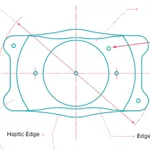
Implantation of a Contact Lens (Phakic Lens or ICL)
Includes an initial consultation and preoperative examination, lens implantation, and 3 follow-up visits—plus anesthesia
Starting at €2,650*
Price per eye

Lens Method
The implantation of contact lenses into the eye is an interesting option for anyone who can no longer tolerate conventional contact lenses and for whom laser eye surgery is not an option due to their prescription. Implantable contact lenses are placed in the eye alongside the natural lens and correct the eye’s focal point, thereby correcting nearsightedness, farsightedness, and astigmatism—and, with multifocal lenses, presbyopia as well. They can even improve visual quality. Don’t worry: the procedure is completely painless.
Implantable contact lenses are not visible from the outside. They are safe, comfortable, and can be replaced as needed.
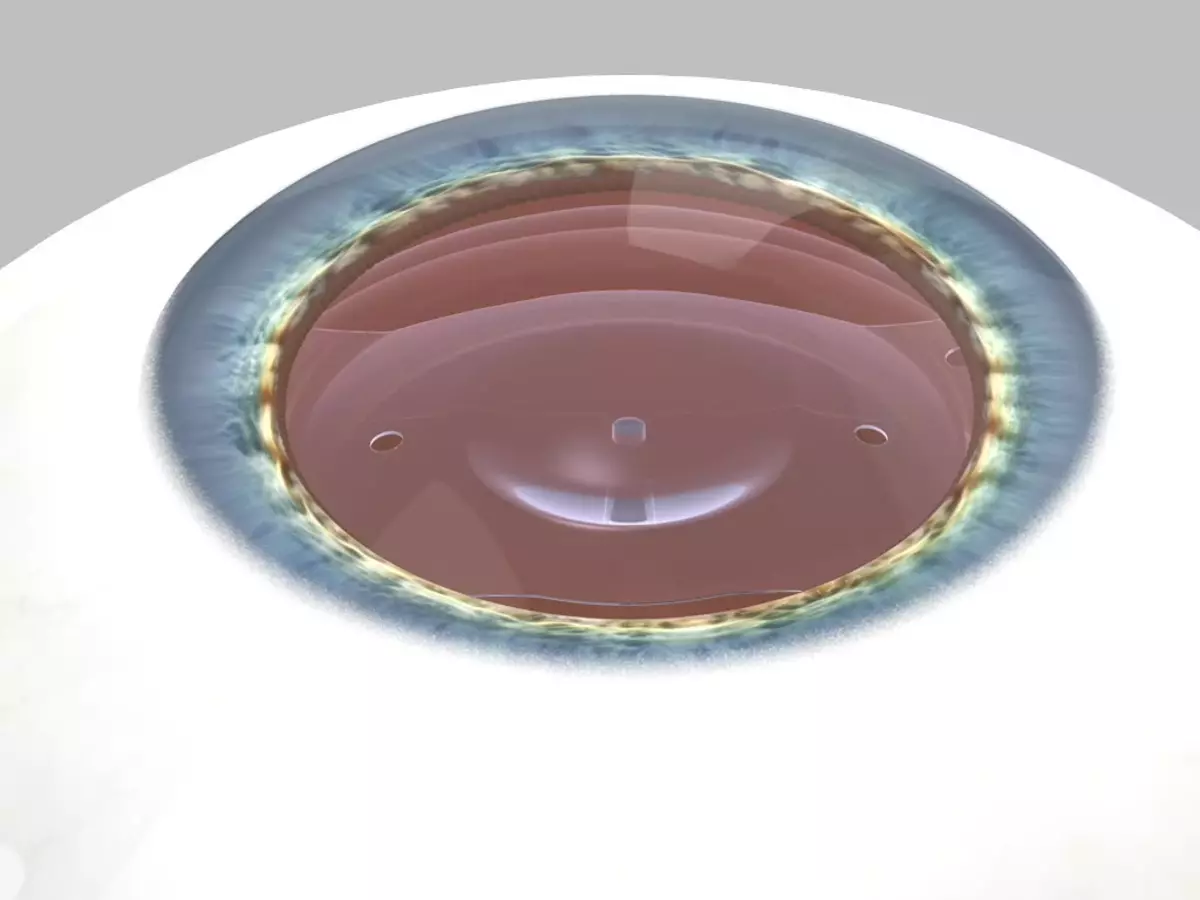
Phakic lenses, also known as implantable contact lenses, are made of a very soft material, such as collagen, and are well tolerated. A distinction is made between anterior chamber lenses and posterior chamber lenses. Posterior chamber lenses are not visible to others and do not need to be secured in place. They are inserted into the posterior chamber during a painless outpatient procedure. No corneal tissue is lost during this process. The lens is placed between the iris and the natural lens and can be removed at any time if necessary.
The Operation
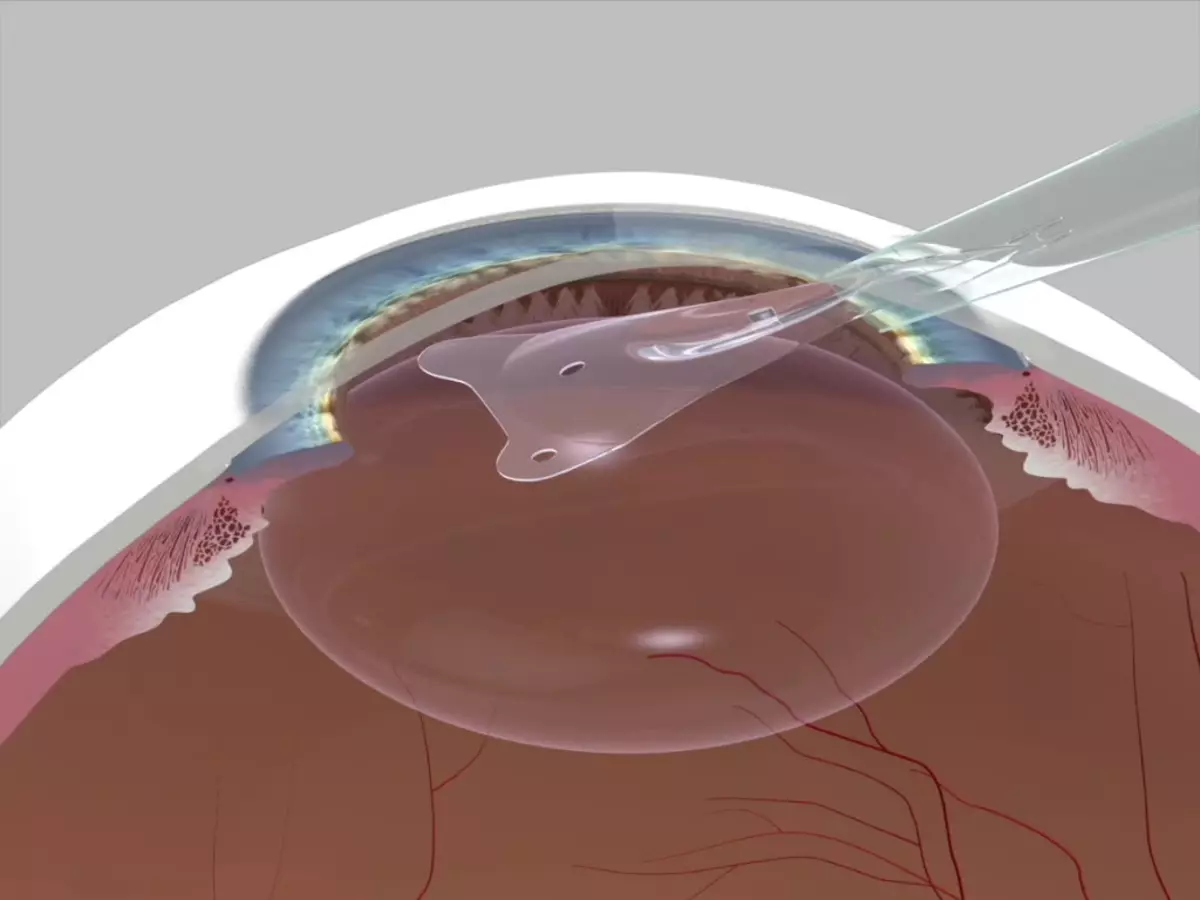
Before the implantation, you will be given eye drops to dilate your pupils and numb your eyes so that you won't feel anything during the procedure.
Then, a fine incision of approximately 1.8 to 2.2 mm is made in the cornea.
Through this opening, the folded lens is inserted into the posterior chamber of the eye using an instrument.
There, it unfolds and settles behind the iris and in front of the natural lens. It is not visible to others. The incision closes on its own; no stitches are required.
The procedure takes about 20 to 30 minutes in total and is painless.
Good to know: Dr. Breyer implanted the first ICL using the micro-incision technique as early as 2002 at the ESCRS Congress. As one of five specialists on the ICL study group, he helps shape the standards for surgical technique, preoperative and postoperative examinations, and follow-up care related to the implantation of implantable collagen lenses.
The ICL has been around for that long.
A total of ICLs have been implanted worldwide.
ICLs have been implanted since 2019.
Advantages
Many patients now prefer implantable contact lenses to laser treatment. Collagen lenses are used primarily in younger people who suffer from severe nearsightedness or farsightedness and require lenses with high diopter values. If astigmatism is also present, it can be corrected with a toric collagen lens. For presbyopia, a multifocal lens is available.
The eye's natural lens is preserved.
No corneal tissue is removed; a minimal incision is sufficient for implantation.
It is extremely rare for a previous refractive error to recur (regression), and patient satisfaction is correspondingly high.
The lens can be removed at any time.
The implantation neither causes nor exacerbates symptoms of dry eyes.
There are small openings in certain areas of the Kollamer lens that allow the aqueous humor in the eye to circulate more freely between the anterior and posterior chambers. These are therefore called aquaports. They are important for ensuring proper nourishment of the cornea and lens and for maintaining stable intraocular pressure. This helps prevent side effects such as the development of cataracts or glaucoma to the greatest extent possible.


Incidentally, Dr. Breyer is one of the pioneers in this field and implants the EVO Visian ICL™ using a minimal incision of 2.2 mm—making the procedure as gentle as possible.
I love my new life with implantable contact lenses.
A. Shahnas, a patient of Dr. Breyer

Long-term results
We’re not the only ones who’ve had excellent experiences with the Visian ICL™. This ICL family has been highly regarded for over 30 years. Over 3 million lenses have been sold worldwide. A study by the U.S. Food and Drug Administration (FDA) also confirms that over 99.4 percent of patients who received the Visian ICL are satisfied with this lens.1 In addition, the ICL has been successfully implanted over 3,000 times in U.S. Army soldiers since 2006 and has proven itself under the harshest conditions. 2
Even after 17 years, ICL continues to deliver satisfactory results in correcting myopia and astigmatism.
Sanchez-Ventosa, A., et al.
This was the conclusion reached by a retrospective study of 70 eyes from 38 patients who underwent Visian ICL (V4 model) implantation between 2002 and 2006.3 The study showed that Visian ICL implantation resulted in long-term visual and refractive stability, suggesting that it is a low-risk procedure.
Comparative studies on implantable contact lenses, specifically toric ICLs versus LASIK, for myopia greater than 3 dpt showed either no significant differences or a significant advantage of (toric) ICLs over LASIK in terms of visual performance:
This is the result of a systematic review of a total of 19 articles comparing the visual and refractive outcomes of laser in situ keratomileusis (LASIK) with (toric) implantable collamer lenses (ICLs) for the treatment of myopic astigmatism. Refractive outcomes, efficacy, safety, predictability, and stability, as well as differences in contrast sensitivity and higher-order aberrations (HOAs), were analyzed for moderate (3 to 6 dpt) and high (≥6 dpt) myopia. The results were either significantly in favor of the (toric) ICL or comparable.
Fewer HOAs and better contrast sensitivity following (toric) ICL appear to be the strongest arguments for their refractive and clinical superiority. However, longer-term follow-up studies are warranted, particularly for the systematic comparison of long-term adverse effects.4
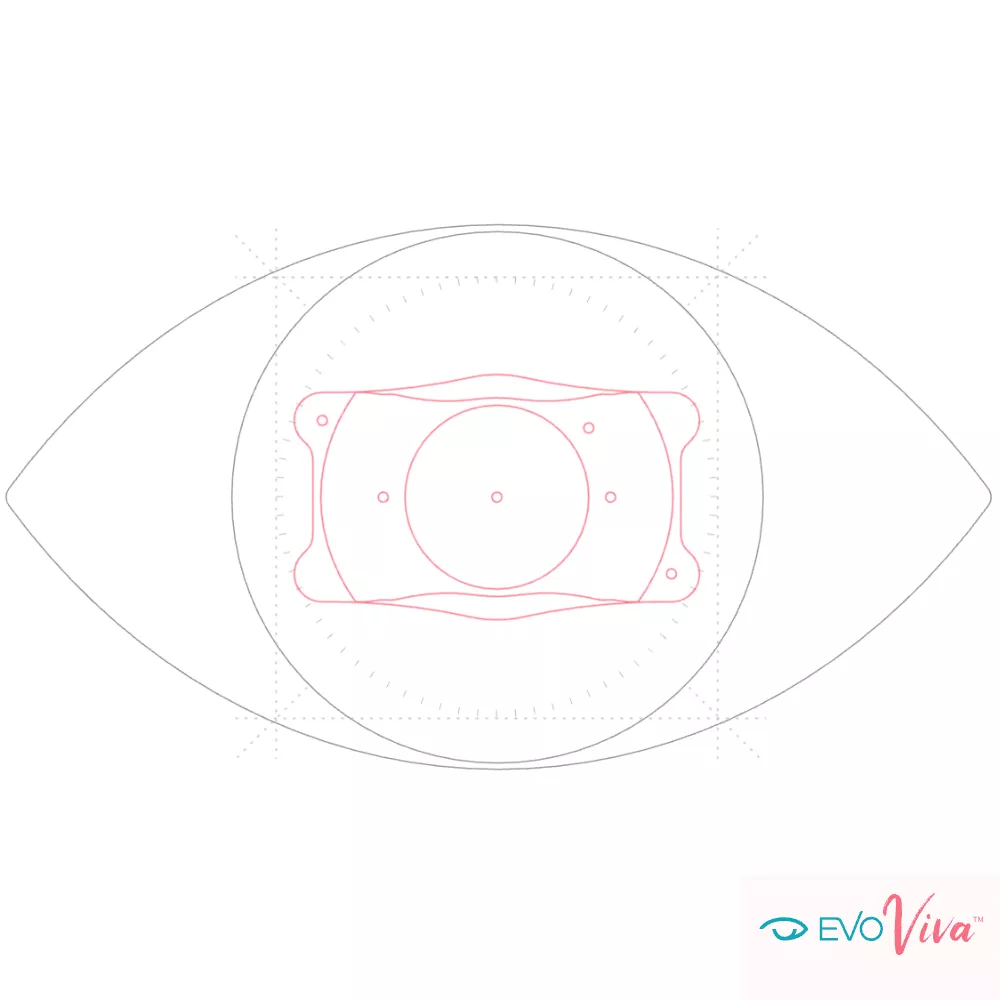
The implantable contact lens is placed in the posterior chamber of the eye, which is located between the iris and the eye’s natural lens. The EVO Viva ICL is designed to provide an extended depth of field, enabling clear vision from near to far; reading glasses are needed only for small print.
This model is suitable for presbyopic patients between the ages of 40 and 60 with myopia ranging from -5 to -20 dpt who wish to be free from glasses. Two options are available:
As a phakic lens—that is, in addition to the eye’s natural lens—for people who are nearsighted and have presbyopia but still have a clear natural lens and therefore do not wish to undergo refractive lens exchange. – This lens is also a good choice for those with thinner corneas.
As an alternative to an add-on IOL for people who already have a monofocal intraocular lens (IOL) in their eye.
Dr. Breyer presented his initial results with the EVO Viva EDoF-ICL in his presentation at the ESCRS 2025 conference in Copenhagen.
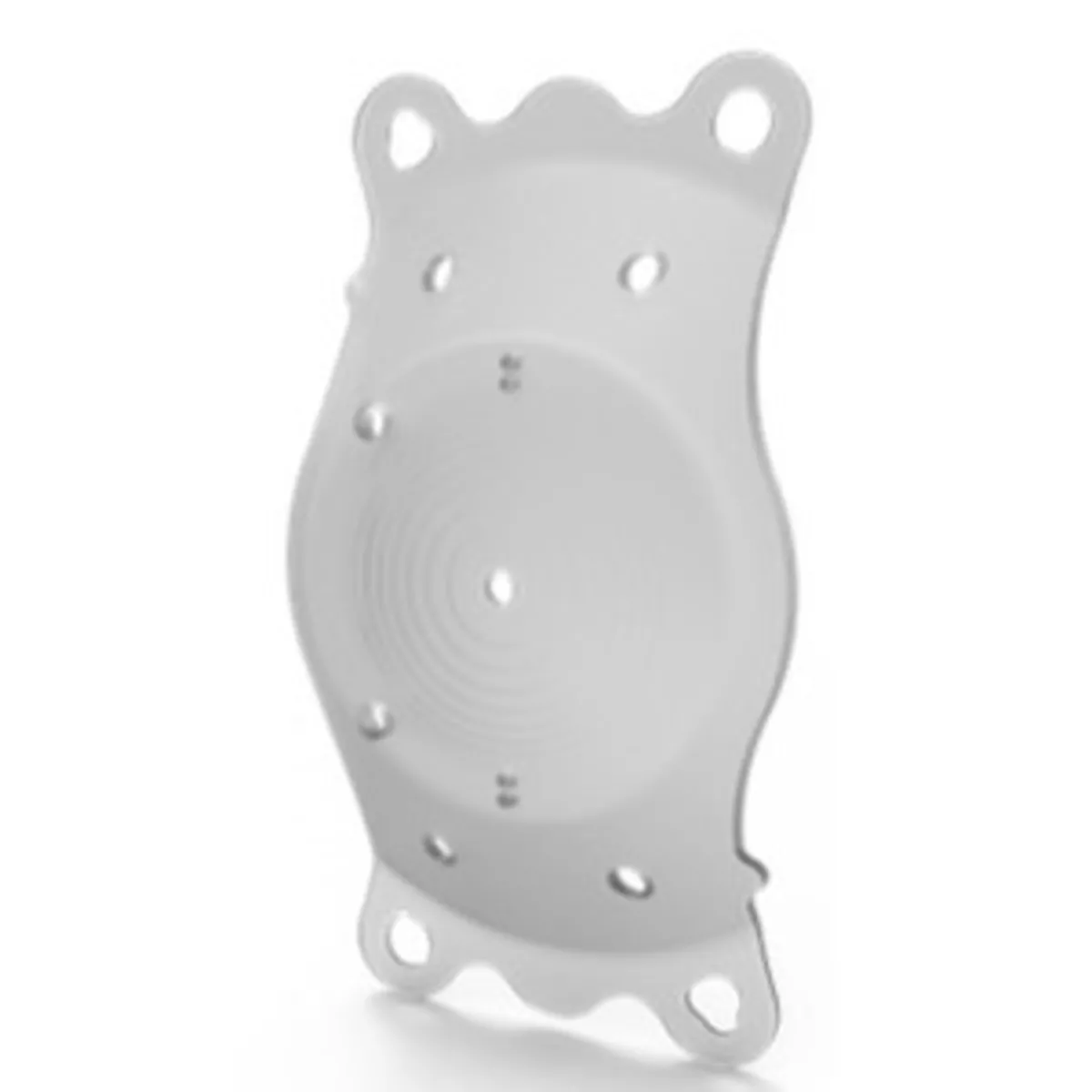
The “Implantable Phakic Contact Lens” (IPCL) from Polytech Domilens is also a posterior chamber lens. It is not only suitable for younger patients to correct nearsightedness, farsightedness, and astigmatism. It is also available with a multifocal design. This makes the lens an attractive alternative for presbyopic patients whose natural lens is still clear and who wish to live without reading or progressive glasses. Should cataracts develop later on, this lens can be removed at any time. Alternatively, only the inner part of the natural lens can be replaced with a monofocal artificial lens, allowing you to continue benefiting from the multifocal design of your IPCL.
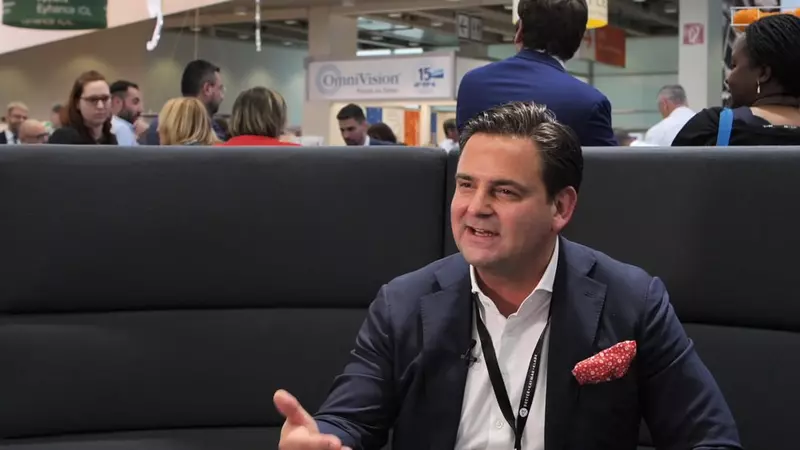
The EYECRYL Phakic (biotech) implantable contact lens is a monofocal, hydrophilic, foldable, one-piece acrylic lens. The aspheric lens is implanted into the posterior chamber in front of the natural lens of the eye to correct nearsightedness ranging from -3.0 dpt to -23.0 dpt. It is also available as a toric lens to correct astigmatism ranging from 0.5 dpt to 5.0 dpt.
Contact
If you are interested in implantable contact lenses and would like to know whether you are a good candidate for the procedure, please contact us. We offer a free, no-obligation initial consultation.
Experiences

More Patient Experiences with ICLThe best part about my ICL implant surgery with Dr. Breyer was that I could see my alarm clock clearly first thing in the morning, right after waking up.
Ms. Okroglic, Cologne
Costs
Includes an initial consultation and preoperative examination, lens implantation, and 3 follow-up visits—plus anesthesia
* The initial consultation is non-binding and free of charge. The fee for lens implantation is based on the German Scale of Medical Fees (GOÄ). More specific information on this can only be provided after a preliminary examination. Depending on the actual time and effort involved, the final bill may differ from this estimate. The GOÄ does not allow for any other method of pricing. In the vast majority of cases, however, we have been able to adhere to the fees listed above. We’d be happy to discuss with you, following an initial examination, which treatment is suitable for you personally and what approximate costs you can expect.
By the way: Under certain circumstances, the costs for laser eye surgery or intraocular lens procedures may be tax-deductible as an extraordinary expense under Section 33 of the Income Tax Act (EStG) without the need to submit a medical certificate from a public health officer.
Yes, but the ointment makes it difficult to see on the same day. By the next day, most patients are already doing just fine.
The main risks are infections and the possible early development of cataracts. That is why today’s ICLs are equipped with aquaports to prevent cataract formation. Aquaports are tiny openings in the lens through which the aqueous humor—which nourishes the cornea and lens—can circulate. You won’t even notice these openings.
No, the ICL is positioned in front of the natural lens.
Before Lens Surgery
We know from experience that the more precise the preoperative evaluation, the better the surgical outcome. We use preoperative evaluations not only to determine your suitability for refractive surgery, but also as the basis for precise surgical planning.