
Age-related farsightedness (presbyopia)
Laser Treatment for Presbyopia – Laser Eye Surgery Starting at Age 45
Starting around age 45, nearly everyone finds it increasingly difficult to see up close. This is why it is also referred to as presbyopia. This is caused by a loss of flexibility in the eye’s natural lens. However, as long as the natural lens is still clear, presbyopia can also be corrected with laser treatment. There are various procedures—established for over 10 years—that target the cornea. The eye’s natural lens remains intact.
Laser eye surgery is worth it if you want to enjoy the outdoors while exercising and keep track of your workout progress on your smartwatch at the same time.
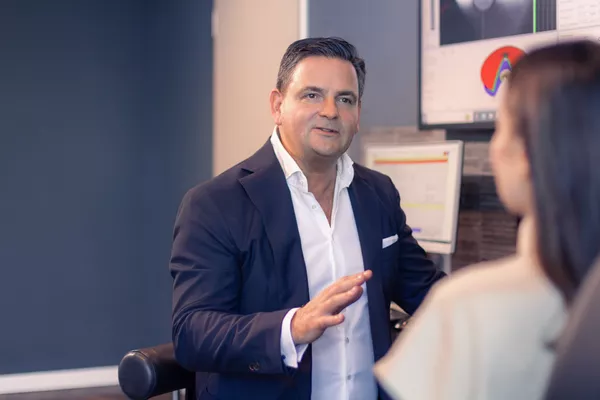
Dr. Detlev R.H. Breyer
We use modern laser procedures, such as Femto-LASIK with special ablation profiles, which restore sharp vision from near to far. Which procedure is right for you:
The innovative PresbyEDoF Femto-LASIK
Laser eye surgery using Presbyond, a variant of the over-the-glasses vision method
Gentle Presby laser eye surgery based on the principle of monovision
Schedule
an appointment for a no-obligation initial consultation

Can presbyopia also be treated with the nanolaser?
Unlike refractive corneal surgery, the nanolaser is used to break up the interior of the natural lens—as an alternative to phacoemulsification—so that the lens can then be removed and replaced with an artificial lens. This is known as refractive lens exchange (RLE) and is equivalent to early cataract surgery. It is therefore not a laser treatment of the cornea.
The Procedures
Laser Treatment for Presbyopia with PresbyEDoF Femto-LASIK
Eye laser surgery based on the PRESBY EDoF DUS formula is a combination of PRESBYOND (Zeiss) and PRESBYMAX (Schwind) developed by Focus-Top physician Dr. Detlev R.H. Breyer.
EDoF stands for “Extended Depth of Focus,” which means that an extended focus range or depth of field is created. Unlike with the lenses of the same name, this is achieved using an excimer laser that creates different ablation profiles for each eye: one for near and intermediate distances, and the other for far and intermediate distances. This creates a transition zone in which both eyes see clearly.
The goal of this method is to provide patients with presbyopia with vision that is as uniform as possible from far distances through intermediate distances to reading distances, regardless of whether they were previously farsighted or nearsighted and/or had astigmatism. In short, this is a laser vision correction procedure that frees patients from the need for both reading glasses and distance glasses. And it is completely painless during and after the treatment—
The procedure is performed using the Femto-LASIK method (recommended)—completed in just a few seconds for both eyes. Alternatively, TransPRK with SmartSurfACE technology is also available. For both procedures, we use the Schwind Amaris 1050RS excimer laser, currently the fastest excimer laser in the world. It features 7D eye tracking, which guarantees you the highest level of safety.
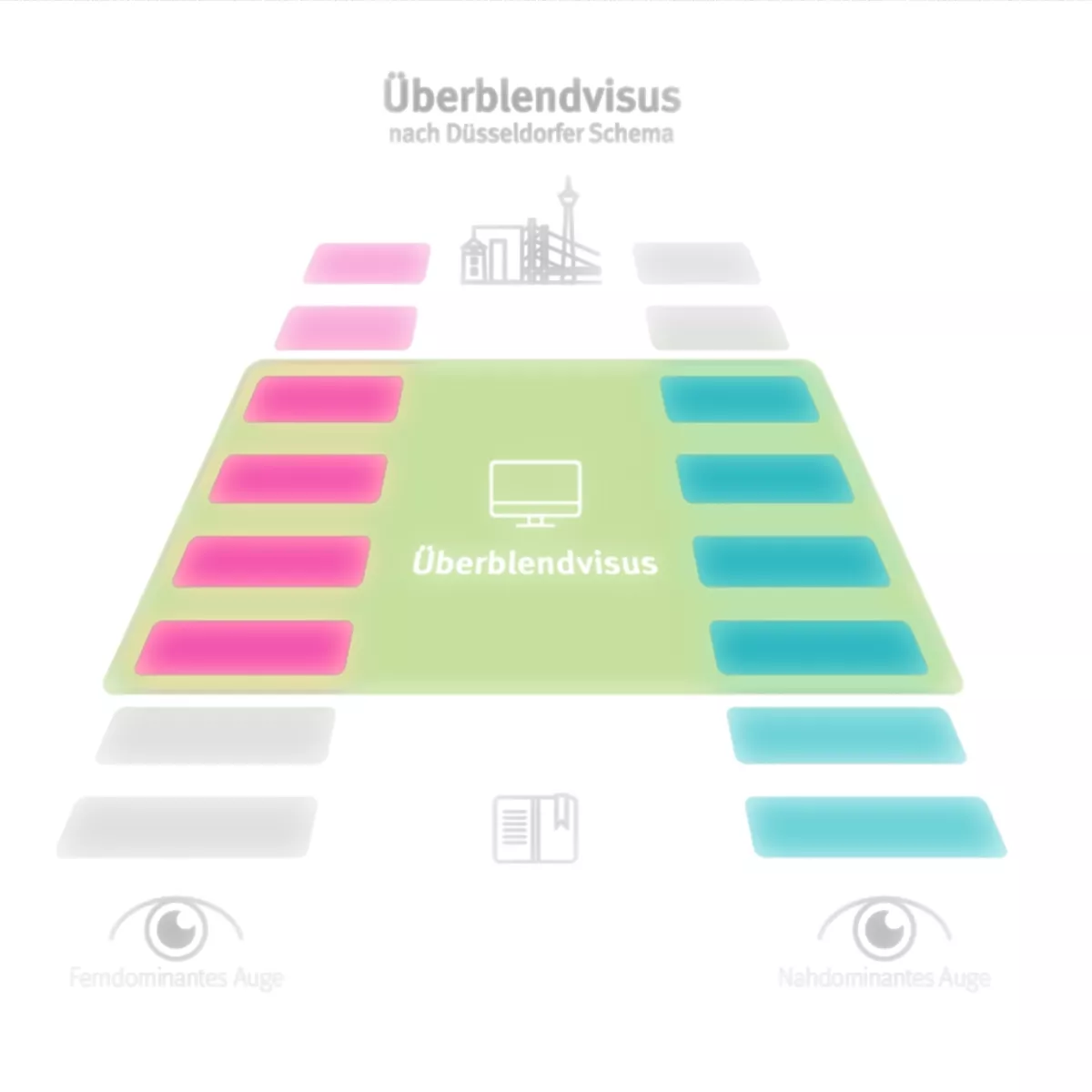
How does Presby EDOF laser eye surgery, or Presby-LASIK, work?
After having used the PRESBYOND procedure (ZEISS) for over 10 years, Dr. Breyer slightly modified the laser profiles developed by Schwind to induce anisometropia—a difference in refractive power between the eyes—corresponding to approximately 1.5 dpt. As a result, both eyes see clearly at different distances. With a difference of 1.5 dpt, there is—as with cross-eyed vision—a range in which both eyes see clearly, meaning binocular vision remains possible.
In addition, so-called spherical aberrations are induced to extend the depth of focus to approximately +1.5 dpt and further improve near vision.
We determine exactly which values to use based on your individual viewing habits.
Dr. Detlev R.H. Breyer
In June 2020, laser eye surgery specialist
Dr. Breyer underwent laser eye surgery himself
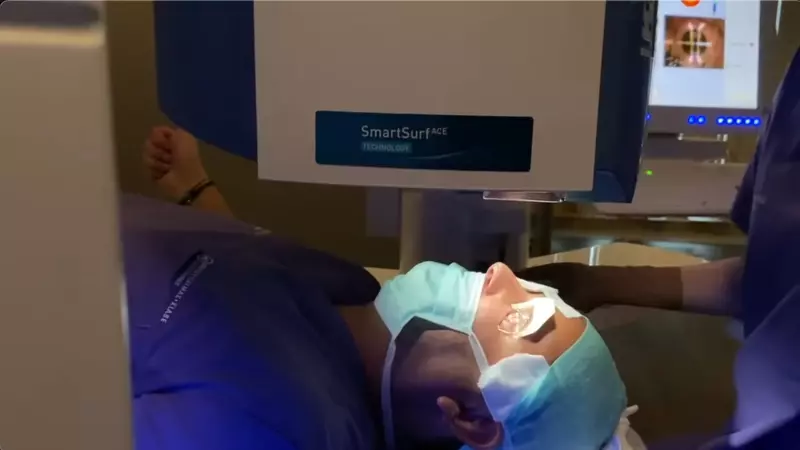
Eye surgeon Dr. Detlev R.H. Breyer (FWCRS), a Focus Top Physician for refractive surgery and cataracts, is one of the pioneers of laser eye surgery. In June 2020, at the age of 52, he underwent laser eye surgery on himself to correct his presbyopia.
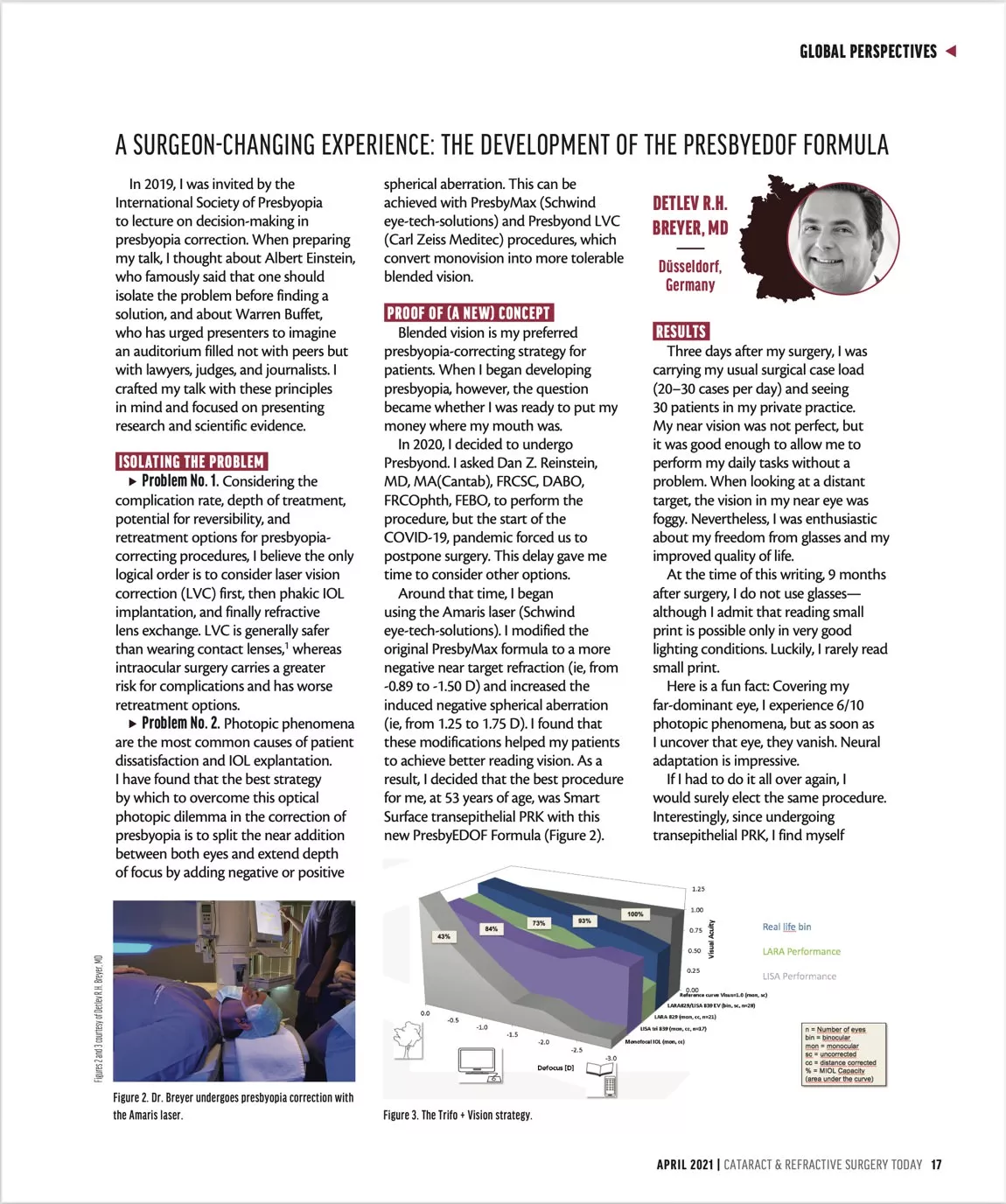
He opted for a mild correction of -1.5 dpt for his near-dominant eye, resulting in an extended depth of focus (EDoF). The distance-dominant eye remained untreated. For binocular vision, this results in a type of cross-fusion visual acuity according to the Düsseldorf scheme, which he called the PresbyEDoF DUS formula. He chose the TransPRK procedure with SmartSurfACE technology from Schwind. You can read more about his surgery in our blog post.
Benefits of PresbyEDoF Femto-LASIK
Combined Correction of Presbyopia with Nearsightedness or Farsightedness and Astigmatism
Painless, fast, and gentle
Maximum safety thanks to the 7D eye tracking of the Schwind Amaris 1050RS excimer laser, and safer than long-term contact lens wear 1
More comfortable and more cost-effective in the medium term than progressive lenses, prescription sunglasses, and contact lenses
Schedule an appointment for a
free initial consultation.
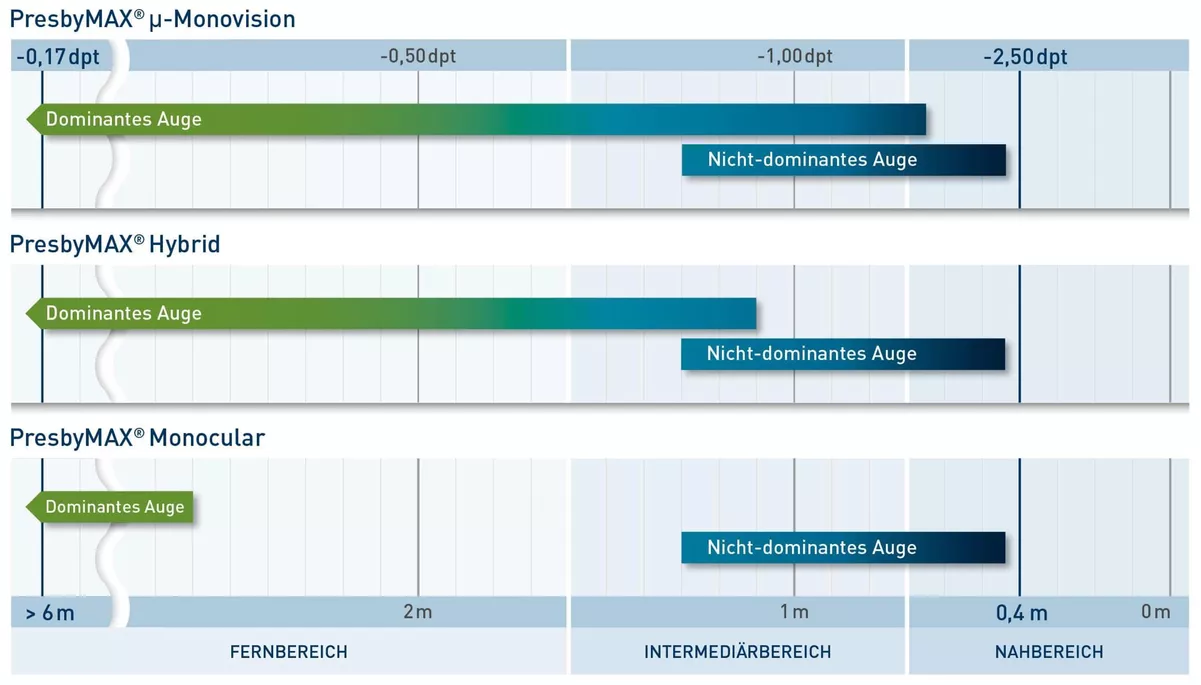
The PresbyMAX principle creates bi-aspheric, multifocal ablation profiles in both eyes. This is achieved by optimizing each eye for near vision in the central area and for distance vision in the outer (peripheral) area. As a result, after a certain adjustment period, good binocular vision is possible at all distances.
The Procedures
Gentle Laser Eye Surgery Based on the Monovision Principle
As an alternative treatment for presbyopia, we offer the gentle Presby laser eye surgery using the SMILE procedure upon request. In this procedure, one eye is optimized for clear near vision and the other for distance vision, based on the principle of monovision. This achieves good visual quality at near distances—up to computer viewing distance—and at a distance. Only at intermediate distances do both eyes see slightly out of focus. This makes it more difficult for the brain to fuse the two images, and the adjustment period takes longer. This visual experience is not suitable for everyone; for this reason, we will discuss with you beforehand to determine whether you are a suitable candidate for this procedure.
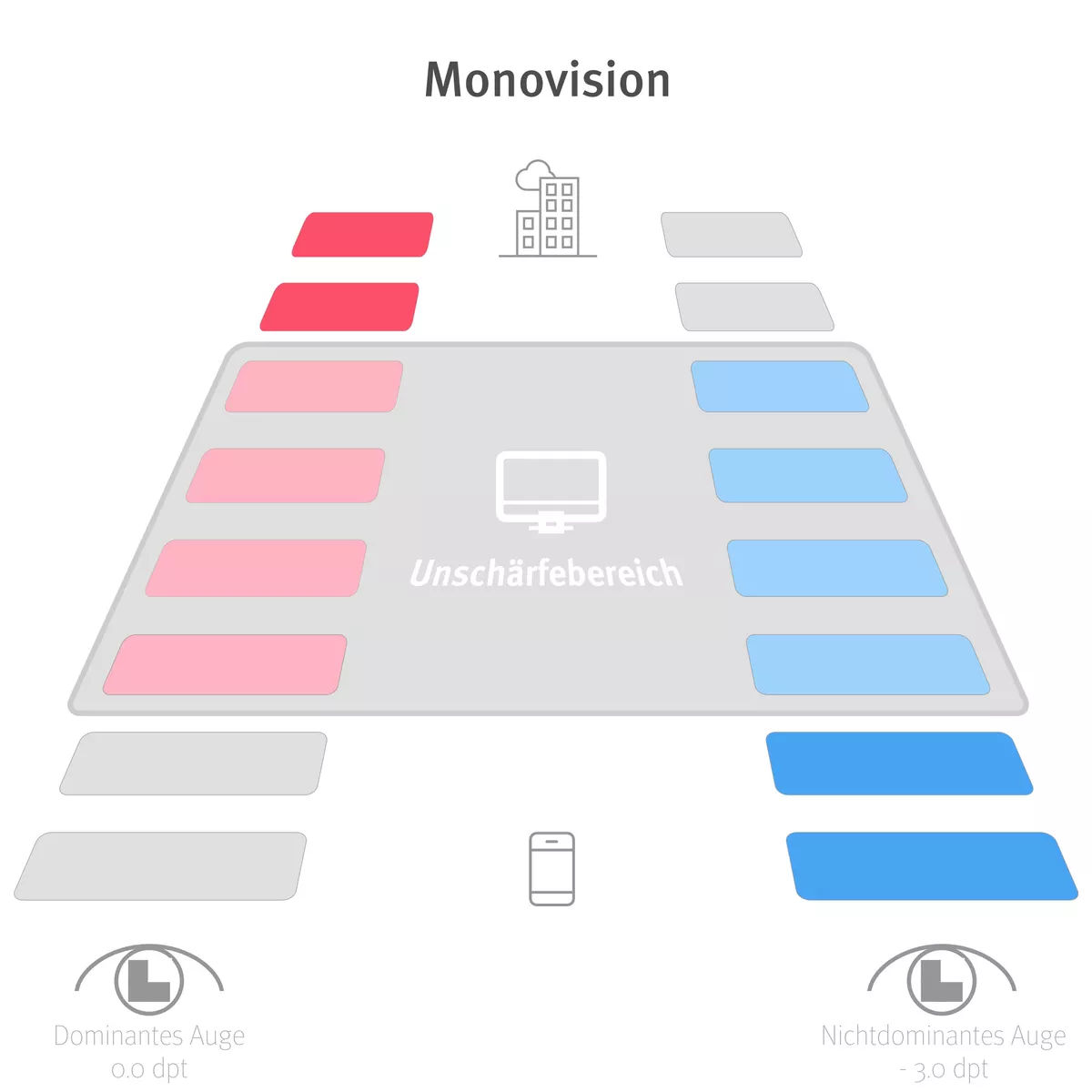
This laser eye surgery procedure was developed in 2005 by Prof. Dan Reinstein and adopted by Zeiss as an ablation profile for the MEL 80 and MEL 90 excimer lasers. With Presbyond Laser-Blended Vision, or blended vision, one eye is adjusted to 0.0 dpt for distance vision, and the other eye is slightly undercorrected to -1.5 dpt for near vision. In addition, a special ablation profile for both eyes increases spherical aberrations, resulting in a greater depth of field without compromising contrast sensitivity. The combination of slight undercorrection and increased depth of field enables good vision at near, far, and intermediate distances. Glasses are generally needed only for reading fine print. Since the two eyes differ by only 1.5 dpt, an overlap zone also develops at intermediate distances. After an adjustment period of approximately one to three months, patients generally tolerate the overlap visual acuity very well.
Since the introduction of the new Schwind Amaris 1050RS excimer laser—currently one of the fastest excimer lasers in the world—Dr. Breyer no longer uses this ablation profile.
In 2010, Dr. Breyer was among the top 10 pioneers worldwide to perform Presbyond laser eye surgery for presbyopia.
Comparison of Methods
Laser Eye Surgery for People 45 and Older: What the Different Procedures Can Achieve
| Presby-EDoF | Presbyond | PresbyMax | Monovision | |
|---|---|---|---|---|
| Fine Print | ||||
| Book | ||||
| PC Distance | ||||
| Distance | ||||
| Adjustment period in months | 1–3 | 1–3 | 1–3 | 3–6 |
PresbyEDoF DUS Formula: Even after age 55, most people can read a newspaper or a book without reading glasses or progressive lenses following this laser eye surgery; they generally only need reading glasses for small print.
Presbyond / PresbyMax: Even after age 55, most people can read a newspaper or a book without reading glasses or progressive lenses following one of these laser eye treatments; they only need reading glasses for small print.
Monovision: Up to age 50, most people can read a newspaper or a book without glasses after monovision treatment; they generally need reading glasses for small print starting at age 45. After age 50, they also need them to read a book or a newspaper. They do not need glasses for computer work or when looking into the distance.
The treatment of presbyopia using laser eye surgery is a specialty of Focus-Top physician Dr. Detlev R.H. Breyer (FWCRS). He and his team are experts in all modern corrective procedures and are not limited in their choice of the best method for you.
We provide personalized advice based on a thorough preliminary examination using state-of-the-art diagnostic tools, your visual habits, and your preferences. If, for medical reasons, we cannot perform laser eye surgery on your eyes, we also perform lens surgery procedures specifically tailored to correct presbyopia.


Frequently Asked Questions
Can youthful vision be permanently restored with laser treatment?
If you’re looking for a permanent solution and want to be free from the need for distance glasses, reading glasses, or progressive lenses, then laser eye surgery might be an option for you. However, you should be aware that youthful vision is only possible with the natural lens of the eye, because it can seamlessly focus (accommodate) on different distances. No corrective procedure available today can address the root cause of presbyopia to restore your youthful vision—neither laser treatment nor lens replacement.
Correcting presbyopia always involves distributing light and therefore entails certain compromises.
Dr. Detlev R.H. Breyer
Of course, all surgeries performed to eliminate the need for reading glasses generally improve near vision or vision at multiple distances. Each method has its advantages and disadvantages and always involves a compromise compared to the vision one had in youth. However, compared to the limitations of living with reading glasses, progressive lenses, or multifocal contact lenses, these laser eye surgeries represent a tremendous improvement in quality of life for the vast majority of the patients we treat. Let us advise you to find out which method is best suited to your individual needs.
Schedule an appointment for a
free initial consultation.
Frequently Asked Questions
Does laser eye surgery carry higher risks for people aged 50 and older?
Compared to the risks of lens implantation, laser eye surgery carries fewer risks. Even wearing contact lenses for years carries a higher risk of infection than laser eye surgery.1
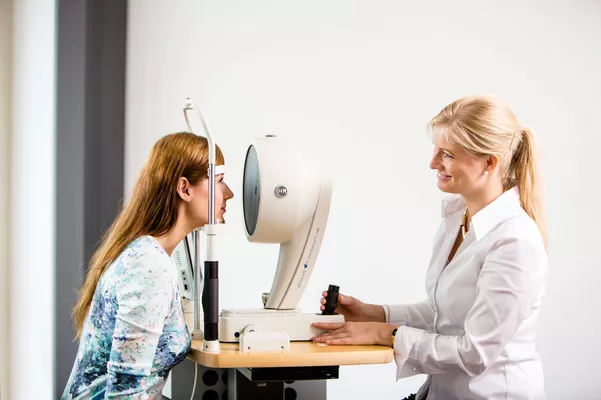
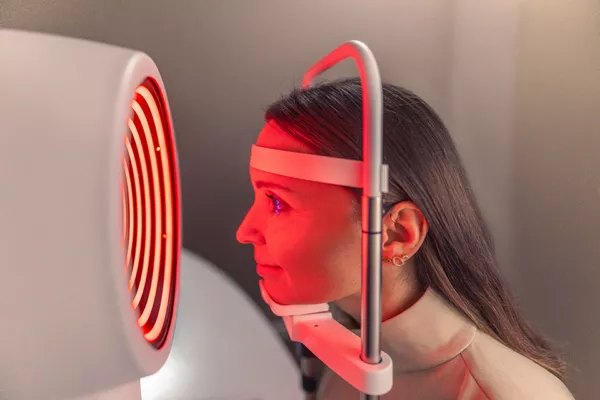
Good to know: At Premium Eyes, we examine your eyes before laser eye surgery using the latest technology, including the Anterion, a swept-source OCT that analyzes the cornea with great precision: its shape, thickness, and optical properties. This supports a reliable diagnosis and monitoring of conditions such as keratoconus. We also examine the back of the eye—including the retina, the center of the retina (macula), the optic nerve, and the peripheral retina—to rule out any pre-existing conditions and risks.
In addition, we’ll ask you a few questions about conditions that would preclude laser eye surgery. This provides reassurance for both you and us. Last but not least, we’ll also discuss your expectations regarding your future visual outcome. Learn more about the thorough preoperative examination before laser eye surgery.
The Next Steps
Procedure, Quick Check, and Thorough Preliminary Examination
In this professional article, published in April 2021 in the Journal of Cataract & Refractive Surgery Today Europe, Dr. Breyer discusses the criteria he considers when selecting a surgical method for treating presbyopia. He describes why he developed the procedure based on the PresbyEDOF-DUS protocol. Nine months after the treatment, he reports: “I don’t wear glasses, although I have to admit that reading small print is only possible in very good lighting conditions. Fortunately, I rarely read small print. Here’s a fun fact: When I cover my distance-dominant eye, I see 6/10 photopic phenomena, but as soon as I use both eyes, they disappear. The neural adaptation is impressive!”
The Alternative to Presby-EDoF with Lenses: The Düsseldorf Protocol
Dr. Breyer applied the principle of cross-fusion visual acuity with extended depth of focus to intraocular lens implantation. In honor of our city, we named this procedure the “Düsseldorf Method.” The Düsseldorf Scheme for cross-fusion visual acuity, used for the individualized correction of refractive errors and presbyopia, was awarded an innovation prize in 2016 at the world’s largest congress for cataract and refractive surgery (ESCRS in Copenhagen).

Book an appointment now
If you’re interested in achieving the best possible vision without (reading) glasses, please feel free to schedule an appointment for a free quick checkup or a thorough preliminary examination with Dr. Breyer. You can do so by phone, email, or online via doctolib.de. We’d also be happy to call you back. We look forward to hearing from you.
Preventive Treatment for Dry Eye
Dry eye is one of the most common eye problems that can impair vision. That is why we examine your eyes for signs of dry eye before every treatment and provide preventive care to alleviate symptoms after surgery. The effectiveness of this approach has been scientifically proven.

Patient Experiences

Frequently Asked Questions
-
If the best eye surgeon, after a thorough eye exam, provides you with the method or lens that’s exactly right for you, you’ll be virtually glasses-free. The key word here is “almost.” You may, for example, need glasses for those rare moments—such as when driving at night, reading fine print, or playing a musical instrument—to see perfectly at the required distance.
-
Unfortunately, this is not possible; the best we can achieve is minimal dependence on glasses. And even that is only possible if you are a suitable candidate for such refractive surgery. This includes both laser eye surgery and intraocular lens procedures. To determine whether you’re a candidate and, if so, for which procedure, we conduct thorough preliminary examinations. During this process, you’ll undergo a comprehensive examination lasting 3 to 4 hours using only the latest equipment, after which—following a detailed consultation—we’ll decide whether it’s even possible to perform the surgery on you correctly. We will only perform surgery on you if it meets current scientific standards. That is why, among other things, we attend conferences around the world 10–12 times a year to teach and learn on your behalf.
-
No problem. Our Focus Top Physician, Dr. Breyer, underwent laser surgery himself to correct presbyopia using (mini) monovision (PresbyEDOF—the Düsseldorf method) and hasn’t worn glasses since.
-
At Premium Eyes, we leave the decision up to the patient after providing a detailed explanation of the pros and cons. We don't pressure anyone. However, 99.9 percent of patients opt for simultaneous surgery.
-
Laser eye surgery is definitely worth it! These days, hardly anyone with presbyopia can get by with just reading glasses. That’s because they’re really only suitable for a reading distance of 30–40 cm. When using a computer, you’ll usually need computer glasses that allow you to see clearly at a distance of 60–80 cm—depending on your personal preference. And it’s a good idea to have at least one spare pair of glasses. On top of that, in everyday life you’ll need progressive lenses and perhaps also sunglasses with progressive lenses. We’ve calculated exactly how much all of this costs compared to laser eye surgery. Compare the costs of laser eye surgery versus glasses and contact lenses.
-
The nanolaser is used to break up the interior of the natural lens—as an alternative to phacoemulsification—so that the lens can then be removed and replaced with an artificial lens. This is known as refractive lens exchange (RLE). This procedure is similar to early cataract surgery; it is more invasive than the refractive corneal laser surgery described above and therefore carries higher risks, especially for people with severe nearsightedness. This is because the eyeball is longer in nearsighted people and the structures of the posterior pole of the eye are thinned—the higher the myopia, the longer the eyeball. Your risk of retinal detachment following a (refractive) lens exchange is therefore higher.2 We therefore recommend lens replacement only once your natural lens has already shown signs of mild clouding.
For this procedure, we use the latest femtosecond laser for cataract surgery, the Lensar ALLY. Learn more about laser lens exchange with the femtosecond laser.
Specialized presentations by Dr. Breyer on presbyopia correction

Costs
Our Fair Prices
The cost of your laser eye surgery depends on which laser method you prefer. You can choose from three laser procedures; TransPRK and Femto-LASIK are suitable for all the ablation profiles described above, while the SMILE method is only an option for monovision in cases of presbyopia.
Presbyopia Correction with Customized Wavefront-Guided Femto-LASIK
Includes an initial consultation and examination, a preliminary examination, laser treatment by Dr. Breyer, and all necessary follow-up visits.
Presbyopia Correction with Customized Wavefront-Guided TransPRK SmartSurfACE
Includes an initial consultation and examination, a preliminary examination, laser treatment by Dr. Breyer, and all necessary follow-up visits.
Wavefront-Optimized SMILE® Pro Laser Eye Surgery
Includes an initial consultation and examination, a preoperative examination, laser treatment to correct myopia performed by Dr. Breyer, and a follow-up visit the day after surgery.
* The fees for our laser and lens treatments are based on the German Scale of Medical Fees (GOÄ). To help you plan better, we’ve compiled some examples of the estimated prices for a few service packages here. We’d be happy to discuss which treatment is right for you and the approximate costs you can expect after an initial examination.
** Monthly costs based on a 24-month term with no down payment.
By the way: Under certain circumstances, the costs of laser eye treatments may be tax-deductible as an extraordinary expense under Section 33 of the Income Tax Act (EStG) without the need to submit a medical certificate from a public health officer.
References
Further Reading
of Presbyopia: Beckers, L., Breyer, DRH. In: Der Augenspiegel, October 2020, 24–26 pdf, 1.46 MB ›
Breyer DR, Beckers L, Breyer, Kaymak & Klabe, “Eye Surgery,” in: Ophthalmological News 05 20, Special Issue on Refractive Surgery. pdf, 171.1 KB ›