
Laser Eye Surgery
Safe Laser Eye Surgery for Police Officers
Are you planning a career in law enforcement and considering laser eye surgery so you won’t have to wear glasses? If your vision meets the criteria outlined in Police Service Regulation 300, it’s worth considering laser eye surgery. We’ve already successfully performed laser eye surgery on hundreds of police officers and aspiring police officers, and we’d be happy to help you as well. Schedule an appointment for a free, no-obligation initial consultation.

Which laser eye surgery procedure is best for police officers?
Safety is not only a top priority for the police; it is also a top priority in medicine. Especially when it comes to laser eye surgery for police officers, the benefits and risks must be carefully weighed. That’s why we generally recommend SMILE pro because of its excellent safety profile, since it does not require a corneal flap. A corneal flap never reattaches as firmly as before and can detach or shift out of place—for example, due to an eye injury. If SMILE pro isn’t right for you, we’ll find an alternative—without a doubt.

Schedule an appointment
for a free initial consultation.
Here's how the SMILE laser eye surgery procedure works with the VISUMAX 800
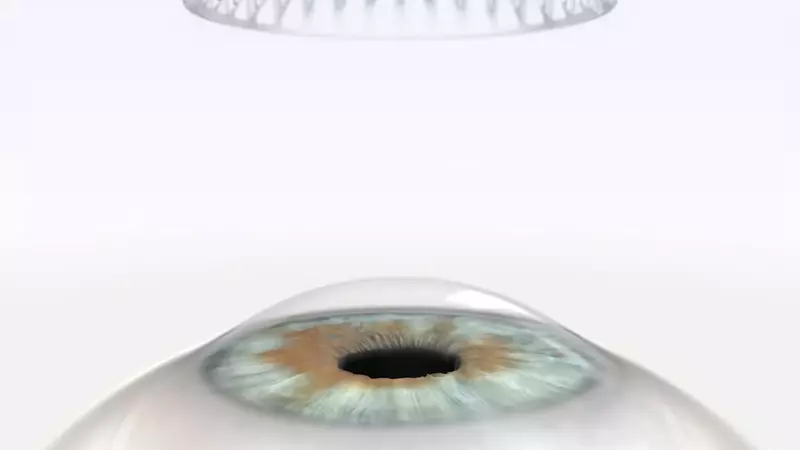
- Minimally invasive procedure without a flap
- Pain-free during and after surgery
- Laser procedure using the VISUMAX 800: approx. 10 seconds per eye
- Safer than Femto-LASIK
- Highly precise and gentle during surgery
- A femtosecond laser for the entire treatment
- Noiseless and odorless eye laser procedure
- Significantly fewer cases of dry eyes after surgery
- Particularly effective for those with contact lens intolerance
- You may remove makeup as early as the day after surgery
- No flap, so no flap-related risks; no tearing or shifting of the flap

Laser Eye Surgery and Police Vision Tests: What You Need to Know
-
Vision requirements are regulated nationwide by the uniform PDV 300 standard.
Without glasses, visual performance (uncorrected distance visual acuity) must be at least 50 percent in both eyes up to the age of 20, and 30 percent thereafter.
Uncorrected near visual acuity must be at least 0.3 in both eyes; with glasses or contact lenses, it must be at least 0.8.
The visual acuity of one eye must be at least 80 percent with glasses or contact lenses, even if that of the other eye is 100 percent.
If there is a visual impairment, an ophthalmologist’s medical report must be submitted.
-
Before undergoing laser eye surgery, you should determine whether you meet all the requirements for the police vision test. If you do not want to wear glasses while on duty, you should keep the following in mind when planning your laser eye surgery:
If you have undergone or are considering laser eye surgery, you must submit both your preoperative and current medical reports with your application.
There must be at least 6 months between the laser surgery and the time of your application.
For the ophthalmological examination required for the application process, you must submit a current ophthalmological report that is no older than 6 months.
Prior to refractive surgery, the preoperative baseline findings must not exceed the following values, depending on the procedure, in accordance with KRC recommendations (as of 5/2024):
Surface treatments (photorefractive keratectomy (PRK), trans-PRK, or LASEK): myopia correction up to -6 dpt and astigmatism correction up to 5 dpt.
Laser in situ keratomileusis (LASIK) and femto-LASIK: Myopia correction up to -8 dpt, astigmatism correction up to 5 dpt, and hyperopia correction up to +3 dpt.
Laser Lenticule Extraction (SMILE, CLEAR, SmartSight, etc.): Myopia correction from -1 to -8 dpt and astigmatism correction up to -5 dpt.
An assessment of the results can be made no earlier than 6 months after completion of treatment and provided there have been no complications.Source: Federal Police Information Sheet on Visual Acuity, accessed on July 2, 2025
-
Recruitment into the police force is not possible if one or more of the following criteria apply:
visual acuity (uncorrected distance visual acuity) in one eye is already less than 50 percent before the age of 20, or less than 30 percent after the age of 20
visual acuity, after correction (glasses/contact lenses), is less than 80 percent in one eye, even if visual acuity in the other eye is 100 percent
Uncorrected visual acuity (near vision) of less than 0.3 in both eyes, and corrected near visual acuity of less than 0.8 in both eyes
The difference in refractive error between the two eyes (anisometropia) exceeds +/- 2.5 diopters
The astigmatic component of a refractive error must not exceed +/-2.5 diopters
Spatial vision of more than 100 arcseconds
strabismus
orthokeratology devices are used
A color vision deficiency is present—tested according to Ishihara, Velhagen, or Panel D 15
Twilight visual acuity and glare sensitivity of less than 1:2.7
Color blindness and/or night blindness is present
Significant visual field restriction (scotomas, no clear outer boundaries), functional monocular vision due to exclusion
Source: Federal Police Information Sheet on Visual Acuity, accessed on July 2, 2025
Your Specialist in Laser Eye Surgery and Lens Procedures
Since 2013, Dr. Detlev R.H. Breyer (FWCRS) has been listed among Focus magazine’s top physicians for refractive surgery and cataract surgery; in February 2025, he also received this distinction for corneal disorders. In March 2022, he was included in the new stern list of leading physicians in refractive surgery.

Are you a good fit?
Alternative Laser Methods


Do you think it's possible to have a career in law enforcement without wearing glasses?
If you’d like to kick-start your career in law enforcement without glasses or contact lenses, book an appointment now for a no-obligation initial consultation with a quick eye exam by Focus-Top physician Dr. Detlev R.H. Breyer. By phone or online.