Laser Eye Surgery
Goethe's Perspective on Presbyopia – The Principle of Monovision
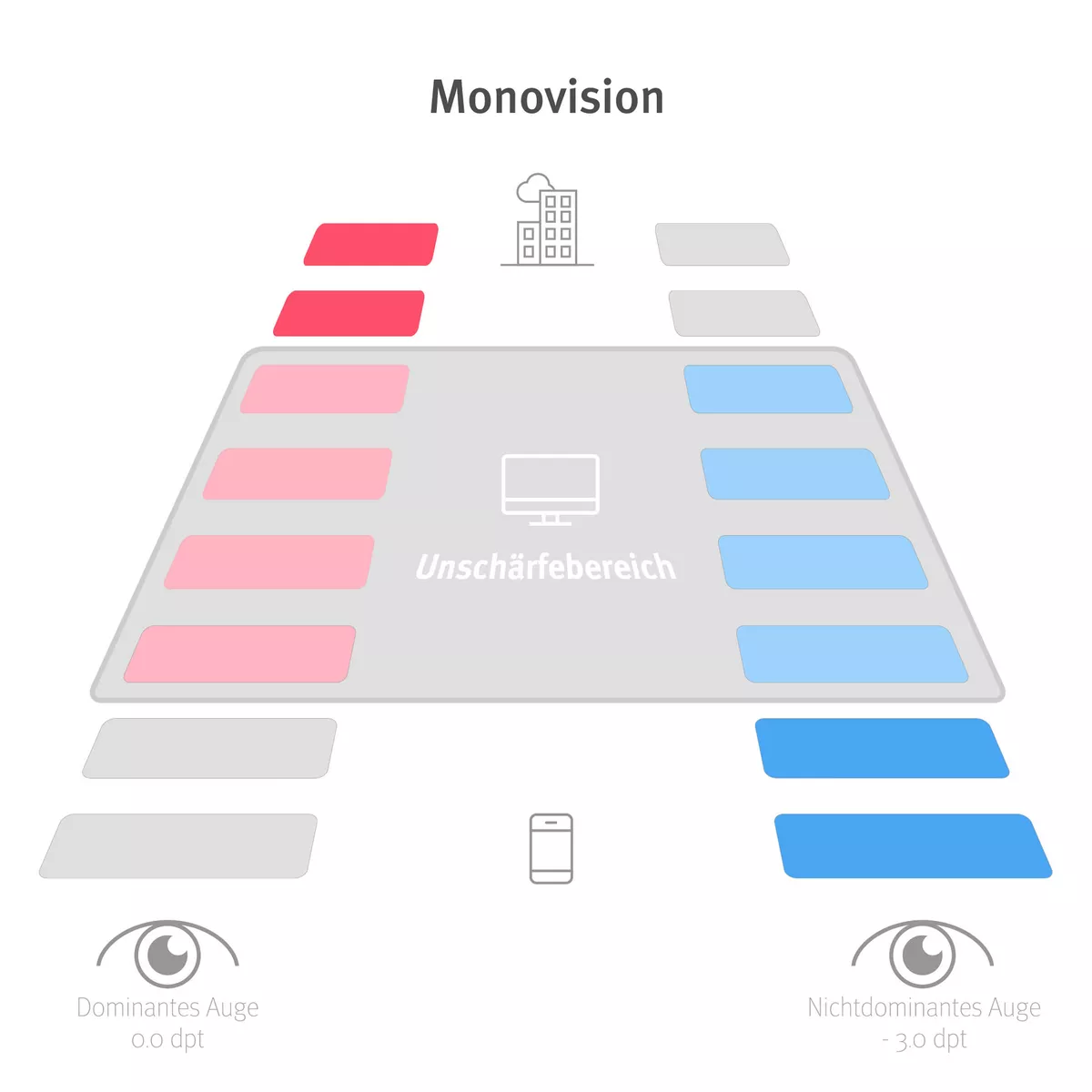
To compensate for the natural lens’s declining ability to accommodate with age and to enable sharp vision at both near and far distances, monovision treatment can be performed for presbyopia. However, this is not suitable for everyone.
In monovision treatment, also known as “Goethe vision,” one eye is optimized for distance vision and the other for near vision. We perform this treatment using the state-of-the-art SMILE® Pro laser eye surgery procedure. We have had better results with the overlap vision approach, in which both eyes see clearly at intermediate distances.
Schedule an appointment
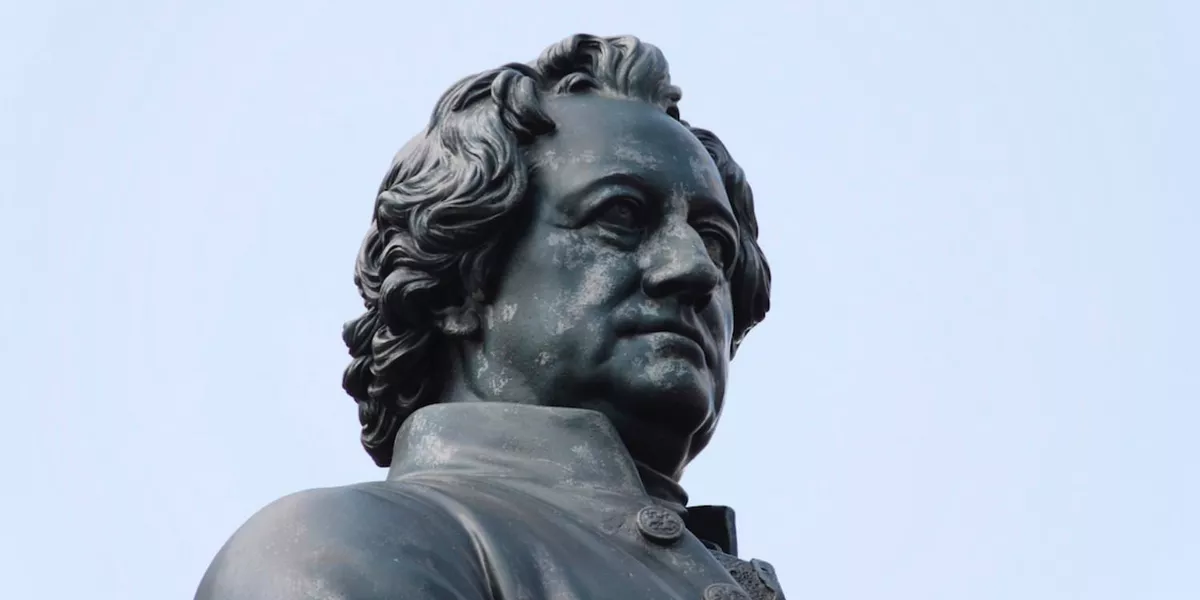
Goethe was born with this unique way of seeing the world, which is why monovision is also called “Goethe vision.” If it is created surgically later in life, when presbyopia begins to set in, the brain may no longer be able to properly fuse the different visual information from both eyes. In this case, depth perception is impaired. About 60% of patients cope well with the difference between the two eyes in daily life, while 40% have problems with it. However, if necessary, both eyes can be realigned later through a follow-up correction.
We can perform monovision using an innovative, minimally invasive laser eye surgery. Alternatively, monovision can also be achieved by implanting lenses into the eye. Whether monovision is suitable for you can only be determined after a preliminary eye examination. You can read more about laser eye surgery in the SMILE® Pro section.



Laser Eye Surgery
Thorough preliminary examinations for greater safety and better vision
Before laser eye surgery, we set aside 3 to 4 hours for your preoperative examination to minimize risks.
State-of-the-art diagnostics of the anterior segment
Examination of the posterior segment of the eye
Calculation of visual acuity using technology from various manufacturers