
Keratoconus
Personalized UV Riboflavin Crosslinking (CXL) for Keratoconus
Riboflavin-UVA cross-linking, or CXL for short, increases the number of chemical cross-links between the fibers of the corneal tissue in order to stabilize it. This cross-linking of the cornea is achieved through a combination of ultraviolet A (UVA) irradiation and the administration of riboflavin eye drops, a derivative of vitamin B2. Based on the latest findings, we adjust the irradiation time and intensity to your individual corneal thickness and, if necessary, follow the “sub400 protocol.” This approach allows CXL treatment even for thinner corneas.

Crosslinking Plus Excimer Laser Treatment
To improve your visual quality, we perform wavefront-guided TransPRK prior to CXL treatment to smooth out your cornea. Unlike conventional TransPRK, this procedure removes only so-called higher-order aberrations (HOA).
Can cross-linking cure keratoconus?
UV riboflavin cross-linking effectively “freezes” the corneal bulge characteristic of keratoconus, but does not reverse it. That is why early treatment is important for maintaining visual quality in patients with keratoconus.
UV Riboflavin Crosslinking with the CCL Vario
We perform UV cross-linking on an outpatient basis. After administering a local anesthetic via eye drops, we carefully remove the protective layer of the cornea—the epithelium—since the large molecules of riboflavin (vitamin B2 eye drops) cannot penetrate the epithelium. (Epi-off procedure).
We then apply riboflavin to the cornea several times until it is well saturated. Afterward, we expose the cornea to UVA light with a wavelength of 365 nanometers. The treatment regimen is based on individual criteria.
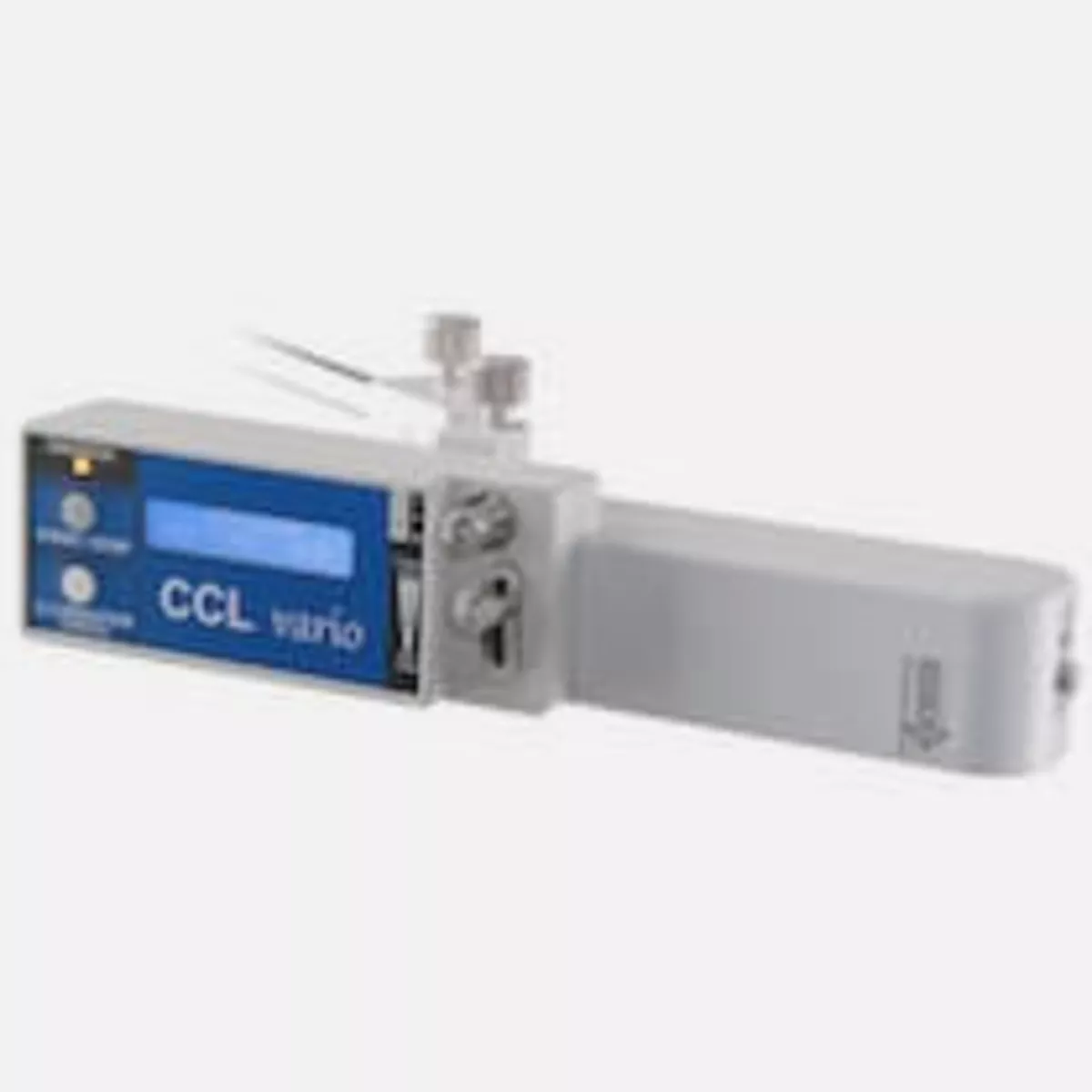
We adjust the duration of the laser treatment based on your individual corneal thickness to protect the corneal endothelium.
The intensity is selected so that the radiation does not reach the eye structures located beneath the cornea.
We also take your age and the progression rate of your condition into account when determining the treatment intensity.
If your corneal thickness is less than 400 μm, we perform the treatment according to the sub400 protocol, which is correspondingly gentler.
After the procedure, a bandage contact lens is placed on the cornea; it remains on the eye for a few days until the epithelium has regenerated. Only then is it removed during a follow-up visit.
As an alternative, we offer cross-linking via iontophoresis, or I-CXL for short.

Femtosecond Laser-Assisted UV Riboflavin Crosslinking
At the 2018 annual meeting of the American Academy of Ophthalmology in Chicago, Illinois, a research group led by Lional Raj and Daniel Raj Ponniah presented a new cross-linking procedure using a femtosecond laser. At the meeting of the American Society of Cataract and Refractive Surgery, this treatment approach was honored as the best poster in the poster exhibition.
Unlike conventional epithelial ablation, the researchers used the femtosecond laser to create a sort of corneal pocket with two access points. A riboflavin solution was introduced into the pocket through these access points. In addition, drops were instilled from above through the epithelium. They then exposed the eye to UVA light for 20 minutes. Finally, the corneal pocket was rinsed with a saline solution.
The results showed that instilling the solution into the corneal stroma at a depth of 140 to 160 µ (microns) achieves more effective tissue stabilization than treatment directly beneath the epithelium. That is why we also offer you this gentler and less painful procedure.
Schedule a diagnostic and consultation appointment.
Your Preparation and Follow-up
Your IV schedule for preparation and follow-up care after the procedure
Before the crosslinking procedure, we will provide you with a medication schedule and a prescription for medications (eye drops or eye ointments). Please read the schedule carefully and use the medications exactly as described in the schedule: Some medications must be used before the surgery, while others must be used afterward. If you are instructed to use different medications, please always wait at least 15 minutes before applying the next one. By using the medications correctly, you support the healing process and reduce the risk of infection. If you have any questions, please feel free to contact us at any time. You can also download the medication schedule here.
Dosing Schedule for Download ( 290.66 KB )

During the first six to eight weeks, you may experience persistent itching, stinging, and burning, which can be relieved by artificial tears—you may use them as often as needed. Your vision may also be blurrier than before during this period, and you may experience increased glare from bright lights. All of this is part of the normal healing process: After this phase and once the postoperative symptoms have subsided, our keratoconus patients have the same or better visual acuity than they did before the surgery.


Schedule an appointment
Do you have questions about keratoconus, or would you like to schedule an exam or consultation? If so, please feel free to schedule an appointment—by phone, email, WhatsApp, or online here on our website. We’d also be happy to call you back. We look forward to hearing from you.