
Lens Method
Preliminary Evaluation: Are You a Good Candidate for Refractive Lens Implantation?
Would you like to be free from your contact lenses or (reading) glasses? Then you’ve come to the right place. Our eye surgeons are internationally recognized pioneers in the field of laser and lens surgery and perform approximately 2,500 refractive surgeries annually, including the implantation of contact lenses (EVO ICL) or premium lenses through a micro-incision—using a femtosecond laser if desired. We’d be happy to assess whether you’re a suitable candidate.
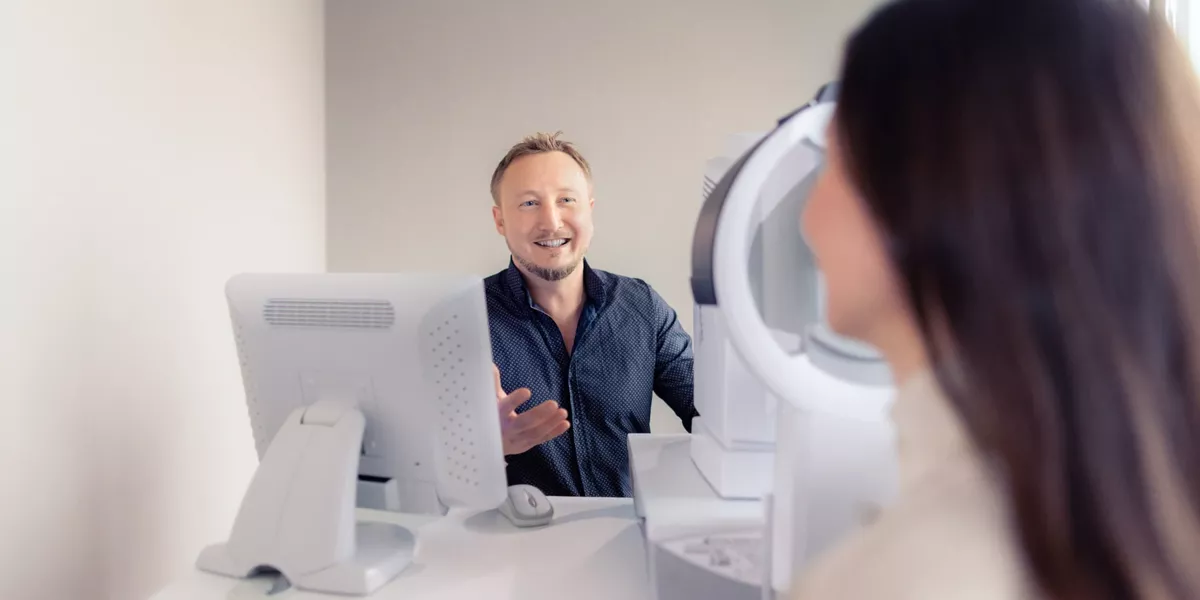
To achieve the highest precision and best visual quality following your refractive lens surgery, we always use more equipment than is strictly necessary. We use diagnostic technology from various manufacturers to obtain a more accurate calculation of refractive errors. Along with the surgery itself, both of these factors contribute significantly to the success of the treatment. By the way, thanks to the new vision simulator, you can test the result even before the surgery.
Preoperative Evaluations Before Refractive Lens Surgery
High-Tech Diagnostics:
The Vision Simulator (Voptica)
Pentacam® HR Version (Oculus)
Sirius+ and Peramis (Schwind)
IOLMaster 700 (Carl Zeiss Meditec)
Anterion (Heidelberg)
Daytona Retinal Scanner (Optos)
Personal Consultation
Why is a thorough preliminary examination so important?
We know from experience: The more precise the preoperative examination, the better the surgical and visual outcomes. We use preoperative examinations not only to determine whether you are a suitable candidate for refractive surgery, but also to plan your surgery precisely. This is especially true for the correction of refractive errors or presbyopia in combination with astigmatism. Here, the IOLMaster 700 offers outstanding measurement accuracy and the ability to feed the results directly into the LENSAR-ALLY laser—a milestone in lens surgery.
Preparation
How to Prepare for Your Exams
Please note the following before coming in for your pre-examination:
Stop wearing contact lenses two to three weeks before the comprehensive pre-examination.
Please allow a total of 3 to 4 hours for all examinations and the consultation.
Do not drive yourself to our office; have someone accompany you or pick you up, as you will not be allowed to drive for several hours afterward. This is because we will dilate your pupils and use special eye drops to inhibit accommodation in order to accurately measure your visual acuity. As a result, your vision will be blurry until the effects have worn off.
Important: Neither a thorough preoperative examination nor laser eye surgery is possible during pregnancy or while breastfeeding. Please feel free to visit us at a later time.
Pentacam® HR
The Preliminary Examination with the Pentacam® HR
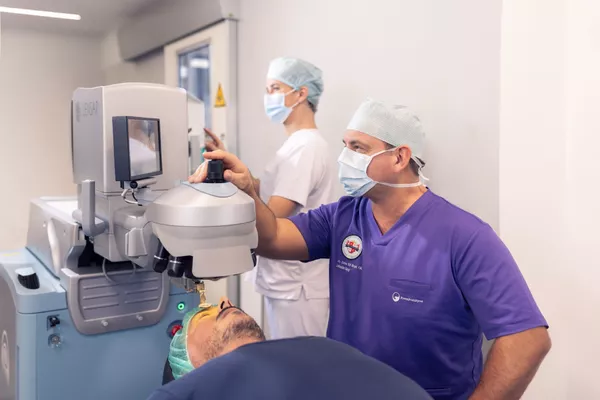
The Pentacam® HR is an automatically rotating camera that measures the anterior segment of the eye. In just under 2 seconds, it analyzes the cornea and provides a 3D analysis of the anterior chamber. During this process, it measures the depth of the anterior chamber and the angle of the anterior chamber. These measurements are important for planning the implantation of a contact lens into the eye and for ruling out risks. The Pentacam also generates a corneal topography, measures corneal thickness, and performs a cataract analysis.
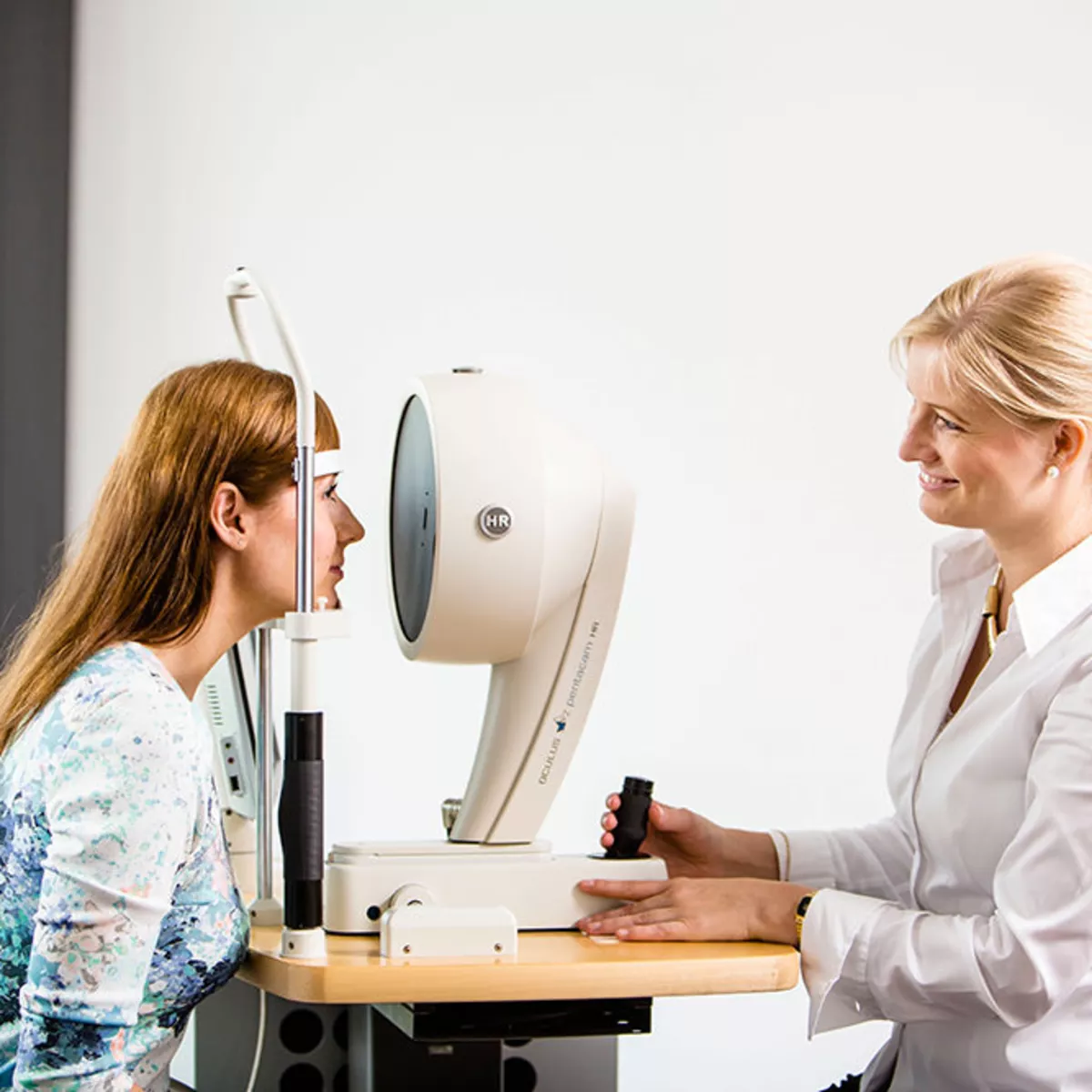
Think of these examinations as an investment in surgical safety and your future vision: The more accurately your refractive error is determined and your eye is measured beforehand, the better the outcome of your lens surgery will be.
Dr. Detlev R.H. Breyer
Sirius+ and Peramis
Examinations Using the Sirius+ and Peramis Diagnostic Systems
With the Peramis (Schwind), we obtain a comprehensive analysis of corneal and ocular wavefront data (aberrometry) using a high-resolution aberrometer that measures up to 45,000 data points.
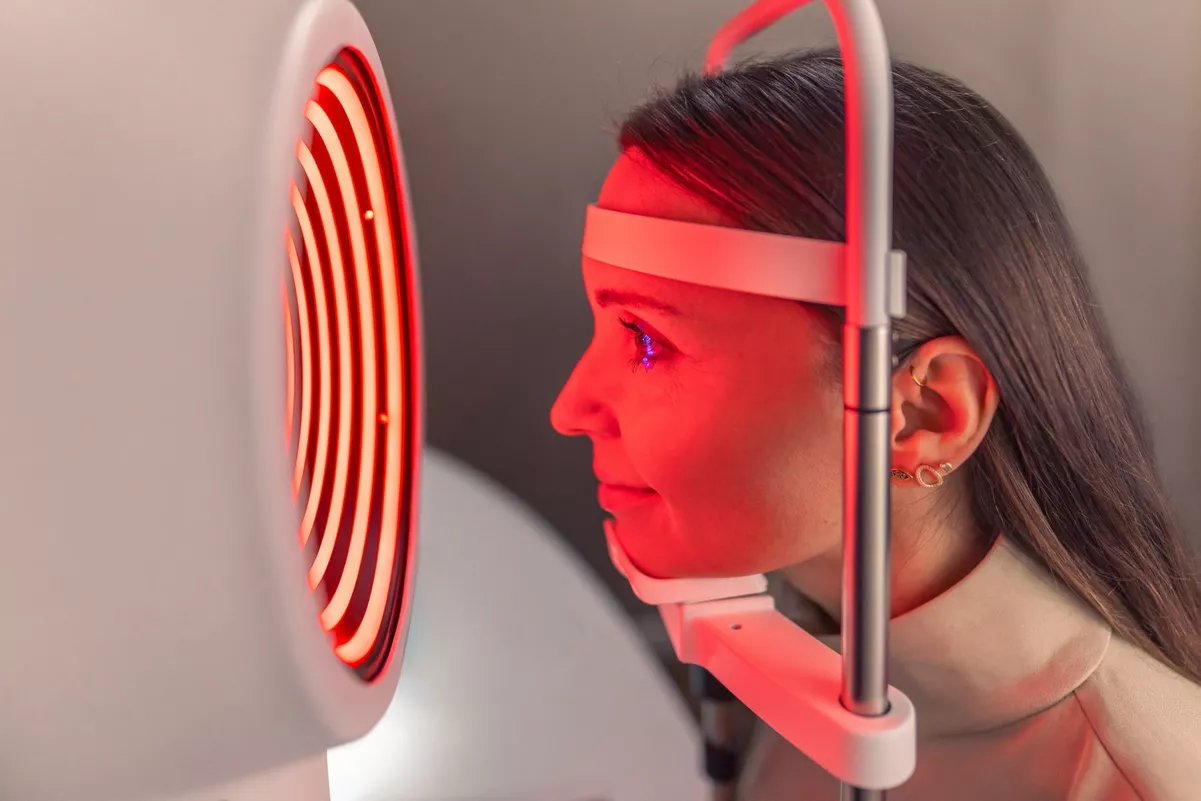
The Sirius+ diagnostic system (Schwind) combines a 3D Scheimpflug camera with high-resolution Placido topography. It provides precise information on the entire anterior segment of the eye, including a pachymetry map of the eye with data on corneal thickness. In addition, it measures the refractive power of the cornea and provides a detailed overview of the cornea, including corneal aberrations. Both the anterior and posterior corneal surfaces are measured. This data also helps us accurately calculate the lens (ICL or IOL).
IOLMaster 700
The IOLMaster 700 for the precise calculation of the lens (ICL or IOL)
The IOLMaster® 700 (ZEISS), featuring swept-source OCT technology, scans both eyes in less than 45 seconds. Swept-source biometry, with 2,000 scans and a wavelength of 1,055 nm, allows for the measurement of the entire eye along the optical axis. It provides us with precise data on axial length, anterior chamber depth, lens thickness, central corneal thickness, as well as the posterior chamber all the way to the retinal pigment epithelium.
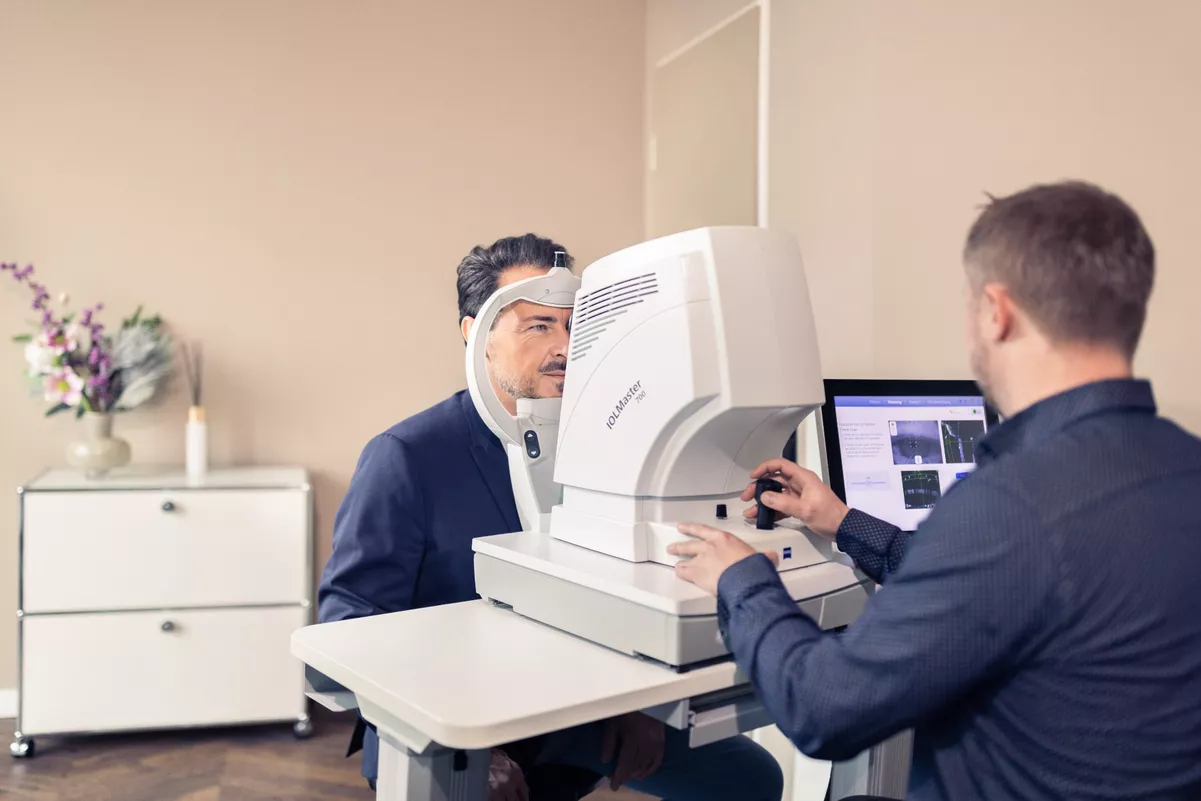
The IOL Master 700 measures both the anterior surface of the cornea and the curvature of the posterior surface. This so-called “total keratometry” combines the measurement of corneal thickness (corneal pachymetry) with data from the anterior and posterior surfaces of the cornea. This enables the direct measurement and accurate prediction of astigmatism on the posterior surface of the cornea, as well as the refractive power and curvature of irregular posterior corneal surfaces, thereby improving the calculation of the toric IOL/ICL power. This is particularly important if you have already undergone laser eye surgery and now want or need premium lenses.
For patients with astigmatism that is to be corrected using a special (toric) lens, a reference image of the eye is captured as part of the keratometry measurement. This image can then be transmitted digitally along with the keratometry data. During the procedure, the image is aligned with the live image. All necessary data is projected into the eyepiece of the ZEISS surgical microscopes. This means that neither preoperative corneal marking nor additional measurements for aligning toric lenses are required.
Anterion
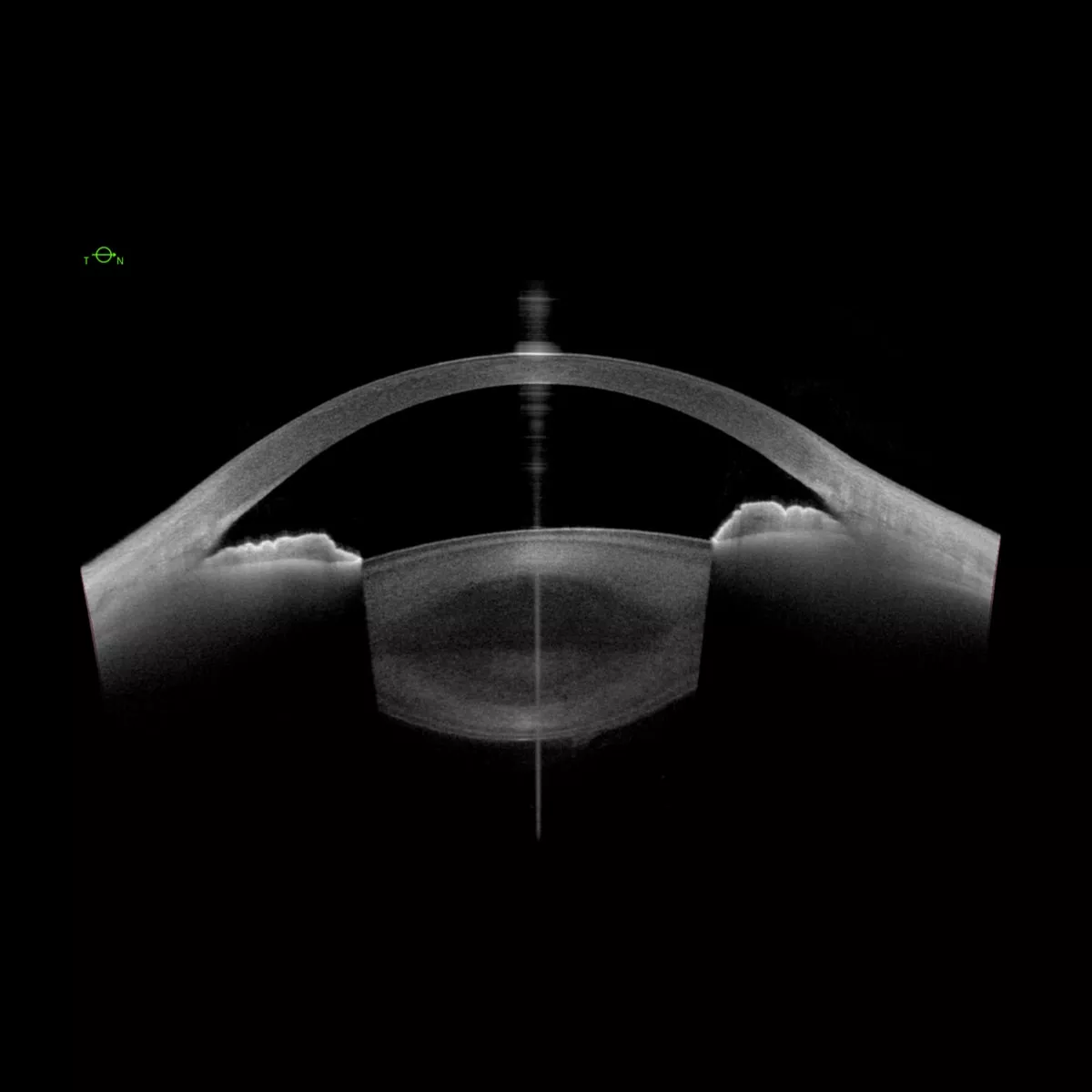
Anterior segment OCT using the Anterion
Using the ANTERION® (Heidelberg Engineering), we perform optical coherence tomography (OCT) of the anterior segment (VA-OCT). This provides high-resolution swept-source OCT images of the anatomical structures and enables accurate morphological classification of corneal diseases, including those affecting the corneal epithelium.
Daytona
Examination of the posterior segment of the eye using the Daytona retinal scanner
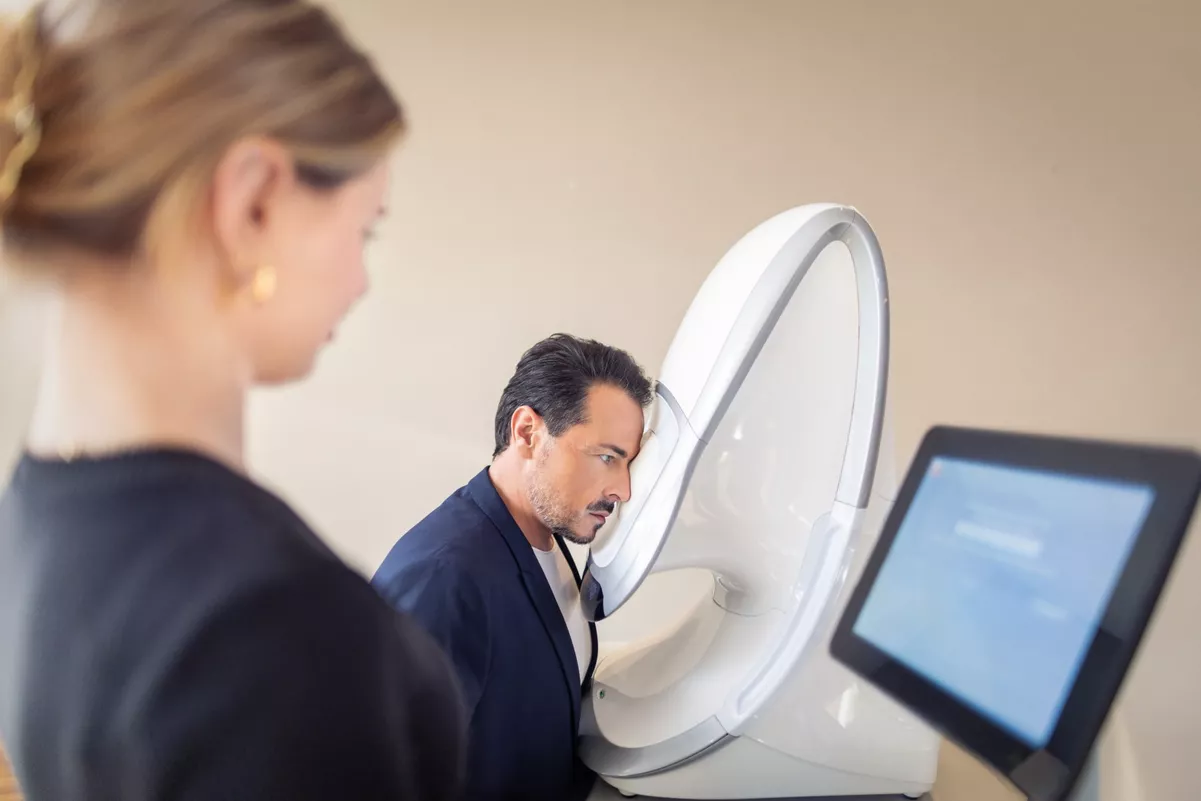
To ensure that the back of your eye—including the macula, retina, and optic nerve—is healthy, we examine your eyes using the Daytona (Optos) retinal scanner. The device features ultra-widefield imaging technology (UWFTM), which allows it to capture an image covering up to 200 degrees of the retina in half a second. The so-called Optomap technology uses low-intensity laser wavelengths to simultaneously scan the retina. This allows us to detect abnormalities not only in the center of the retina or along the optic nerve, but also in the peripheral retina. This provides us with greater certainty and is important for selecting the right lenses.
Schedule an appointment
for a preliminary examination.
Consulting
Personalized consultation and lens selection by Dr. Breyer
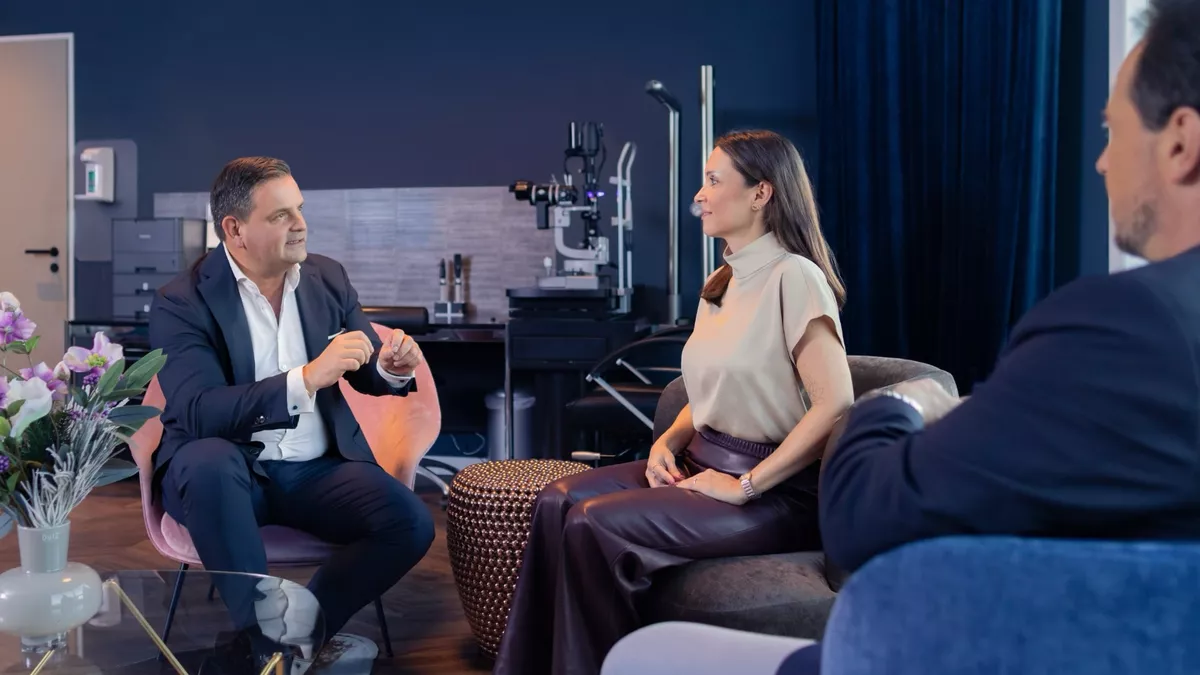
Dr. Detlev R.H. Breyer, an eye surgeon recognized by his international peers, will consult with you to help you select the ICL, intraocular lens, or combination of lenses that is right for you. When selecting premium lenses, we follow our MI-LENS concept. In doing so, we take into account your personal expectations regarding your future visual quality, as well as your profession, hobbies, or activities in which your vision plays an important role.


Preventive Treatment for Dry Eye
Dry eye is one of the most common eye problems that can impair vision. That is why we examine your eyes for signs of dry eye before every treatment and provide preventive care to alleviate symptoms after surgery.



Book an appointment now
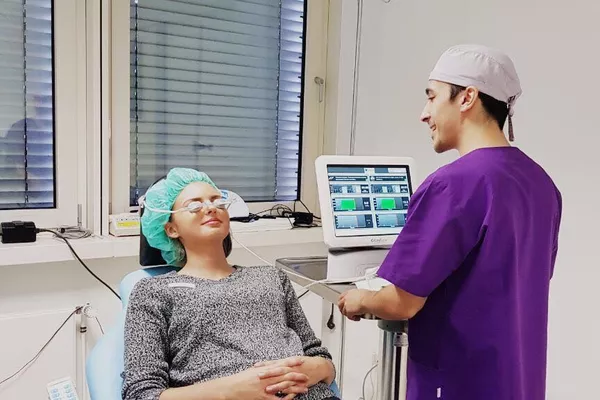
If you’re interested in achieving the best possible vision without (reading) glasses, please feel free to schedule an appointment for a free initial consultation or to come in for a preliminary eye exam. You can reach us by phone, email, WhatsApp, or online via doctolib.de. We’d also be happy to call you back. We look forward to hearing from you.