
Refractive errors and eye conditions
What is farsightedness (hyperopia)?
Farsightedness, medically known as hyperopia, is characterized by the fact that while you can see well at a distance, you cannot see small print or nearby objects clearly. Unlike age-related farsightedness (presbyopia), it is a defect in the eye’s optical system.

What causes hyperopia, and what are its effects?
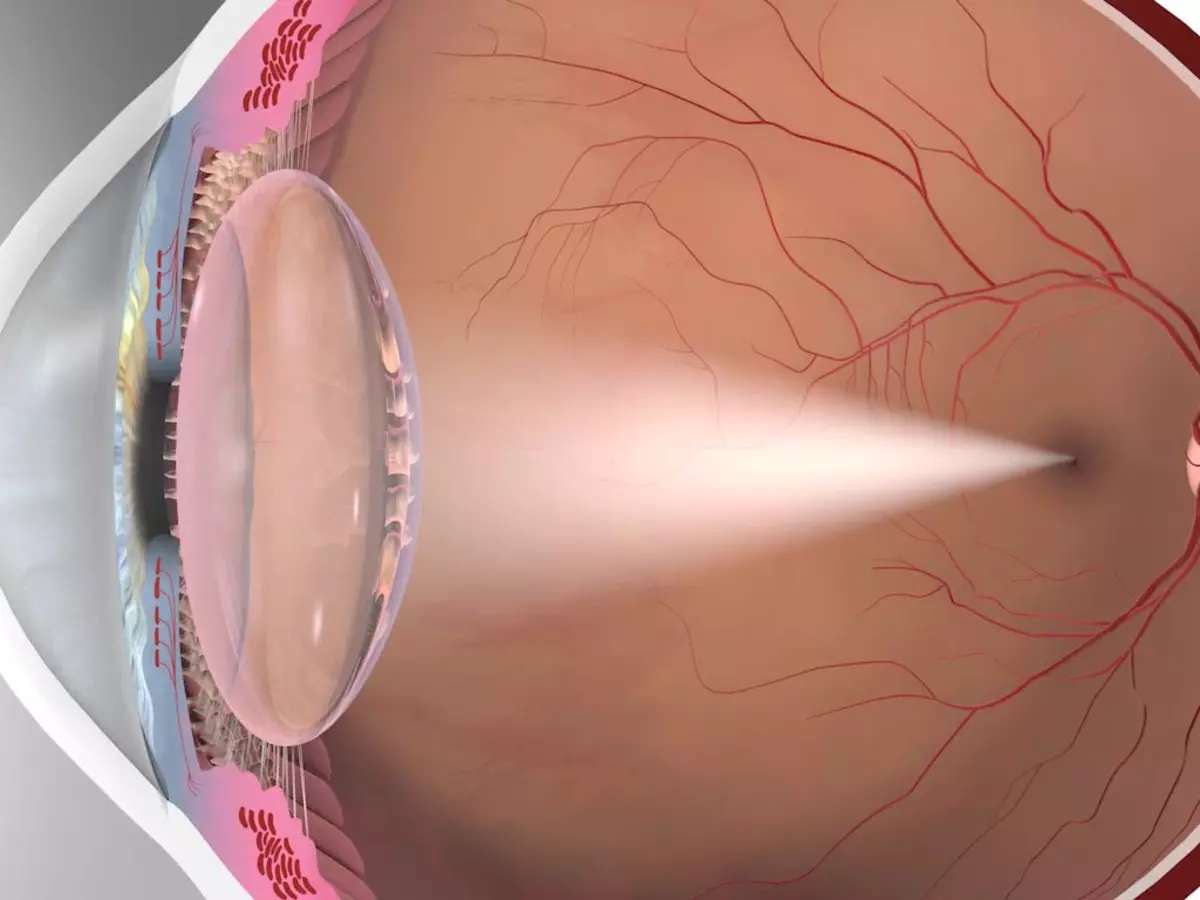
The cause of farsightedness, or hyperopia, is either an eye that is too short, a lens with insufficient refractive power, or a cornea that is too flat. As a result, the image is not projected precisely onto the retina, but slightly behind it.
The closer an object is to the eye, the more noticeable the error in the refraction of light rays becomes: As a result, distant objects can be seen clearly and distinctly, but nearby objects appear blurry.
Book an appointment for an initial consultation.
Laser Eye Surgery for Farsightedness: Get the Big Picture
Laser Eye Surgery for Farsightedness (Hyperopia): Which Procedure Is Right for You? We’ll introduce you to the different procedures and explain their benefits and side effects.

These procedures correct farsightedness



Patient Experiences with the Correction of Farsightedness
Karla Borger, the German beach volleyball champion and Olympian from Stuttgart, had Dr. Breyer perform Femto-LASIK laser eye surgery so she wouldn’t have to rely on contact lenses while playing sports. Dr. Breyer usually recommends the SMILE procedure to athletes. However, Karla was farsighted and had astigmatism. When she underwent treatment in 2021, SMILE was not yet approved for correcting farsightedness. But it is now!

Other Procedures


Book an appointment now
If you're interested in achieving the best possible vision without glasses, please feel free to schedule an appointment for a quick checkup or a preliminary examination. You can do so by phone, email, WhatsApp, or online via doctolib.de. We'd also be happy to call you back. We look forward to hearing from you.