
Cataract
Cataract Surgery
Cataract surgery is the only way to treat cataracts. It is performed about 900,000 times a year in Germany and is considered a routine procedure. During the procedure, the clouded interior of the eye’s natural lens is removed, and a modern artificial lens is implanted into the lens capsule. Thanks to the individualized selection of multifocal lenses or other premium lenses, it is even possible to achieve a high degree of independence from glasses after the procedure.

Preparing for Your Cataract Surgery
If you have been diagnosed with cataracts, we would be happy to provide you with a no-obligation consultation regarding the procedure. Once you’ve decided to have surgery, we’ll conduct a thorough preoperative examination and measurement of your eyes. You can choose between standard monofocal lenses or customized premium lenses, which can correct existing vision problems to help you achieve freedom from glasses. There is a standard surgical procedure and cataract surgery using the femtosecond laser—we’ll explain the difference between them here as well.
Cataract surgery is one of our surgeons' areas of expertise. Thanks to minimally invasive surgical techniques and state-of-the-art technology, the procedure is painless and safe for you.
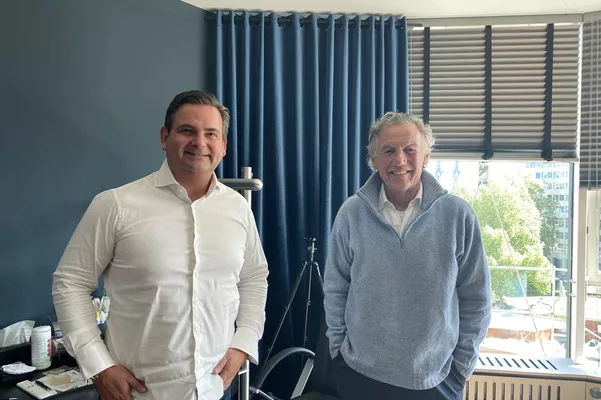
Dr. Detlev R.H. Breyer

Schedule an appointment for a
consultation about cataract surgery.

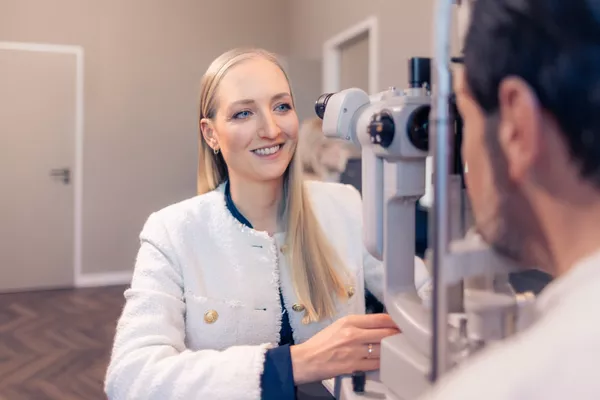
We use the preoperative examination to tailor the cataract surgery plan to your individual needs. This includes measuring the anterior and posterior segments of the eye using state-of-the-art technology and examining the eye for other conditions, such as macular degeneration or glaucoma. This also allows us to better predict the quality of vision that can be achieved after cataract surgery and which lenses are best suited for you. All measurements are factored into the planning of the procedure. Therefore, the outcome of the surgery is largely influenced by a thorough diagnostic evaluation of the eye.
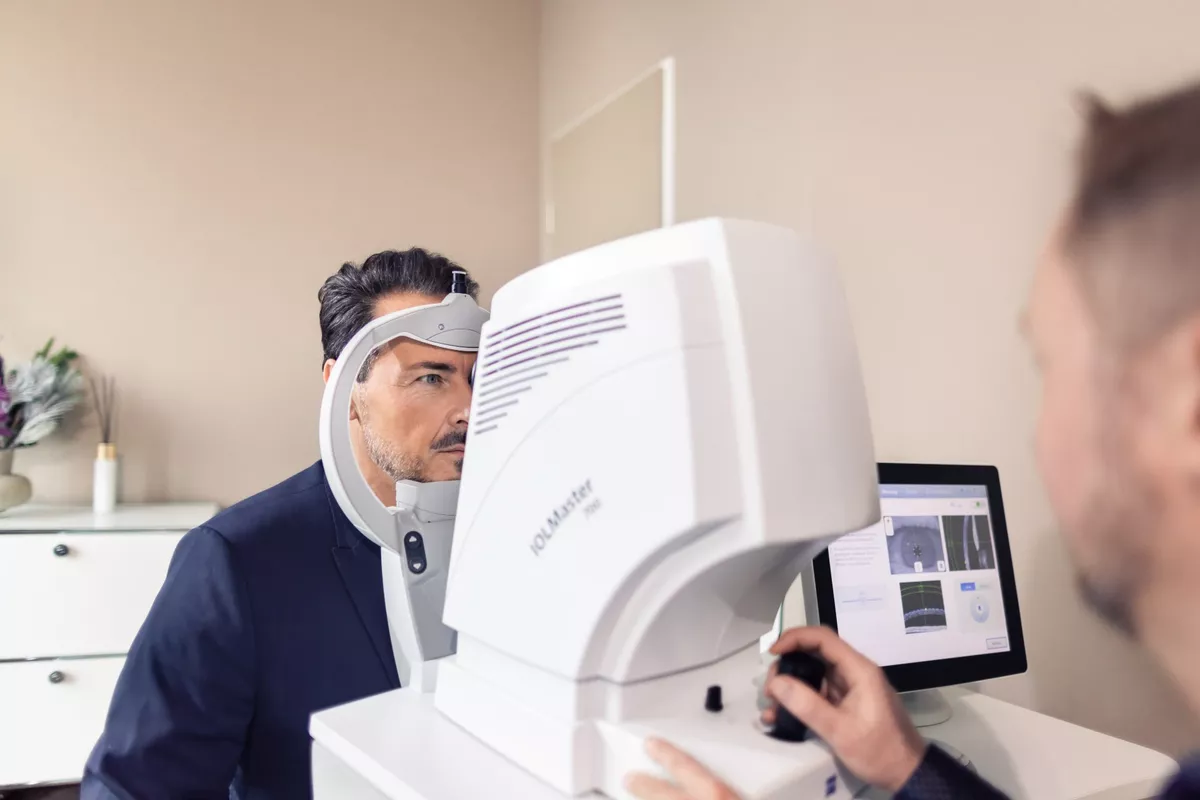
In addition, we will provide you with a medical history form in which we ask for some health information that is relevant prior to surgery. You should then have any additional preoperative tests performed at your primary care physician’s office. We will discuss with you exactly what is required.
Before the procedure, we’ll explain all the steps involved in the surgery, as well as the associated risks and what you need to keep in mind beforehand.
By the way, some surgeries can also be combined with cataract surgery, such as surgical treatments for glaucoma or retinal surgery.
Important for contact lens wearers:
Please stop wearing contact lenses for two weeks prior to the preliminary examination.



Cataract Surgery
How is cataract surgery performed?
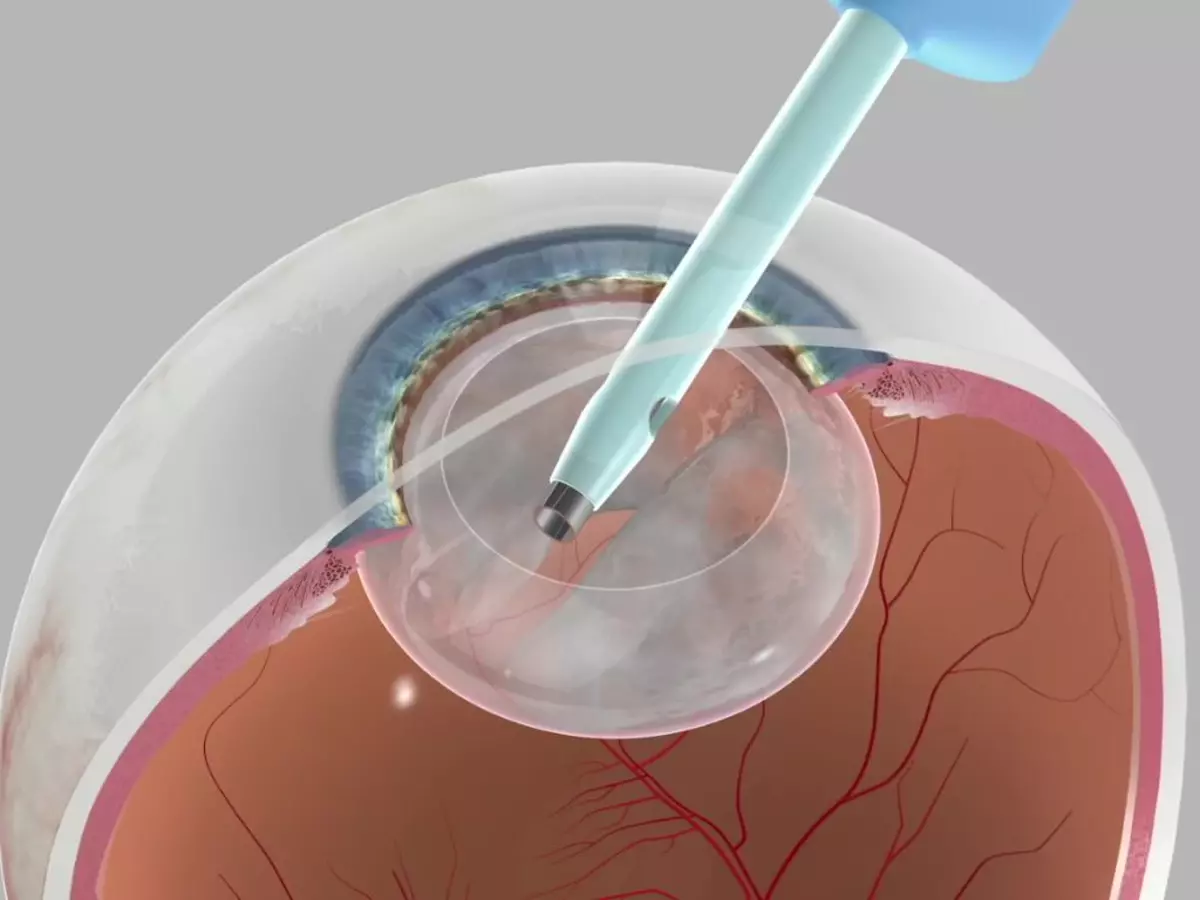
Cataract Surgery Using the Small-Incision Technique and Phacoemulsification
During cataract surgery, a tiny incision is first made at the edge of the cornea. The surgeon then makes a circular incision in the lens capsule (capsulotomy). Using state-of-the-art technology, the clouded interior of the lens is gently broken up and suctioned out using ultrasound energy (phacoemulsification). Finally, the surgeon uses a fine instrument to insert the rolled-up premium lens into the capsular bag, where it unfolds on its own. No sutures are required. The lens remains in the eye for life. This procedure is covered by public health insurance; the patient is only required to pay a copayment for the premium lens.
Cataract surgery is now performed using tiny instruments under a modern surgical microscope (Zeiss), so that the surgeon can see all structures at all times.
To remove the interior of the eye’s natural lens, it is liquefied using ultrasound energy, allowing it to be easily aspirated through fine instruments. For this procedure, known as phacoemulsification, we use state-of-the-art phaco systems, such as the Centurion (Alcon), whose intelligent handpiece measures intraocular pressure during surgery. This technique allows us to perform cataract surgery at near-physiological intraocular pressure with minimal heat generation. Since the end of 2025, we have been performing the procedure using the even more advanced Unity (Alcon) device.
The less the intraocular pressure is increased during surgery, the better it is for the eye, especially for the sensitive optic nerve.
Lower heat generation protects the retina.
Phacoemulsification is considered the gold standard, and its safety has been demonstrated by numerous peer-reviewed scientific studies.
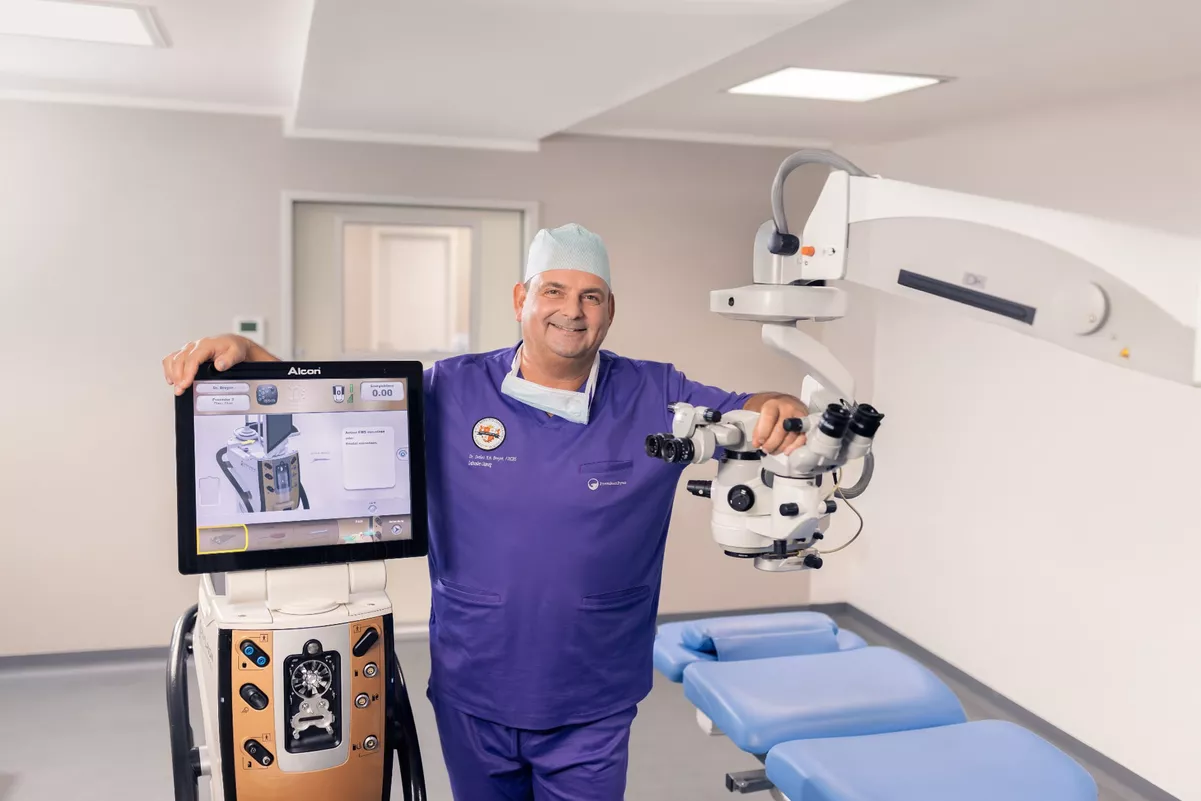
Good to know: Thanks to the high level of safety, cataract surgery can now be performed even in the early stages of the disease. Cataract surgeries performed by high-volume surgeons are successful 99 percent of the time without major complications. The risk of losing an eye during cataract surgery is 0.05 percent.
Preparations on the Day of Cataract Surgery
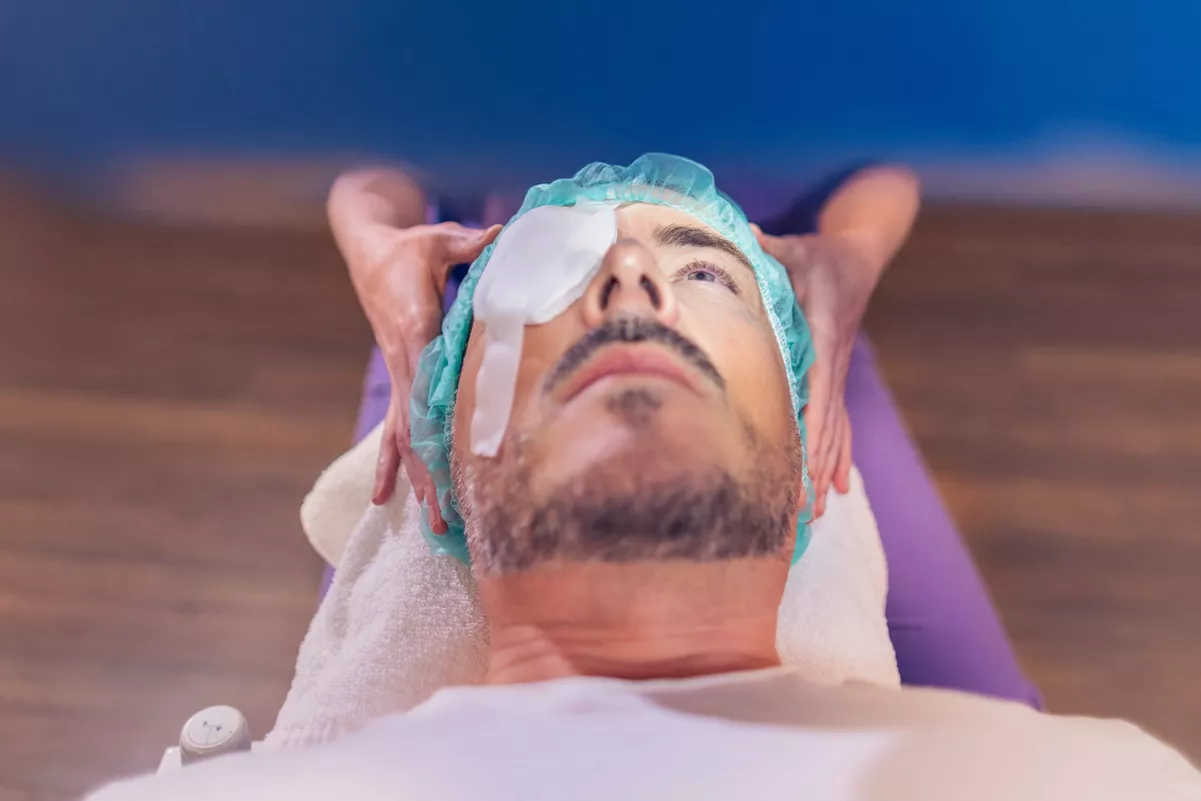
On the day of your cataract surgery, you will be given antiseptic eye drops; your hair and body will be covered, and the skin around the eye to be operated on will be disinfected. An eyelid retractor will then be inserted before the surgeon performs the procedure.

Benefits and Reasons for Choosing This Option
What are the benefits of cataract surgery?
Cataract surgery, in which the clouded lens is removed and an artificial lens is implanted, can significantly improve your vision—provided you do not have any other eye conditions. Afterward, you’ll be able to lead a more active life because you’ll simply feel more confident. After cataract surgery, 9 out of 10 people can see more clearly and with greater contrast; their vision is also better even in poor lighting conditions.
clearer and sharper vision
Improved color vision
better contrast perception
Improved low-light vision
Better distance and near vision (with premium lenses)
greater safety in everyday life
Laser Surgery
Cataract Surgery Using the New LENSAR ALLY Femtosecond Laser
Since 2012, we have been using a femtosecond laser for cataract surgery upon request. We are particularly proud to be able to offer you the latest generation, the LENSAR ALLY, starting in August 2024—as the first in Europe! The use of the femtosecond laser provides you with added safety and allows for even more precise positioning of the intraocular lens in the eye. This is especially important if you choose a premium lens. In particular, for correcting astigmatism, corrective incisions or an axial mark can be made directly with the laser. We’d be happy to advise you!

Good Reasons for Cataract Surgery
-
Most people decide to have cataract surgery because they feel that cataracts are limiting their quality of life. The surgery restores clear vision and can even eliminate the need for glasses.
-
We advise you not to put off cataract surgery for too long, as a clouded lens progressively impairs your vision and poses a danger to you and others while driving or in many everyday situations. Falls and accidents are simply more likely to occur when you can no longer see your surroundings clearly. Cataract surgery can reduce the risk of falls by more than 30 percent.
-
Cataracts can impair driving ability. People who have cataract surgery drive twice as safely. That’s what a team of researchers from Australia has found. Read more about it here in this news article about the study.
-
As surgeons, however, we always advise our patients not to wait too long, because the risks associated with the surgery increase with age. A very hard lens nucleus is more difficult to operate on, and other health problems may also arise as a person ages.
-
A study published in the journal JAMA Internal Medicine in December 2021 found a link between the removal of a clouded lens through cataract surgery and a 20 to 30 percent reduction in the risk of dementia. Read more about this in this news article.

Schedule an appointment for a
no-obligation consultation.
Contact
What's valuable to you belongs in good hands
If you're interested in cataract surgery and achieving the best possible vision without glasses, please feel free to schedule a no-obligation initial consultation with us—either online through this website or by phone. We'd also be happy to call you back. We look forward to hearing from you.
Schedule an appointment for a
consultation about cataract surgery.
FAQs
Frequently Asked Questions
Here you'll find common patient questions about cataract surgery.
-
Cataract surgery is performed approximately 900,000 times a year in Germany alone and can therefore be considered a routine procedure. The current state of the art involves an incision length of approximately 2.0 mm, as this prevents the incision itself from causing astigmatism. An incision length of less than 2.0 mm is also referred to as the small-incision or micro-incision technique. Dr. Breyer is one of the eye surgeons who helped develop this technique.
-
Please discuss this with the anesthesiologist. Generally speaking, yes. However, this may not be the case with general anesthesia. You should also consult with the doctor who prescribed the Marcumar.
-
The entire lens is not removed; only the cloudy inner part of the lens—the lens’s optical element—is removed. The lens capsule and suspensory ligaments remain intact.
-
The procedure takes about 10 to 15 minutes per eye and is painless.
-
Choosing your surgeon is a crucial factor in ensuring your safety and the outcome of your cataract surgery. Dr. Detlev R.H. Breyer is not only recognized as a top physician on the Focus and Stern lists of doctors but is also internationally renowned as a specialist in cataract surgery. He and his colleagues, Prof. Hakan Kaymak and Dr. Karsten Klabe, have each performed over 55,000 surgeries. Cataract surgeries performed by high-volume surgeons are successful 99 percent of the time without major complications. And the risk of losing an eye during cataract surgery is 0.05 percent. All three routinely use a minimally invasive surgical technique and select a lens tailored to your individual needs, allowing you to achieve freedom from glasses—if desired—through the use of multifocal or premium lenses.
-
At the very latest when you feel that your vision is significantly impaired—because you can no longer perceive contrasts well or suffer from glare while driving—you should consider cataract surgery. As surgeons, however, we always recommend that our patients not wait too long, because the risks of the surgery increase with age. A very hard lens nucleus is more difficult to operate on, and other health problems may also arise as you age.
Cataract surgery is a routine procedure. We use a very gentle, minimally invasive technique—and a laser, if desired. The lenses available today offer such excellent visual quality that most patients tell us afterward: “I wish I’d had this done sooner.” And, by the way, many people are already doing this as soon as presbyopia sets in—well before the age of 60—so they can become independent of reading glasses. The idea that one should wait until the “cataract is ripe” is therefore no longer relevant.
Conclusion: With minimally invasive surgical techniques and individually selected intraocular lenses, cataract surgery is now well-tolerated, and visual quality is significantly better than it was just a few years ago. It can now be performed even in the early stages of cataract development.
-
The lenses remain in the eye for a lifetime. The optical parameters are calculated in advance.
-
During the first two weeks after surgery, you should leave your operated eye completely undisturbed as much as possible and avoid touching it. Do not use creams, lotions, or makeup on your face; do not rub your operated eye; and do not apply any pressure to it. After this time, you can resume your normal activities.
-
Avoid wearing eye makeup for the first two weeks. Starting in the third week, there should be no reason not to.
-
As a general rule, we schedule a separate surgery date for each eye. This approach has proven effective and is also more comfortable for you. You may feel the second surgery a little more than the first because you’ll know exactly what to expect. However, this experience does not change if both eyes are operated on one after the other on the same day, as was recently (2026) found in a study in Canada.
-
If your vision begins to deteriorate again some time after your cataract surgery, a secondary cataract may be the cause. It can be removed with a brief YAG laser treatment. Learn more about secondary cataracts.
Schedule an appointment now
If you’re also interested in achieving the best possible vision without (reading) glasses after your cataract surgery, please feel free to schedule an appointment for a free initial consultation or a preliminary examination. You can contact us by phone, email, WhatsApp, or online through our website. We’d also be happy to call you back. We look forward to hearing from you.