
Laser Surgery for Cataracts
Cataract Surgery with a Femtosecond Laser—Precise, Comfortable, and Tailored to the Individual

The high precision of a femtosecond laser has been successfully used for three decades in laser eye surgery to correct refractive errors. Since the femtosecond laser made its debut in lens and cataract surgery around 2009, it has truly revolutionized the field. The laser performs all incisions in the cornea—which would otherwise be made manually by the surgeon—with greater and more consistent precision. Additional advantages:
It also corrects mild astigmatism,
allows for gentler removal of the cloudy lens
and ensures more precise alignment of the artificial lens within the eye—a factor that is relevant not only for toric lenses.
With the femtosecond laser, cataract surgery is not only less invasive for you, but your independence from glasses after the procedure can also be tailored more specifically to your individual needs.
What are the advantages of Femtosecond laser-assisted cataract surgery?
A femtosecond laser operates with great precision and minimal tissue damage: It can deliver its energy through clear tissue to a precisely defined depth, where it separates the tissue at the atomic level by converting the laser energy into mechanical energy (photodisruption). The surrounding tissue remains completely intact.
The precisely circular opening in the lens capsule facilitates the precise implantation and alignment of a premium lens and increases your chances of not needing reading or progressive glasses after the procedure.
After the natural lens is fragmented with the laser, it is easier to remove and requires less ultrasound energy. This shortens the surgery time, is gentler on the cornea, and minimizes risks.
Schedule an appointment for a
no-obligation initial consultation
Cataract Surgery with a Laser or a Scalpel: What's the Difference?
Cataract surgery using a femtosecond laser is considered more precise, safer, and gentler because every incision is made with the same precision. The surgeon’s experience with laser surgery plays just as important a role as the quality and technology of the laser. The following incisions are made with the femtosecond laser, which would otherwise be made with a scalpel—that is, manually:
a tiny incision at the outer edge of the eye
a circular opening in the anterior lens capsule (capsulotomy)
fragmentation of the lens
high-precision correction of astigmatism through arc-shaped incisions or axis marking
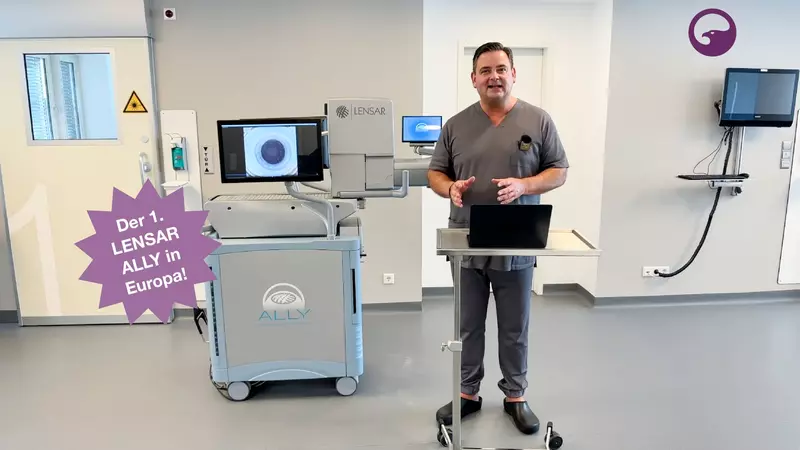
The new femtosecond laser system enables personalized laser cataract surgery that is even more precise, safer, and gentler than with the previous model. After fragmenting the lens, it takes us only 1 to 2 seconds to aspirate the contents using ultrasound.
Dr. Detlev R.H. Breyer

Schedule an appointment
If you're interested in achieving the best possible vision without glasses, please feel free to schedule an appointment for a quick checkup or a preliminary examination. You can reach us by phone, email, WhatsApp, or online via doctolib.de. We'd also be happy to call you back. We look forward to hearing from you.
Animation
How is cataract treated with a laser?
In the animation, you can see the steps of the laser procedure during cataract surgery: The femtosecond laser creates a circular opening in the anterior lens capsule, breaks up the interior of the lens, and creates a small opening in the cornea. In cases of astigmatism, corrective incisions or an axis mark can also be made.
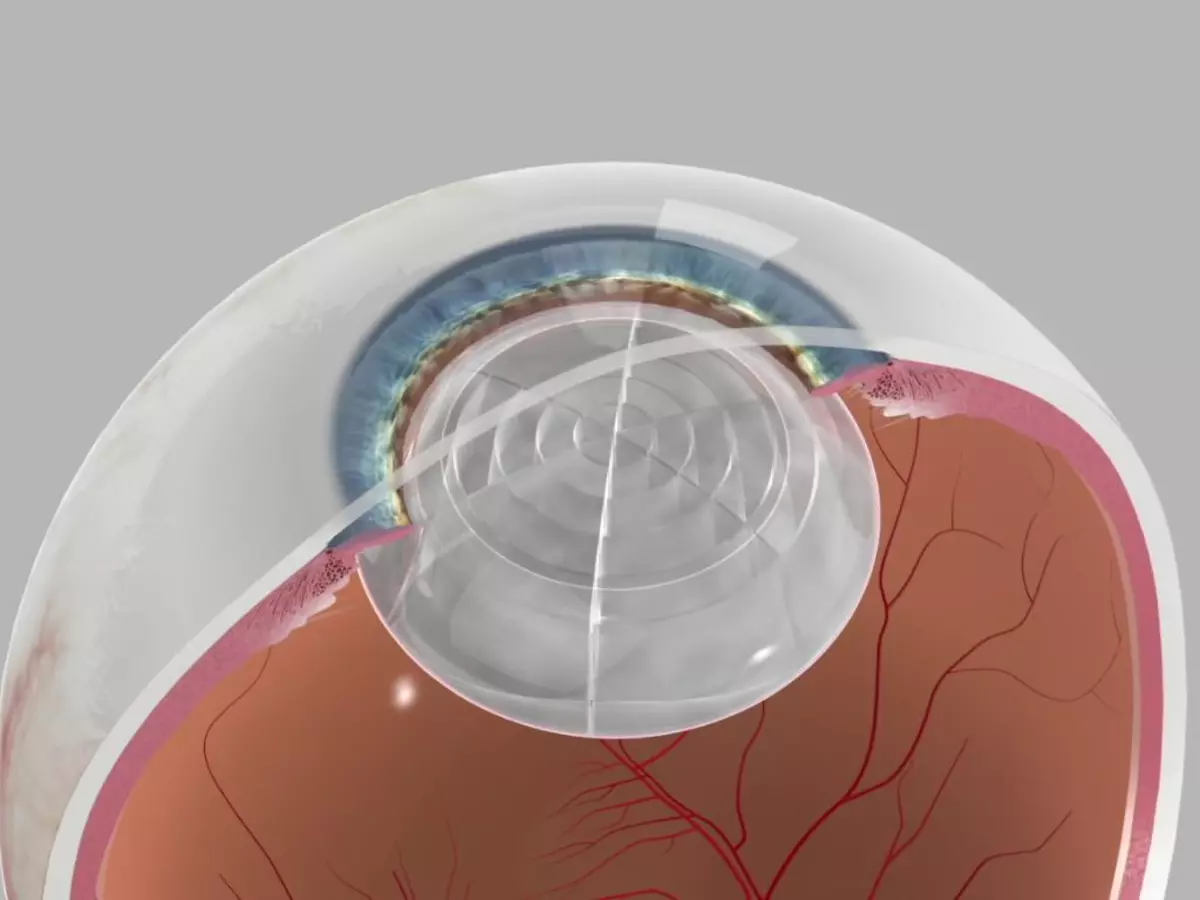
The femtosecond laser adapts the fragmentation pattern to the density of the lens nucleus. This facilitates subsequent removal using ultrasound (phacoemulsification). Incidentally, this step can also be performed directly on the new LENSAR ALLY. There is no need to switch devices.
When you enter the operating room on the day of your surgery, the data from numerous preliminary eye examinations has already been entered into the femtosecond laser. As soon as your eye is positioned against the laser, the laser compares the live image with the examination images. In the process, the laser even recognizes the structure of your iris, which is as unique as your fingerprint.
Using its powerful imaging system, which is based on six Scheimpflug cameras, the laser measures your eye in a matter of seconds and creates a 3-D model of it. It identifies the type and density of your cataract and can thus personalize your treatment. This includes, for example, the customized fragmentation of the clouded lens using minimal energy to protect your eye.
Your cornea is also precisely measured so that any astigmatism can be corrected with specialized incisions. If a toric lens is planned for correction, the laser marks the axis for the exact alignment of the lens to achieve improved visual quality.

An Overview of the Steps in Laser Treatment
Importing examination data and comparing it with real-time data
More precise corneal incisions for correcting astigmatism
Automated centering of the lens capsule opening (capsulorhexis)
Tissue-specific femtosecond laser treatment
Phacoemulsification (removal of the lens interior using ultrasound)
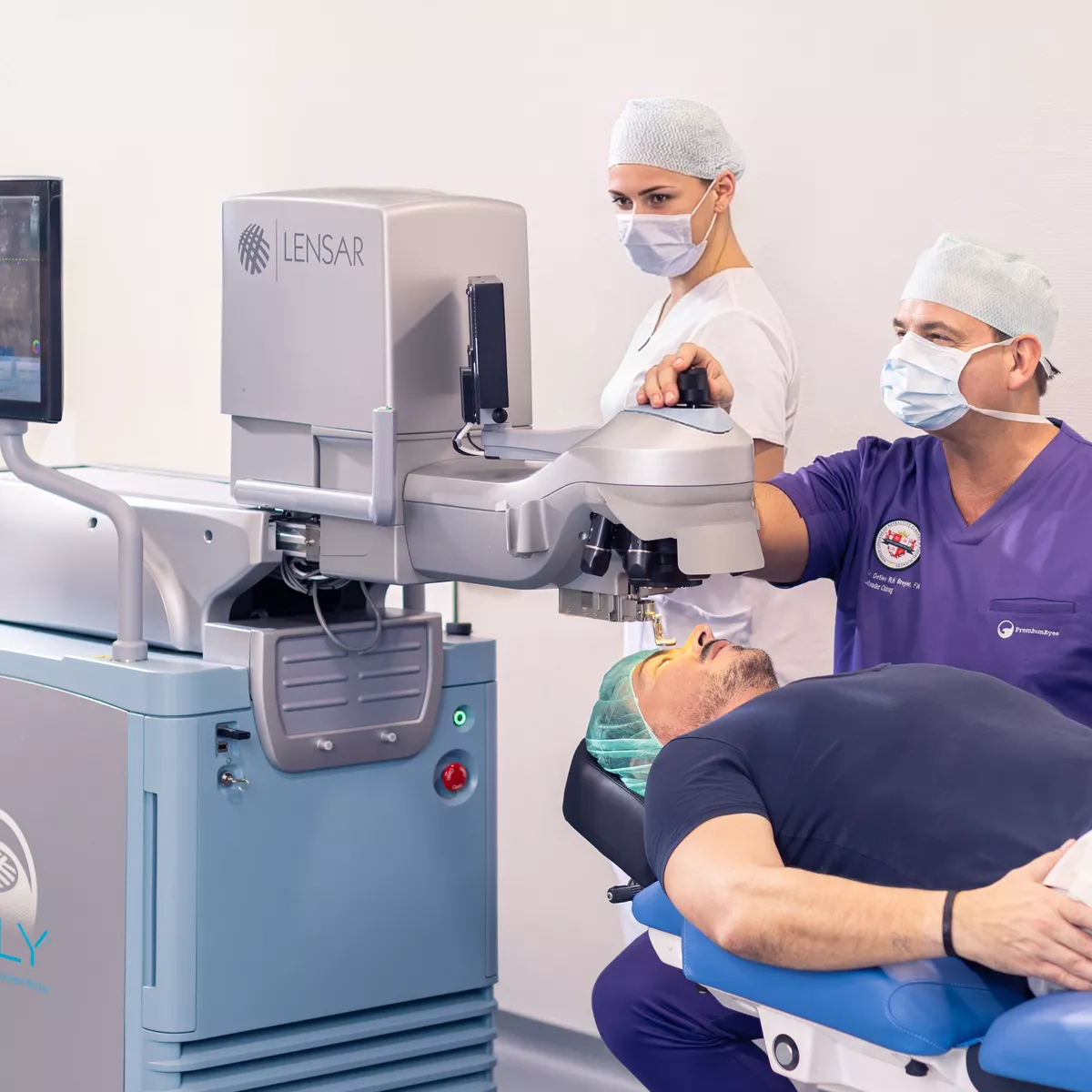
Improved Patient Experience
As the first and only cataract laser, the ALLY system features two laser profiles—one for the cornea and one for the lens. This not only allows the energy delivery to be tailored to the specific tissue in the eye, but also shortens the laser procedure to just about one minute.
The shorter the procedure, the lower the risk of eye movement—which means even greater safety for you. The phaco system has been directly integrated for the subsequent removal of the lens. This means that this part of the procedure can also be performed under sterile conditions using the laser—there is no longer any need to switch devices. The removal of the pre-fragmented lens takes only one to two seconds at our clinic.
Learn more about LENSAR ALLY and premium lenses

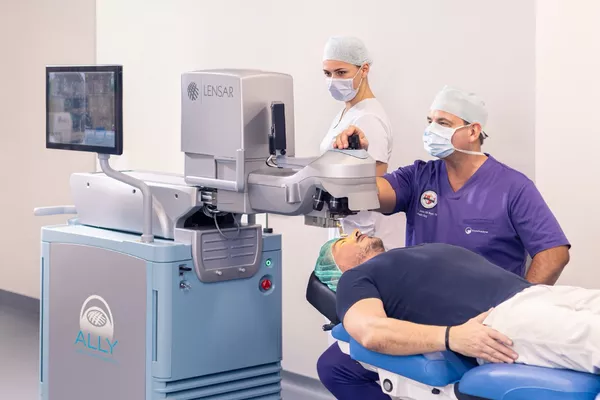
Schedule an appointment for a
no-obligation initial consultation.

Cataract Surgery—With or Without a Femtosecond Laser?
Well-known TV host Nina Ruge asks Dr. Breyer to explain cataract surgery and, in particular, the use and benefits of the femtosecond laser. This video is intended for patients who are considering cataract surgery and have particularly high expectations regarding their visual quality after the procedure. (As of 2019)
Research Findings
Advantages of the femtosecond laser in dense cataracts
In a prospective, randomized, comparative study published in 2024 in the Journal of Cataract & Refractive Surgery, 100 patient eyes with dense cataracts (lens opacity) were treated using either manual cataract surgery or laser surgery. The patients were examined two weeks and six months after surgery.
The results showed that these patients with denser cataracts benefited from customized nucleus fragmentation patterns because
this significantly shortened both the subsequent removal of the fragments via phacoemulsification and the total duration of the surgery.
Endothelial cell loss was also lower with the laser compared to conventional phacoemulsification.1
Another study from 2022, published in the Journal of Cataract & Refractive Surgery, concluded that femtosecond laser-assisted cataract surgery is safer for patients with hard nuclear cataracts who had previously undergone a vitrectomy and enables faster visual recovery.2
A large-scale meta-analysis of several peer-reviewed studies, presented in September 2016 at the European Congress of Cataract and Refractive Surgeons, compared (femto)laser surgery with manual cataract surgery. The meta-analysis, conducted by the Eye Clinic at the University of Frankfurt, examined 34 studies in which the visual outcomes of 6,492 eyes treated with the femtosecond laser were compared with those of 6,707 eyes treated using the manual method.
The conclusion was that femtosecond laser-assisted cataract surgery has comparable benefits and risks to manual cataract surgery. Overall, laser surgery appears to be superior to the manual method.
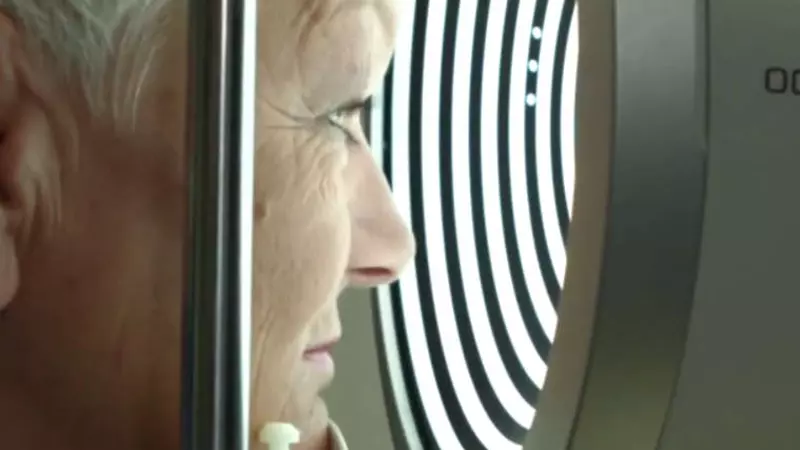
Sabine Wagner, a journalist and film producer, is suffering from early-stage cataracts. She has learned that the only treatment that can help her is surgery, which is possible even in the early stages of the disease. Her ophthalmologist recommends Dr. Breyer. Although she immediately trusts him and is impressed by his experience, she is quite nervous before the surgery on her first eye.
Schedule an appointment now for a no-obligation initial consultation
If you’re interested in achieving the best possible vision without reading glasses or progressive lenses, please feel free to schedule an appointment for a no-obligation initial consultation or preliminary examination with Dr. Breyer. You can do so by phone, email, or online via doctolib.de. We’d also be happy to call you back. We look forward to hearing from you.
On the day of surgery
The Procedure for Laser Cataract Surgery on the Day of Surgery
Anesthesia: Choose the level of pain relief you want
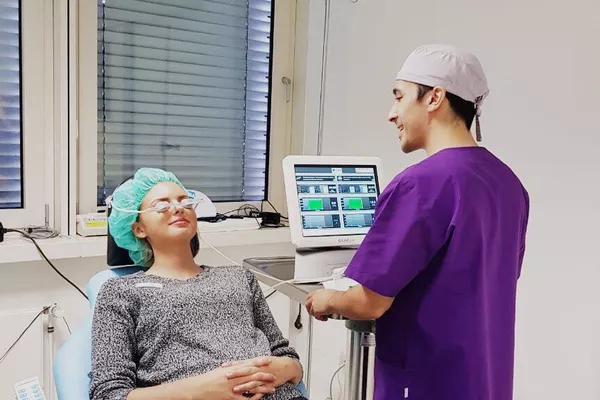
The outpatient procedure takes no longer than 20 minutes. We place great importance on creating a relaxed and comfortable surgical environment. We guarantee you a pain-free procedure and offer both you and us the luxury of letting you choose your method of anesthesia. Choose from the following options:
Twilight sedation via an injection
Twilight sedation and an injection next to the eye (peribulbar anesthesia). In 10 years, we have never injured an eyeball using this method.
General anesthesia for anxious patients
Drip anesthesia for the brave
Preparing for Surgery
Your hair and body will be covered, and the skin around the eye to be treated will be disinfected. The surgeon then carefully inserts the eyelid retractor to keep the eye open. He positions the laser’s contact lens (patient interface) on your eye and centers it precisely over the natural lens. The laser also allows for alignment with the optical axis.
The Use of the Femtosecond Laser
With our “LENSAR ALLY” femtosecond laser, we take perfection to the next level: First, we perform an iris alignment to prevent angular errors in toric lenses and arc-shaped keratotomies (corneal incisions). This is made possible by improved corneal diagnostics.
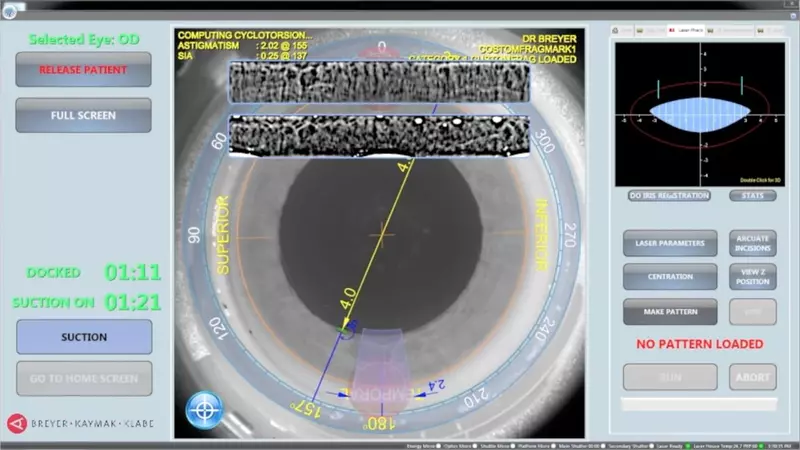
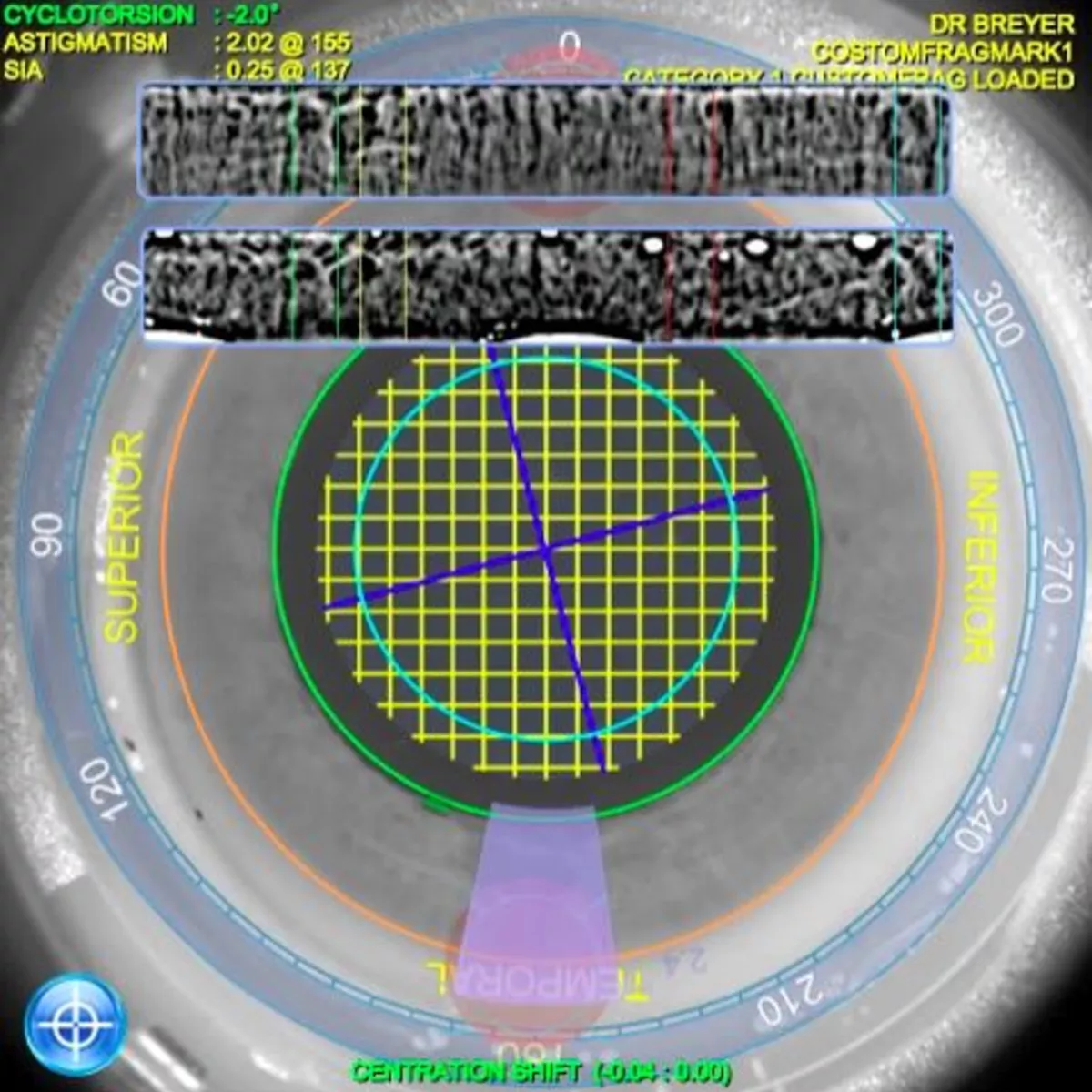
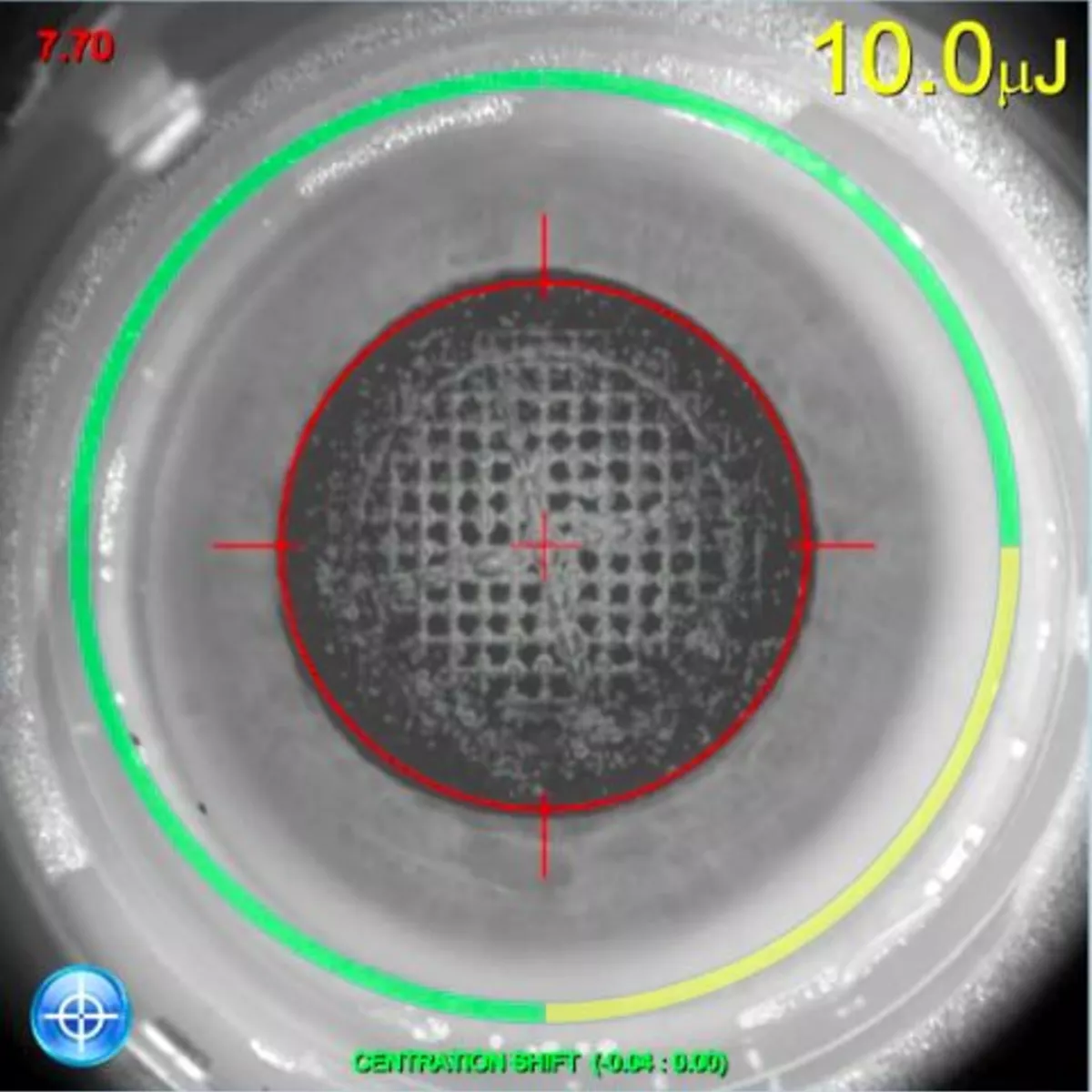
Under the surgeon’s control, the laser makes a small incision—previously calculated with precision—at the outer edge of the eye.
Dr. Breyer relies on the micro-incision technique (keyhole technology) and has played a key role in promoting this technique at international conferences. The main incision is only 1.8 mm wide, and the secondary incisions are 0.9 mm wide. This prevents incision-related corneal distortion and increases the stability of your eye.
At the same time, a circular opening is created in the anterior lens capsule (capsulotomy). Even highly experienced surgeons can never perform the circular capsulotomy manually with such precision. This elevates the long-term stability and centration of the intraocular lens to an unprecedented level, ensuring your vision remains as good as possible over the long term.
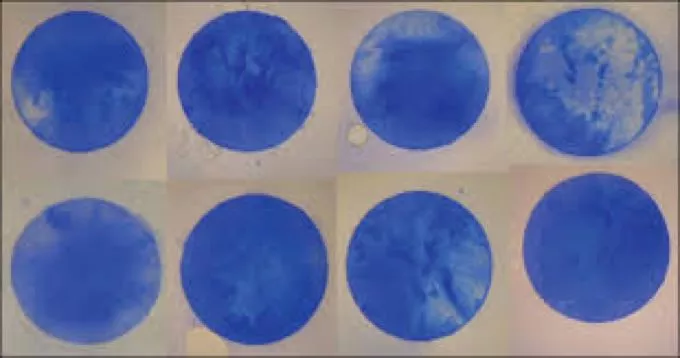
The laser then breaks up the natural lens. Since the laser precisely measures the cloudiness of the lens before surgery, we use only as little laser energy as necessary during cataract surgery to protect your eye. Our surgeons plan each of these steps very carefully in advance and carry them out exactly as planned, while monitoring everything in real time on the screen of the integrated camera system.
Gentle removal of lens fragments without changing instruments
The new LENSAR ALLY has already optimally pre-fragmented the lens core using minimal energy. The fragments are then removed using the integrated phaco system with reduced ultrasound energy at the laser. In most cases, this takes only 1 to 2 seconds—and that’s no mistake! There’s no need to switch devices.
Lens Implantation
The surgeon then inserts an artificial lens into the now-empty lens capsule under the surgical microscope. Because the laser allows for more precise incisions, the lens can be positioned much more accurately, making it easier to predict the visual outcome after surgery. Good to know: We implant all modern types of lenses—regardless of manufacturer—after selecting a customized premium lens for you using our legally protected MI-LENS strategy. This selection is based on the research findings from the past 10 years that we have developed in collaboration with the University of Heidelberg. Modern premium lenses are made of soft materials and are inserted in a folded state through very small openings. They only return to their original shape once inside the eye.
The Laser Lens
Our experiences with the Femtis IOL published in the American Journal of Ophthalmology
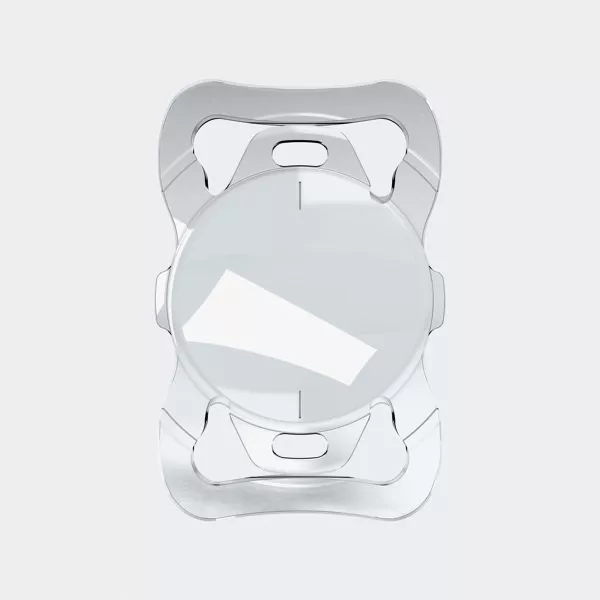
Together with our partners, including the Eye Clinic at Heidelberg University Hospital, we published our experience with the Femtis IOL, which was implanted using femtosecond laser-assisted cataract surgery (FLACS), in the January 2021 issue of the American Journal of Ophthalmology.3
Lectures by Dr. Breyer on the topic

Additional Measures to Ensure a Successful Surgical Outcome
: Our Certified Quality Management System.
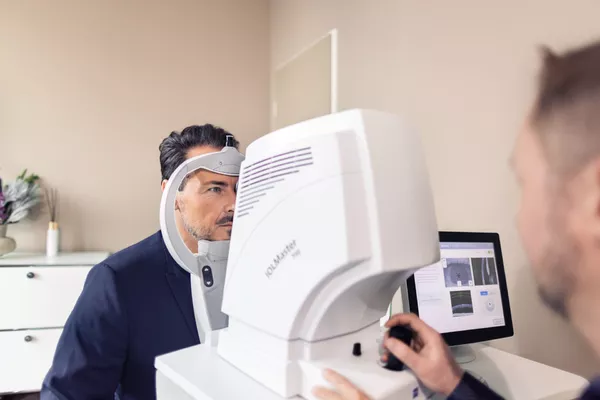
Corneal Diagnostics Using the IOLMaster
The IOLMaster 700 and LENSAR ALLY open up new possibilities for cataract patients with astigmatism: Feeding highly precise corneal diagnostic data directly into the laser enables markerless implantation of toric lenses and improves visual quality. With the new LENSAR ALLY, the entire procedure is even more precise, safer, and gentler!
Frequently Asked Questions
-
Cataract surgery using a femtosecond laser is more precise because all incisions are calculated exactly in advance and executed with the same precision. The latest femtosecond laser we use for cataract surgery, ALLY (Lensar), was developed specifically for personalized cataract surgery and features two different laser profiles for corneal and lens tissue, advanced imaging, and an integrated phaco system. This makes your laser cataract surgery even more precise, safer, gentler, and even more comfortable! It’s also ideal for the precise implantation of toric lenses in cases of astigmatism.
Even a highly experienced surgeon is unable to make incisions with the precision of a femtosecond laser. Precision is not an end in itself: the more precise the incisions, the more accurately the intraocular lens can be positioned within the capsular bag. Exact positioning is crucial for optimal visual outcomes after surgery. Even the slightest deviations can lead to suboptimal results.
-
Laser cataract surgery is safer because all incisions are precisely calculated in advance and executed with the same precision. The latest femtosecond laser we’ve been using since September 2024, ALLY, was developed specifically for personalized cataract surgery. It features two different laser profiles for corneal and lens tissue, advanced imaging, and an integrated phaco system. This makes your laser cataract surgery even more precise, safer, gentler, and even more comfortable! It’s also ideal for the precise implantation of toric lenses in cases of astigmatism.
-
There is never an absolute guarantee in medicine, but the LENSAR laser greatly enhances safety. Dr. Breyer, a Focus Top Physician, has performed approximately surgeries in his career as a surgeon. He would never claim to be as precise and safe as a laser or to be able to perform surgery as gently. He uses the laser to treat 90 percent of his patients.
-
The procedure takes about 5 minutes and is painless. Dr. Breyer has experience from over operations.
-
The lenses remain in the eye for a lifetime. The optical parameters are calculated in advance.
-
The nanosecond laser is used to liquefy the eye’s lens. In this respect, it is not an alternative to the femtosecond laser, but rather to phacoemulsification using ultrasound.
As shown on this page, the femtosecond laser not only fragments the lens but also performs additional steps that would otherwise be done manually. The consistently high precision of femtosecond laser-assisted cataract surgery has been proven, and based on our many years of clinical experience, it offers particular advantages when the goal is to eliminate the need for glasses. You can find more details on this topic in Dr. Breyer’s presentation.
-
Please discuss this with the anesthesiologist. You should also consult with the doctor who prescribed the Marcumar.
-
During the first two weeks after surgery, you should leave your operated eye completely undisturbed as much as possible and avoid touching it. Do not use creams, lotions, or makeup on your face; do not rub your operated eye; and do not apply any pressure to it. After this time, you can resume your normal activities.
-
The entire lens is not removed; only the cloudy inner part of the lens—the lens's optical element—is removed. The lens capsule and suspensory ligaments remain in place.
-
Important for you to know: We even receive many patients who have experienced complications at other facilities. Our surgeons at Breyer, Kaymak & Klabe are so experienced that they can safely manage any potential complications, so we don’t have to refer you to a hospital. We have ophthalmologists with different areas of expertise on staff: former senior physicians and a former chief of ophthalmology at the Marien Hospital Düsseldorf.
-
You should leave the choice of lens to a specialist if it’s important to you to be free from glasses after the surgery. We take a scientific approach to lens systems and the selection process. This process consists of several phases: We discuss with you the professional and personal activities you frequently engage in, your vision requirements, and where you would be willing to make compromises. We then conduct comprehensive preliminary examinations and measurements of your eyes. Based on our knowledge of the various lens systems, your examination results, and your preferences, we recommend lenses that will help you achieve your desired visual quality. One highly personalized treatment option, for example, is the implantation of so-called EDoF lenses based on the “Düsseldorf Scheme” for transition vision, which we developed. Aside from the lenses themselves, the surgeon’s experience and the surgical technique naturally play a role. For example, in patients with astigmatism—and not only in these cases—we achieve greater precision in lens alignment by using a femtosecond laser during cataract surgery.
Who is a candidate for laser lens replacement?
Whether you have presbyopia and would like to be free from your reading glasses, or whether you are already experiencing symptoms of cataracts—that is, clouding of the lens—laser lens replacement could be a potential treatment option for you in either case. We’d be happy to discuss with you what you hope to achieve with the treatment and what your expectations are regarding visual quality after surgery.
Before surgery, we conduct very thorough examinations to achieve the best possible visual outcome for you and to ensure safety for both you and us. The results of our examinations are incorporated into the treatment and are essential for the individualized selection and calculation of your premium lenses. If you have astigmatism, it can be corrected with a toric lens. In this case, measurements taken with the IOLMaster 700 are particularly helpful during implantation.
Important note for contact lens wearers: Please stop wearing contact lenses for two weeks prior to the preoperative examination.
Best Vision
Preoperative Evaluations for Refractive Surgery
Recommended by the Commission on Refractive Surgery
High-tech Diagnostics:
Pentacam® HR (Oculus)
The Vision Simulator (Voptica)
Aberrometer (TOPCON)
IOLMaster 700 (Carl Zeiss Meditec)
Treatment Recommendation


Schedule an appointment
If you’re interested in achieving the best possible vision without (reading) glasses after your cataract surgery, please feel free to schedule an appointment for a free initial consultation or a preliminary examination. You can do so by phone or online through our website. We’d also be happy to call you back. We look forward to hearing from you.