Technology
IOLMaster 700 for Your Personalized Cataract Surgery—Even with Astigmatism
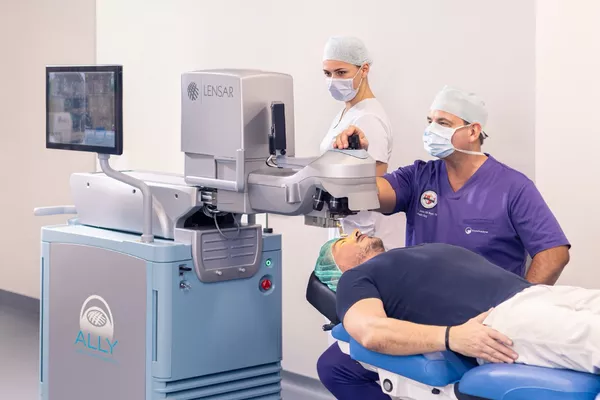
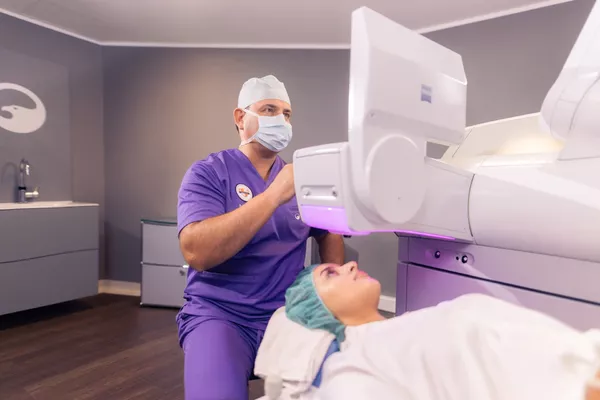
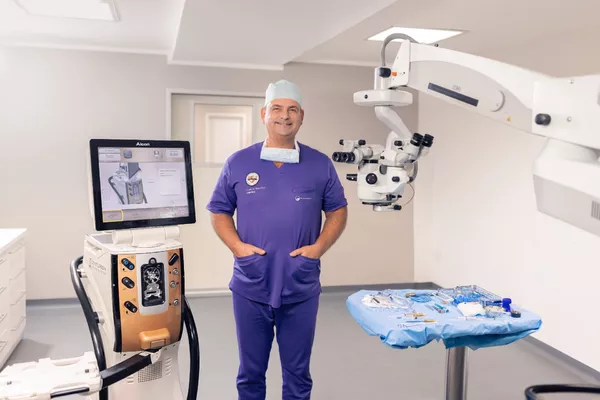
The IOLMaster 700 (Zeiss) uses a technique known as “total keratometry” to measure both the anterior surface of the cornea and the curvature of the posterior surface. Thanks to this highly precise corneal diagnostic technology—whose results are fed directly into the LENSAR ALLY and the surgical microscope—we can calculate the refractive power of a toric IOL even more precisely and implant it in such a way that your astigmatism is corrected more accurately.
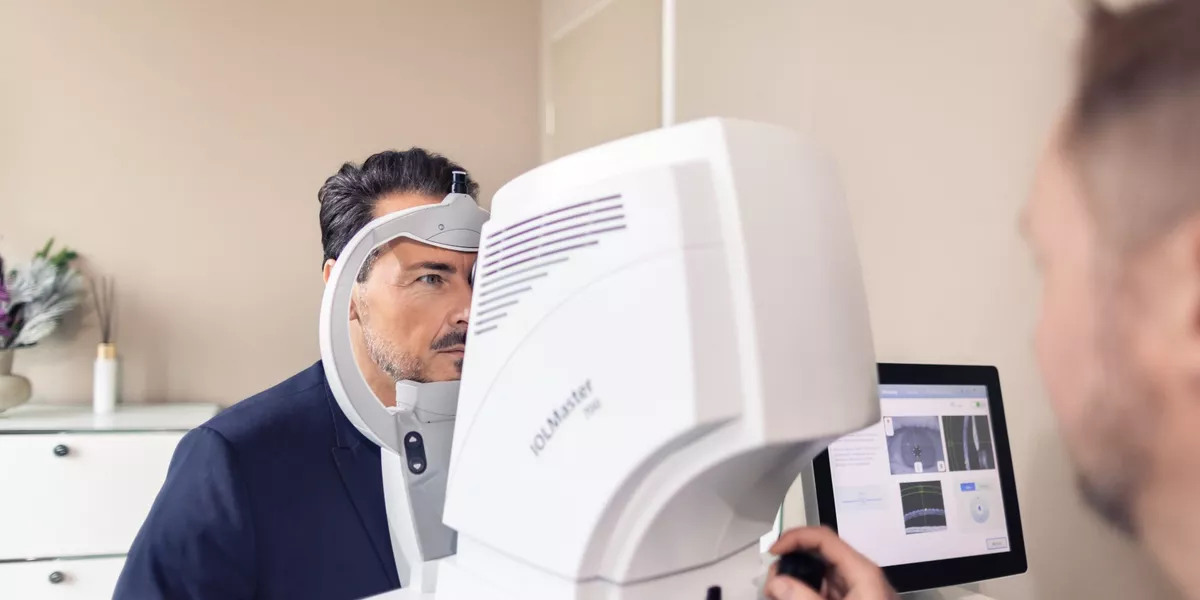
Biometry and Keratometry
In traditional keratometry, only the radii of curvature of the anterior corneal surface and the corneal diameter are measured. Data for the posterior surface of the cornea are calculated using formulas. In addition to the anterior surface of the cornea, the IOL Master 700 also measures the curvature of the posterior surface. This so-called “total keratometry” combines the measurement results for corneal thickness (corneal pachymetry) with those for the anterior and posterior surfaces of the cornea. This allows the individual characteristics of the cornea in each eye to be taken into account. Based on this data, the astigmatism of the posterior corneal surface can also be accurately determined, allowing for an even more precise calculation of the refractive power of the toric IOL.
For a passionate refractive cataract surgeon like me, the technical capabilities offered by the LENSAR ALLY in combination with the IOLMaster 700—that is, the ability to literally “tailor” cataract surgery—represent a huge step forward. Above all, it is a major benefit for patients with astigmatism.
Dr. Detlev Breyer
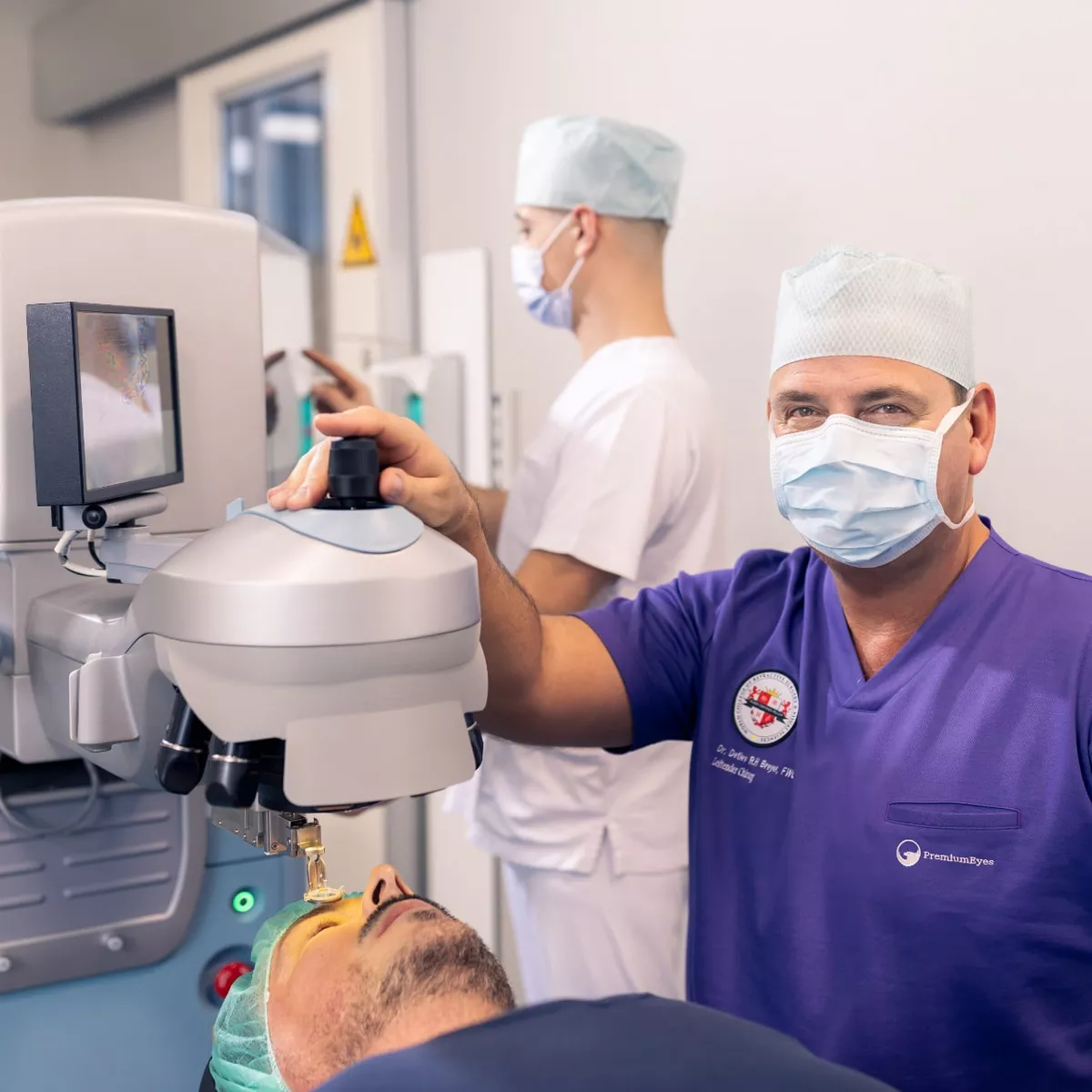
More and more patients are taking advantage of the option to correct their astigmatism using toric intraocular lenses (IOLs) or toric multifocal lenses (MIOLs). Dr. Breyer specializes in this field and, several years ago, developed tools and described techniques that facilitate implantation. He was even one of the first to implant these lenses using a minimally invasive approach with the micro-incision technique.
Two Options for Correcting Astigmatism
If a mild case of astigmatism is detected during the diagnostic evaluation, arc-shaped corneal incisions made with a laser are one option for correcting it.
More severe cases of astigmatism must be corrected with toric lenses. Toric lenses are shaped to counteract the astigmatism.
However, both can only be successful if the lens is implanted precisely along the axis of the astigmatism. In the past, the cornea was marked manually before surgery for this purpose. The LENSAR introduced the option of marking the axis directly with a laser. Now, using the IOLMaster 700 during the preoperative examination, we can take a reference image of the eye, which enables markerless IOL implantation.
Markerless implantation of a toric lens
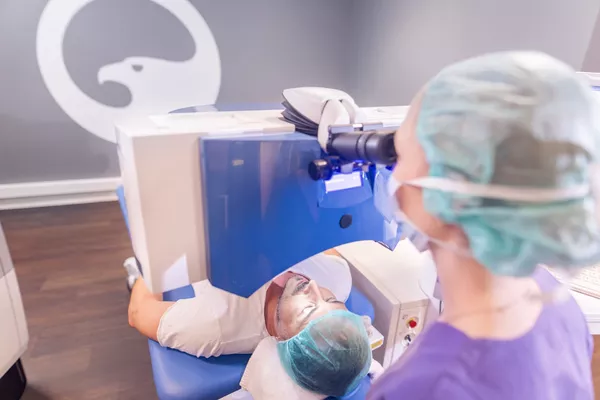
For patients with astigmatism, a reference image of the eye is captured as part of the keratometry measurement. This image, along with the keratometry data, can then be digitally transferred to the LENSAR Streamline laser system. During treatment, the image is aligned with the live image. All necessary data is projected into the eyepiece of the ZEISS surgical microscopes.
The system accurately displays the degree of opacity of the natural lens (cataract density) and calculates customized patterns according to which the lens is fragmented using laser energy, allowing the surgeon to remove it more gently.
The surgeon can use the true axis of astigmatism shown in the reference image to make arc-shaped incisions or to align the intraocular lens precisely along that axis. Neither corneal marking prior to surgery nor additional measurements for the alignment of toric IOLs are required. This capability further refines the implantation of a toric lens.