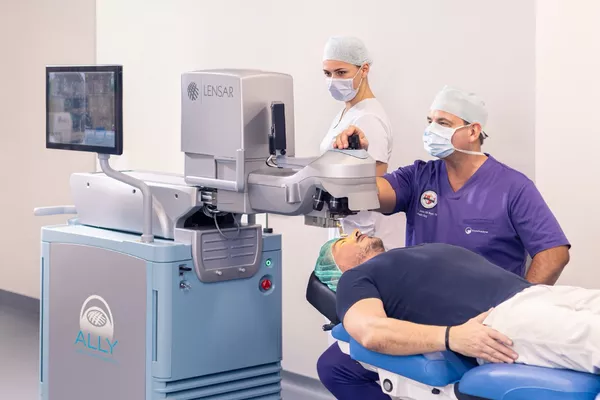
Modern Phaco System – Ensuring the Safety of Your Cataract Surgery
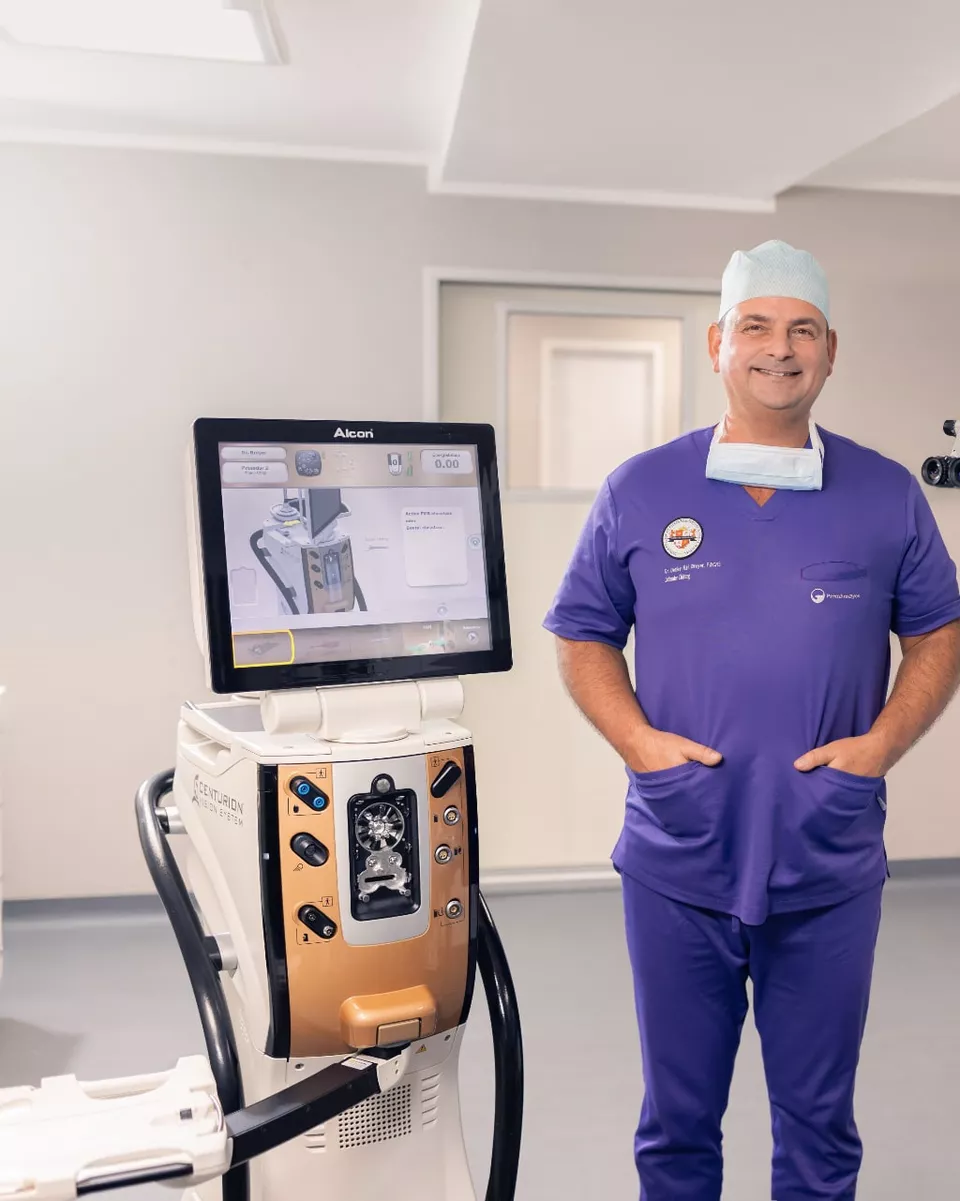
During cataract surgery, the interior of the eye’s lens is broken up using ultrasound and then suctioned out. Recent findings show that it is safer and gentler on the eye if intraocular pressure remains within the physiological range as much as possible during the procedure. The intelligent Centurion Vision System (Alcon) responds to changes in pressure in real time and compensates for them.
What happens during phacoemulsification?
In traditional or manual cataract surgery, the capsular bag containing the eye’s lens is opened in a circular incision using a tiny blade. The interior of the lens is then broken up using ultrasound energy and suctioned out with a suction-irrigation device. This is called phacoemulsification. To compensate for the resulting loss of pressure in the eye, a sterile fluid—known as irrigation fluid—is simultaneously introduced into the eye. This fluid ensures the necessary stability of the eye during cataract surgery.
The Centurion Vision System maintains an intraocular pressure that is nearly physiological
We use the computer-controlled Centurion Vision System (Alcon) for cataract surgery. The phacoemulsification handpiece is used both to aspirate the interior of the lens and to inject fluid. Its integrated pressure sensor measures the pressure in the anterior chamber of the eye during surgery and transmits the readings to the system. The system responds in real time to changes in pressure and compensates for them to maintain a nearly natural (physiological) intraocular pressure (IOP).
Advantages
The anterior chamber remains stable
and the surgery becomes safer.
The system’s high sensitivity prevents both pressure spikes, which can damage the optic nerve,
as well as a drop in pressure that would compromise the safety of the procedure.