Lecture
PresbyEDoF – a new strategy for correcting presbyopia using a new excimer laser
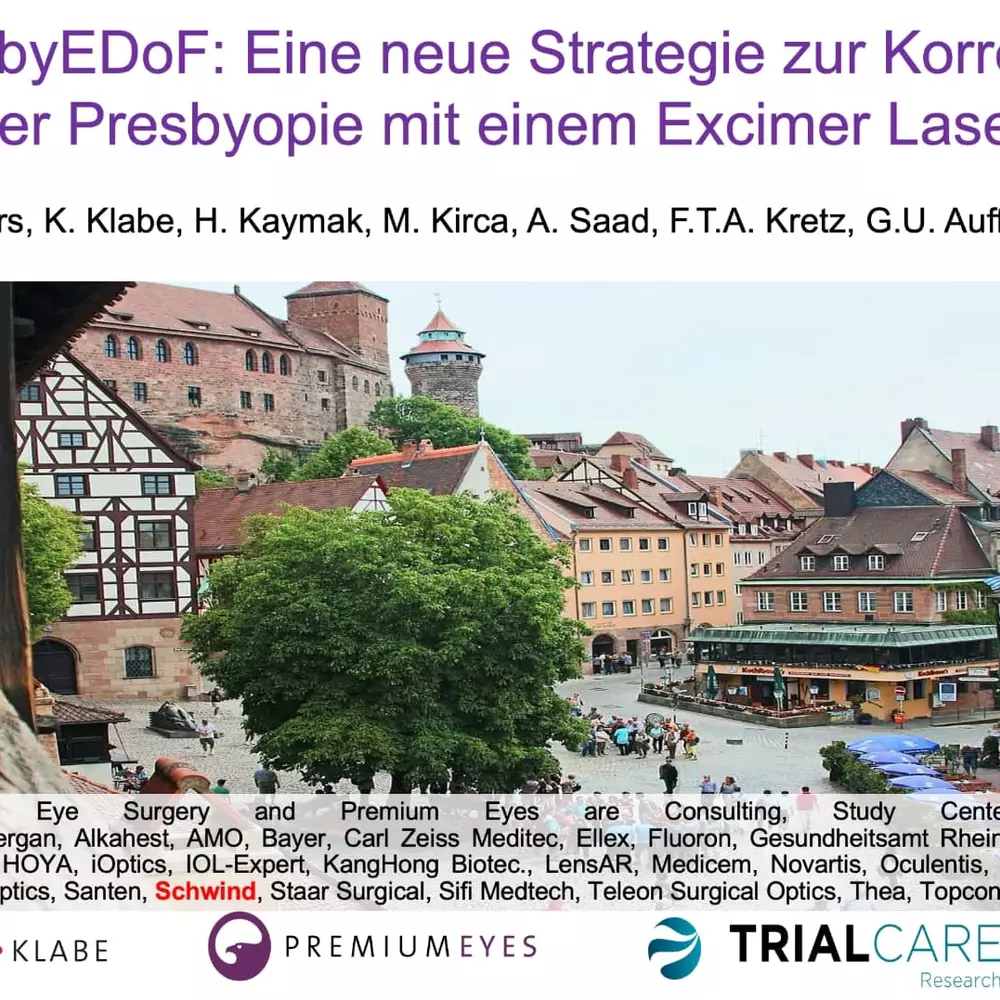
In this presentation, Focus Top Physician Dr. Detlev R.H. Breyer introduces the PresbyEDoF procedure he developed, which is performed using the Schwind Amaris 1050RS excimer laser. The advantages of this excimer laser include its high precision, speed, and safety, which is ensured by a 7D eye tracker.
Schedule an appointment for a
free introductory session on PresbyEDoF.
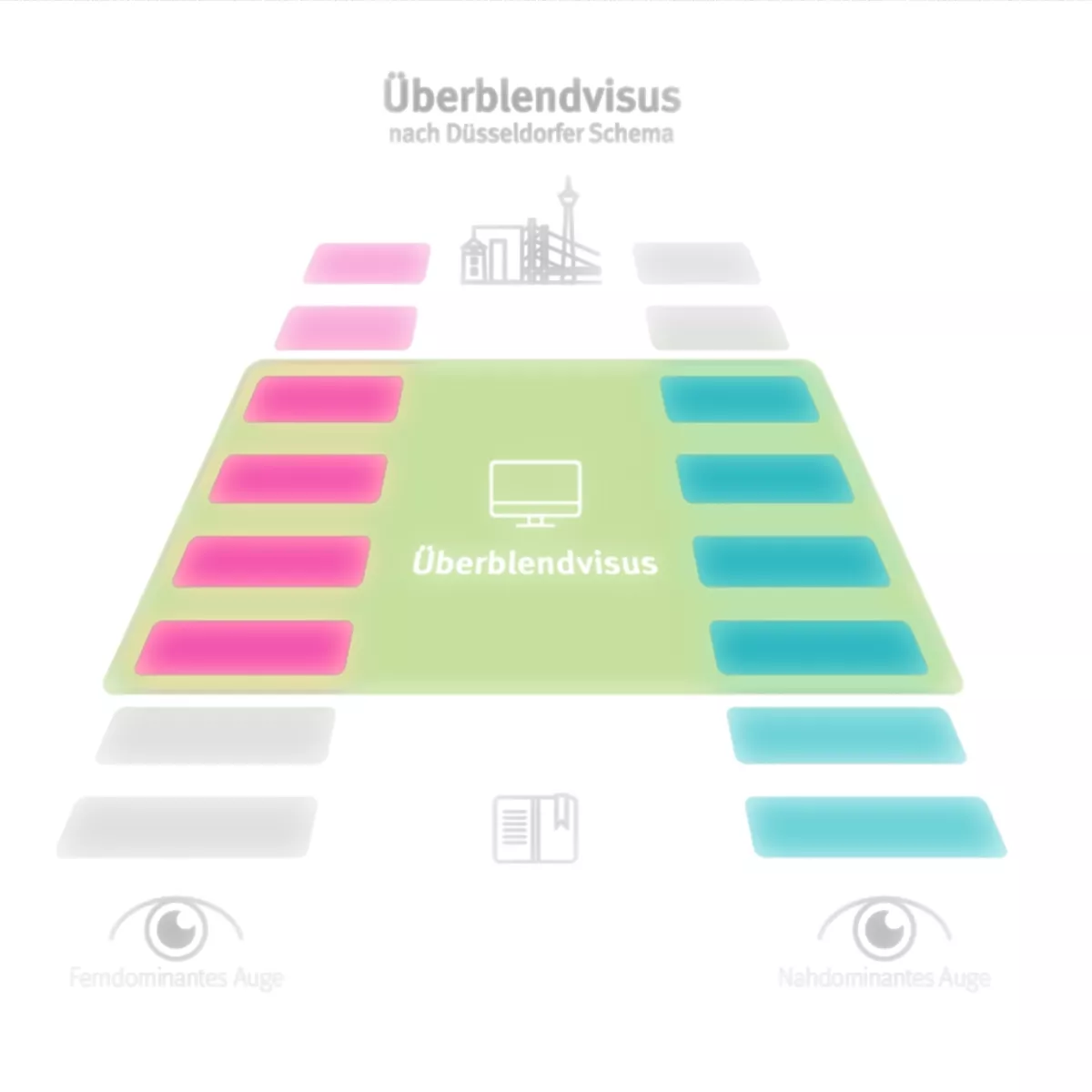
After Dr. Breyer had previously used the PRESBYOND procedure (ZEISS) for over 10 years—and his patients were very satisfied with the results—he slightly modified the laser profiles developed by Schwind to induce anisometropia, which corresponds to approximately 1.5 dpt.
As a result, both eyes see clearly at different distances. However, with a difference of 1.5 dpt—as with blended vision—there is a range in which both eyes see clearly, so binocular vision is not impaired. In addition, so-called spherical aberrations are induced to extend the depth of field to +1.5 dpt and further improve near vision. Since our brain is accustomed to these spherical aberrations, it quickly learns to filter out the sharp image. The exact values used can be determined based on individual visual habits. He calls this principle PresbyEDoF, as it corresponds to the Düsseldorf scheme that Dr. Breyer developed for lens treatments using various intraocular lenses with extended depth of focus (EDoF).
The Patient Survey
About three months after treatment, the patients were surveyed on the following topics. The comparison focused on:
the patients’ visual quality and quality of life BEFORE treatment WITH glasses compared to
their visual quality and quality of life AFTER treatment WITHOUT glasses.
The questions covered activities of daily living such as reading, close-up work at home (cooking, sewing), at work, or as a hobby; orientation, e.g., on a cluttered shelf; recognizing signs and street signs, seeing at twilight or at night, and navigating new surroundings, as well as visual acuity during evening events, such as at the theater, movie theater, or sporting events. And last but not least, the survey also addressed the ability to drive a car during the day, at dusk, in the evening, or at night, as well as under difficult conditions (weather and traffic conditions).
More than 80 percent of patients felt that their activities were not restricted in any way after treatment without glasses; this was about 5 percent more than before treatment with (!) glasses. No one reported experiencing severe or considerable difficulties with the activities mentioned after treatment.
Dr. Detlev R.H. Breyer