
Laser Eye Surgery
Is laser eye surgery more environmentally friendly than wearing contact lenses?
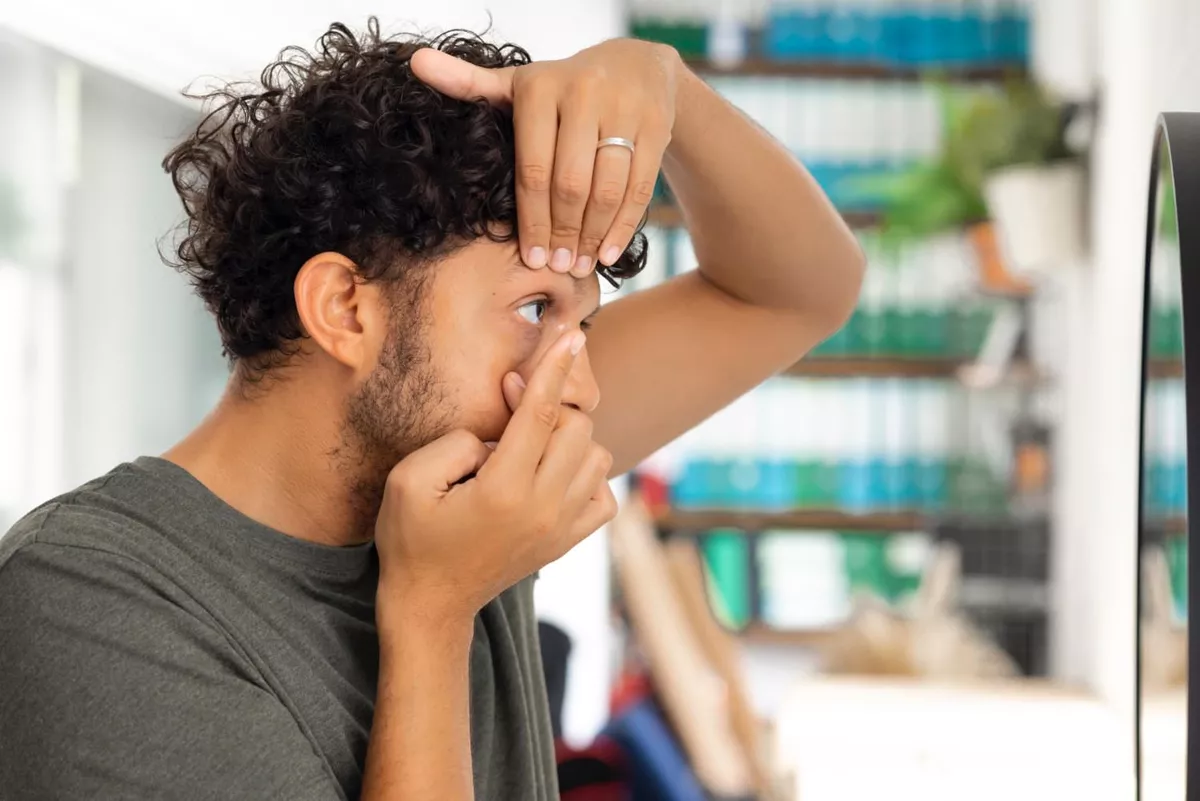
Plastic pollution is one of the biggest environmental problems of our time. Did you know that contact lenses also contribute to this growing environmental problem? In Germany, approximately 5.5 percent of the population—that’s around 3.4 million people—currently use contact lenses to avoid wearing glasses, and that number is on the rise. This results in a correspondingly large volume of waste each year. Laser eye surgery could significantly reduce this plastic waste without requiring you to give up your freedom from glasses. The earlier in life the treatment is performed, the greater the effect.
Current Contact Lens Consumption and Forecasts for 2025
In 2022, contact lenses were used per capita in Germany.
Contact lenses are expected to be in use in Germany by 2025.
The global market for contact lenses is projected to reach [figure] by 2025.
In 2022, each citizen in Germany will use an average of 3.12 contact lenses. Consumption is even projected to reach around 333.9 million contact lenses by 2025; worldwide, the estimated total is approximately 7,827.9 million lenses (Source: Stastita). While packaging and blister packs are often recyclable, this is not yet the case for most lenses. They can therefore only be disposed of as general waste.
However, a research group at Arizona State University found that in the U.S., 15 to 20 percent of contact lens wearers flush their lenses down the sink or toilet.1 This amounts to roughly 20 to 23 metric tons of plastic entering wastewater each year.
"People who choose not to wear contact lenses for environmental reasons don't have to give up the freedom of not relying on glasses."
Dr. Detlev Breyer

Most contact lenses today are made from silicone hydrogel. The researchers were able to show that microbes in wastewater treatment plants break down these materials into microplastics, which accumulate in sewage sludge. About every other pound of sewage sludge contains a pair of contact lenses in the form of environmentally harmful microplastics. In bodies of water, microplastics are ingested by organisms as food. Unlike other plastic materials, the materials that make up contact lenses can also absorb liquids. This includes not only water but also everything found in the water, such as environmental toxins like pesticides and herbicides. These chemicals could thus enter the food chain in high concentrations.
How sustainable is laser eye surgery compared to contact lenses?
In this context, laser eye surgery is certainly a more sustainable alternative to contact lenses. The earlier in life this treatment is performed, the fewer contact lenses will be needed.
Doesn't laser eye surgery also generate plastic waste?
A SMILE pro procedure using the new VISUMAX 800 requires only a recyclable plastic patient interface and a paper towel. Compared to the quantities of contact lenses mentioned above that are discarded as waste over the years, this amount is practically negligible. All other surgical instruments used are made of metal. They are sterilized after each use and can then be reused. Incidentally, the VISUMAX 800 is manufactured by Zeiss, a company that places a very high priority on sustainability. The company has set a goal of becoming carbon-neutral in its own operations (Scope 1 and 2) by 2025. You can read more about this in the 2023 Sustainability Report.
Are you a good fit?
We'd be happy to offer you a free initial examination to determine whether you're a good candidate for laser eye surgery.
Let us advise you
If you're interested in achieving the best possible vision without glasses, please feel free to schedule an appointment for a no-obligation quick checkup or preliminary examination with Dr. Breyer, your laser eye surgery and lens specialist. You can contact us by phone, email, or online via doctolib.de. We look forward to hearing from you.